
Klarna CEO fires 40% of staff and warns of future impacts
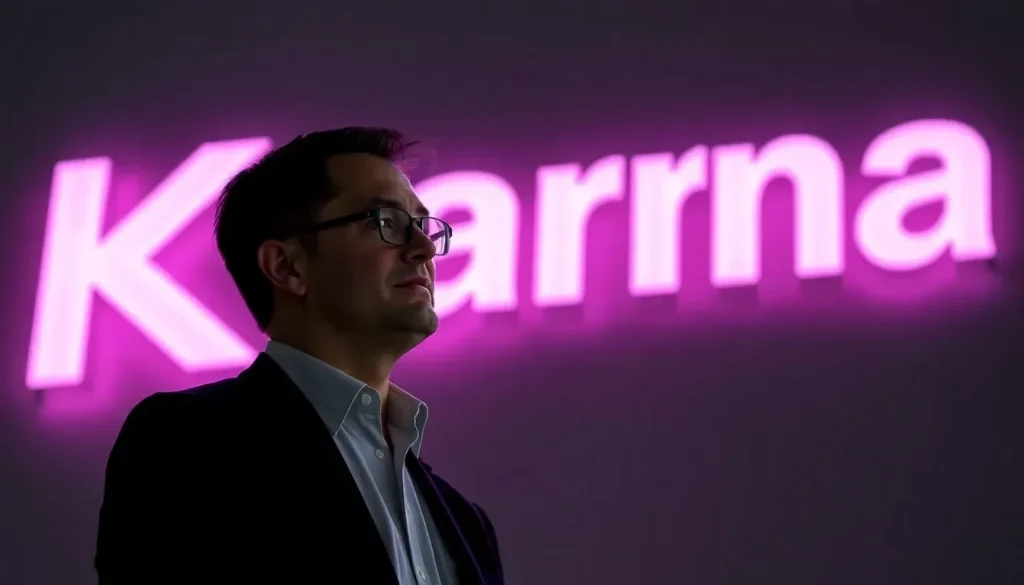
The rapid advancement of Artificial Intelligence (AI) is transforming various industries, particularly the financial sector. As businesses like Klarna embrace AI technologies, the implications for the workforce are becoming increasingly urgent. The CEO of Klarna, Sebastian Siemiatkowski, recently issued a stark warning about an impending labor shock due to AI, a topic that requires more attention and discussion than it has received thus far.
In an era where AI has shifted from being a futuristic concept to a structural tool in business, Siemiatkowski's acknowledgment of the potential job losses attributed to AI is a significant development. He argues that the world is ill-prepared for the consequences of AI, particularly regarding job displacement and the transformation of knowledge work.
Klarna's CEO warns of an impending labor shock due to AI
In a recent interview with Bloomberg, Siemiatkowski stated, “The world has not yet faced the consequences of AI eliminating large numbers of jobs,” highlighting the urgency of addressing this issue. He emphasized that this shock would not be limited to the technology or finance sectors but would impact society as a whole.
His remarks could be viewed as alarmist, especially in a climate where sensational news often captures public attention. However, he raises a valid concern about the speed at which automation is advancing, outpacing the necessary labor transitions and retraining programs.
“Yes, new jobs will be created, but in the short term, that does not help the translator in Brussels.”
This statement underscores the discrepancy between the creation of new roles and the immediate loss of traditional jobs, creating a gap that many workers may struggle to bridge. The speed of automation could lead to a significant increase in unemployment if not properly managed.
Contradictions in the narrative surrounding AI and employment
Interestingly, Siemiatkowski’s view today contrasts sharply with his earlier stance. Just months ago, he celebrated Klarna's 40% reduction in workforce, citing the efficiencies gained through AI implementation. He proudly noted that his company had transitioned from 5,500 employees to just over 3,000 while increasing productivity. Klarna's AI assistant, powered by ChatGPT, was reportedly handling the work of 700 customer service agents.
This earlier triumph of technology now appears to be a double-edged sword. Although Klarna initially saw success through these layoffs, the company has since had to rehire staff for customer service roles due to the automated system's inability to meet quality standards.
Siemiatkowski himself has acknowledged that Klarna does not heavily rely on AI for subscription decisions, indicating that there are still practical limitations to its deployment. This admission contradicts his previous enthusiasm, where he aspired to position Klarna as a leading adopter of AI technologies.
The real issue: speed of change and unpreparedness
The underlying issue may not be the technology itself but the pace of its adoption and the lack of a clear transition plan. When a CEO who has drastically cut his workforce now warns of “labor shock,” it raises questions about the motivations behind these statements.
- Is he genuinely concerned about the societal impact of AI?
- Does he foresee a backlash against companies that prioritize automation over human labor?
- Could there be a shift towards a more ethical approach to AI implementation in response to potential social unrest?
Moreover, this rapid technological shift highlights a systemic failure among governments. Many policymakers are reactive rather than proactive, often patching up issues rather than implementing comprehensive solutions that anticipate future challenges. Their tendency to remain silent on critical issues only exacerbates the situation.
As Siemiatkowski notes, the “excessive gains” associated with automation are coming to an end, leading to a future where banking may revolve around mere balance sheets. This shift raises ethical and occupational concerns that are now at the forefront of corporate discussions.
Preparing for the future: New skills and capabilities
Looking ahead, organizations and governments must prioritize developing new skills and capabilities to equip the workforce for a changing landscape. This effort should include:
- Investing in retraining programs for displaced workers.
- Encouraging educational institutions to adapt curricula that reflect the demands of a technology-driven job market.
- Fostering collaboration between companies and educational entities to create relevant learning opportunities.
Without these proactive measures, the risk of mass unemployment due to AI could become a reality, leading to economic instability and social upheaval. As industries evolve, the emphasis must shift from profits to sustainable labor practices that consider the well-being of all stakeholders.
The broader implications of AI on society
As the discourse around AI and job displacement continues to evolve, it is crucial to consider the broader societal implications. The rise of AI technologies could reshape the way we work, communicate, and interact with one another. Some potential consequences include:
- A widening gap between skilled workers and those unable to transition to new roles.
- Increased reliance on technology, leading to potential ethical dilemmas regarding data privacy and security.
- Challenges to mental health as workers face uncertainty about their job futures.
Addressing these issues requires a collective effort from governments, businesses, and society to ensure a balanced approach to technological advancement. These stakeholders must work together to create policies and practices that promote workforce resilience in the face of inevitable change.
In conclusion, the conversation surrounding AI and its impact on labor is far from over. As leaders like Siemiatkowski navigate the complexities of automation, it is imperative that we address the challenges head-on, fostering an environment where technology and humanity can coexist and thrive.



Leave a Reply