
Apple M5 SoC set to compete with Intel in 2025 MacBook Pro
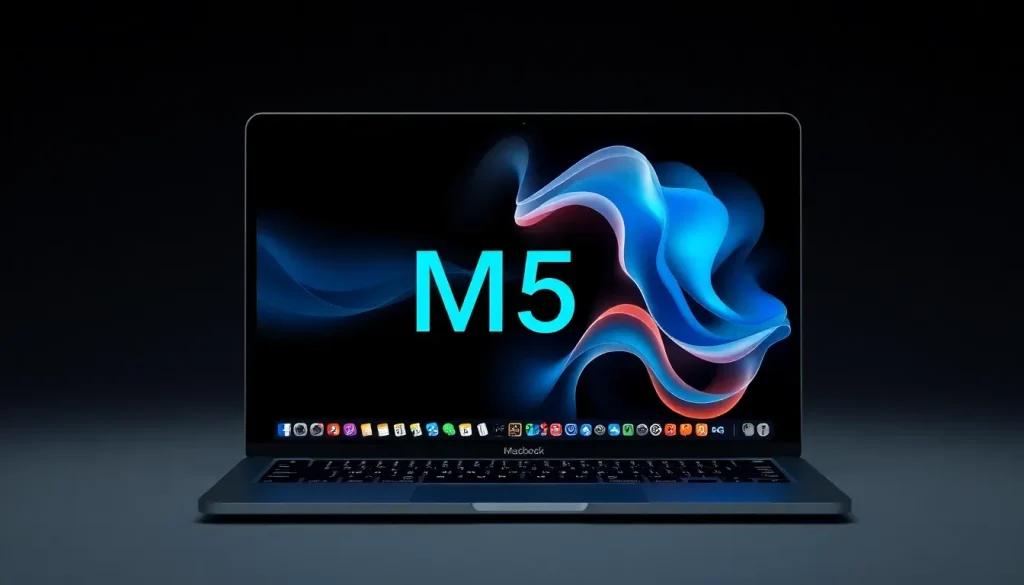
In a groundbreaking move, Apple has unveiled its latest high-performance system-on-chip (SoC), the Apple M5, set to debut in the MacBook Pro. As the third iteration utilizing TSMC's 3 nm manufacturing process, this chip marks a significant leap in Apple's computing technology. While only the standard version has been announced, speculations about enhanced versions such as the Apple M5 Pro, Max, and Ultra are already in the air. These advanced chips are expected to feature additional CPU and GPU cores, further enhancing performance.
The Apple M5 is currently exclusive to the newly launched 14-inch MacBook Pro (2025). Apple touts substantial improvements in both graphical performance and artificial intelligence capabilities, positioning itself to compete directly with AMD and Intel in the ultrabook market, particularly with integrated neural processing units (NPU) aimed at accelerating AI tasks. However, when comparisons are made against a 2020 Intel CPU, the implications of this new technology remain to be fully realized.
Key Features of the Apple M5
The Apple M5 chip is equipped with a robust 10-core processor, consisting of 4 performance cores (P-Core) and 6 efficiency cores (E-Core). Apple claims that compared to the M4, these cores provide a remarkable 15% performance boost in multi-core operations. The most significant upgrade, however, lies in the graphics department, where a 10-core GPU has been integrated, accompanied by a Neural Accelerator for each core. This combination promises up to a 45% improvement in graphics performance and introduces third-generation dedicated hardware for Ray Tracing.
Additionally, the M5 features a Neural Engine with 16 cores, which, along with a 30% increase in memory bandwidth—reaching 153 GB/s—is projected to yield a substantial enhancement in AI performance (up to 250%) and creative workloads. However, memory capacity is limited to a maximum of 32 GB of RAM, with the base model expected to come with 16 GB. Upgrading this capacity will incur additional costs, leading to the anticipation of future SoCs like the Apple M5 Pro.
Overall, the Apple M5 aims to deliver performance improvements across various tasks, boasting speeds that are up to 60% faster for gaming and 2.1 times quicker for code compilation in Xcode. These comparisons are notably against Apple's earlier M1 chip, showcasing a 20% advantage over the M4. Furthermore, when set against the latest Intel MacBook Pro, Apple claims that the M5 outperforms in artificial intelligence tasks by a staggering factor of 86 and leads in graphics performance by 30 times.
Performance Enhancements:
- AI-enhanced video processing is up to 670% faster in Topaz Video compared to the MacBook Pro M1, and 1.8 times faster than the M4.
- 3D rendering in Blender can be up to 580% quicker compared to the MacBook Pro M1 and 70% faster than the M4.
- Frame rates in gaming reach up to 220% higher than the MacBook Pro M1 and 60% faster than the M4.
- Code compilation performance is up to 110% faster in Xcode compared to the 13-inch MacBook Pro M1, and 20% faster than the M4.
Specifications of the 2025 MacBook Pro with M5
The 2025 MacBook Pro, integrating the Apple M5, maintains a familiar 14-inch display size. The most notable update is the inclusion of the M5 SoC, which promises to translate all these performance gains into a cohesive and efficient laptop experience. Apple claims that this new model can provide up to 14 hours more battery life compared to previous Intel-based MacBooks. However, it’s important to note that these comparisons are made against a considerably outdated processor from 2020.
The Intel counterpart to the M5 is roughly equivalent to the Intel Core i7-1068NG7, a 4-core processor produced using a 10 nm process. This context puts into perspective the advancements made with the M5 chip. In terms of pricing, the MacBook Pro starting at 1,829 euros for the 14-inch model is not a budget option. This model includes 16 GB of RAM and 512 GB of SSD storage.
For those looking to upgrade, an additional 250 euros adds 24 GB of RAM, while 32 GB will set you back 500 euros more. The 1 TB SSD upgrade costs an extra 250 euros (with 2 TB at 750 euros and 4 TB at 1,500 euros). It’s important to note that a charger is not included; users must purchase one separately for around 65 euros for a 70W unit or 85 euros for a 96W charger.
Considering the base model of the MacBook Pro with the Apple M5 starts at 1,829 euros, it raises concerns about the potential pricing for the upcoming M5 Pro version. For context, the MacBook Pro with M4 Pro currently retails at a starting price of 2,849 euros for the 16-inch model featuring 24 GB of RAM and 512 GB of SSD storage.
Future of Apple Silicon: What Lies Ahead?
The introduction of the Apple M5 marks an exciting chapter in Apple's venture into custom silicon, promising to challenge established players like Intel and AMD in the laptop market. As technology evolves, the anticipation for future iterations, like the M5 Pro, remains high. These chips are expected to refine performance further and introduce new capabilities.
Moreover, as machine learning and artificial intelligence applications expand, the role of the NPU in the M5 will likely play a crucial part in how future software and applications are developed. The potential for enhanced user experiences, particularly in creative fields like video editing, gaming, and software development, is significant.
To get a visual insight into the capabilities of the new MacBook Pro with the M5 chip, check out this informative video:
Comparative Analysis: Apple M5 vs. Competitors
As the Apple M5 enters the competitive landscape, a detailed comparison with similar offerings from Intel and AMD is essential. The M5's architecture and performance metrics will determine its success in various use cases.
- Performance Benchmarks: Early performance benchmarks suggest that the M5 significantly outpaces previous generation Intel chips, particularly in multi-threaded tasks and AI processing.
- Power Efficiency: Utilizing a 3 nm process not only enhances performance but also improves power efficiency, making the M5 a strong contender in mobile computing.
- Long-term Viability: With the shift towards integrated solutions, the M5's design is expected to adapt well to future software demands, particularly in creative industries.
In summary, the Apple M5 chip and its integration into the 2025 MacBook Pro represents a significant advancement in Apple's silicon strategy. As the tech giant continues to innovate, the impact on the laptop market will be closely watched by consumers and professionals alike.



Leave a Reply