
German overclocker sets DDR5 world record at 13GT/s
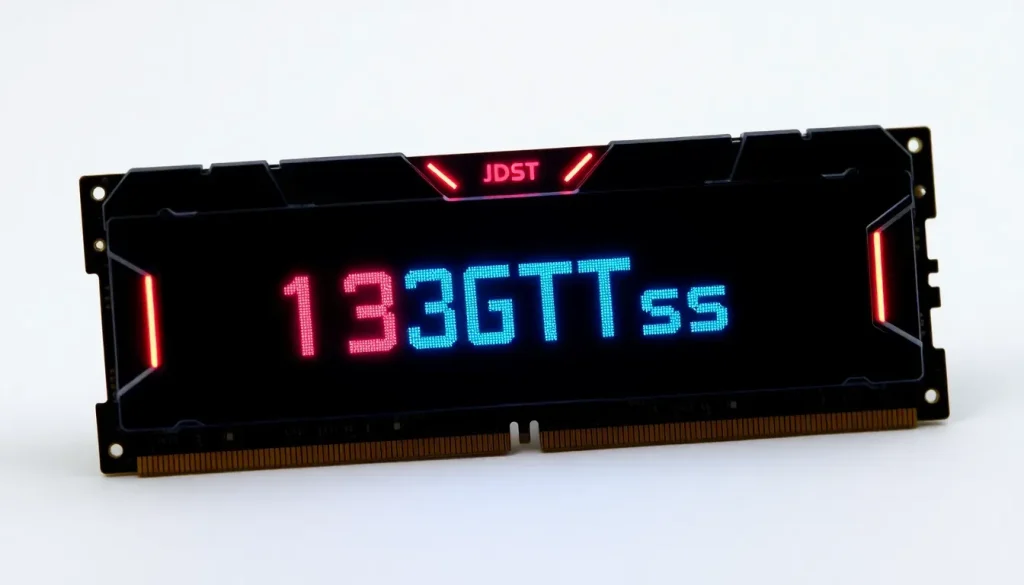
The world of memory overclocking is constantly evolving, pushing the boundaries of what is technically possible. Recently, a significant milestone was achieved in the realm of DDR5 memory, showcasing the relentless spirit of overclockers who strive for excellence. This article delves into the latest achievements in DDR5 overclocking, the techniques employed, and the implications for future memory technology.
New world record for DDR5 overclocking
On October 15, 2023, a German overclocker known as sergmann set a new validated world record by exceeding the 13GT/s milestone in DDR5 memory speeds. This remarkable achievement surpassed the previous record by a mere 90MT/s, suggesting that the limits of DDR5 memory frequencies are being closely approached.
While advancements in manufacturing processes could potentially provide some additional headroom, experts believe that significant leaps in memory speeds may be on hold until the anticipated release of DDR6, projected for 2027. This raises intriguing questions about how far DDR5 can go and what the future holds for memory technology.
Technical details of the record-setting run
To achieve this notable record, sergmann utilized a 24GB Corsair Vengeance DDR5 module, which natively operates at 8000MT/s with a CAS latency (CL) of 38, thanks to the XMP 3.0 profile. However, the real magic happened when he employed liquid nitrogen (LN2) for cooling, allowing the memory frequency to be pushed to an astonishing 6504.9MHz, translating to 13,009.8MT/s.
In pursuit of maximum frequency, typical memory timings were compromised. Sergmann opted for timings of CL68-127-127-127-2 (tCAS-tRCD-tRP-tRAS-tCR), which are drastically relaxed compared to standard settings. This choice reflects the common practice among overclockers to prioritize speed over latency when setting new records.
Key components enabling the achievement
The successful execution of this record was heavily reliant on high-performance hardware. Two critical components played a vital role:
- Gigabyte Z890 Aorus Tachyon Ice motherboard: Known for its robust design, this motherboard is tailored for extreme overclocking, providing essential features like advanced power delivery and enhanced thermal management.
- Intel Core Ultra 9 285K processor: This CPU, although reduced to just 2+2 active cores running at 2GHz, was crucial in providing the necessary stability for the memory controller during the overclocking process.
By operating the CPU with fewer cores, sergmann was able to concentrate its power solely on the memory controller, which significantly contributed to the stability required for achieving such high memory speeds.
Comparison to previous records
Interestingly, another overclocker, known as saltycroissant, had previously claimed an impressive speed of 13,020MT/s just a month prior. However, this record was not validated on the HWBot platform, which is the standard for verifying overclocking achievements. As a result, sergmann’s accomplishment stands as the officially recognized benchmark for DDR5 performance.
The future of DDR5 and beyond
With this latest feat, there arises an important question: How much further can DDR5 go? The potential for reaching a 14GT/s threshold is tantalizing, yet many experts suggest that we may be nearing the natural limits of the DDR5 architecture. The focus is now shifting toward DDR6, which promises even higher speeds and improved efficiency.
As the industry gears up for DDR6, several key advancements are anticipated:
- Enhanced manufacturing techniques: Future memory modules are expected to use more advanced production processes that could allow for higher clock speeds and lower latencies.
- Increased data bandwidth: DDR6 will likely support significantly higher data rates, offering improved performance for high-demand applications.
- Better power efficiency: Innovations in memory technology may lead to reduced power consumption, which is crucial for mobile devices and laptops.
Conclusion
The pursuit of higher memory speeds through overclocking continues to be a thrilling aspect of computer technology. As demonstrated by sergmann's recent achievement, the combination of skill, knowledge, and high-quality components can lead to groundbreaking results. The coming years will be pivotal as we transition toward DDR6, but for now, DDR5 remains at the forefront of memory technology, showcasing what is possible through human ingenuity and determination.


Leave a Reply