
Echo Studio 2025 review: excellent sound with compact design
The evolution of smart speakers has been nothing short of remarkable, especially for Amazon's flagship model, the Echo Studio. With nearly six years since its last major update, the anticipation surrounding the 2025 edition is palpable. In a rapidly changing tech landscape, the Echo Studio remains a benchmark for audio quality, but how does it stack up against the competition in 2025? Let's delve deeper into the latest features, sound capabilities, and practical applications of this innovative device.
Design and Dimensions: A Shift Toward Compactness
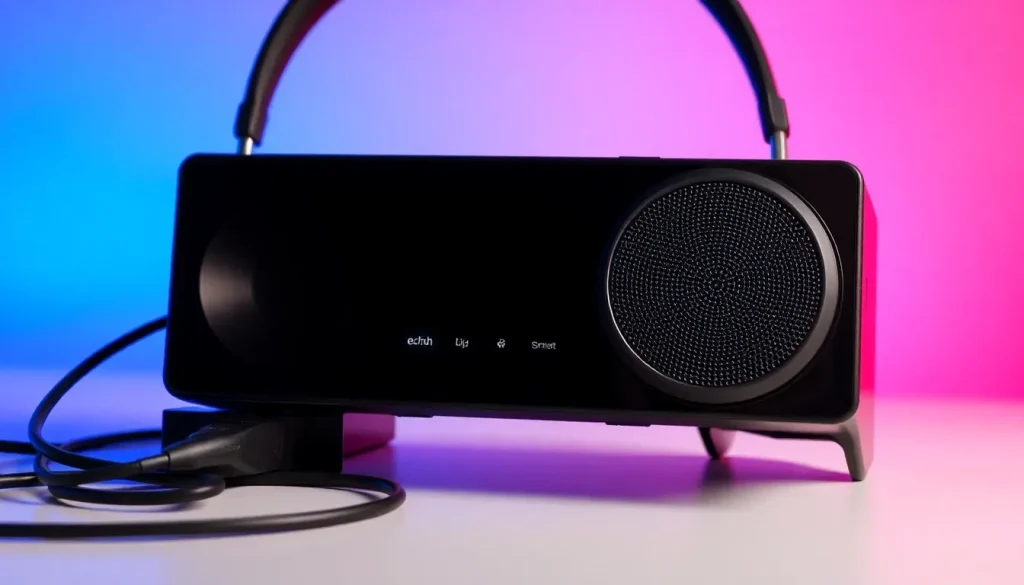
The new Echo Studio (2025) has embraced a more compact and rounded design, moving away from the cylindrical shape of its predecessor. This redesign aligns with Amazon's latest aesthetic for smart devices, which emphasizes a smaller footprint without compromising on performance.
Despite its reduction in size, the Echo Studio continues to deliver powerful audio capabilities. It resembles a larger Echo Dot, yet it maintains its position as Amazon's premier audio device. The new model is designed for those who desire high-quality sound in a smaller package, making it suitable for various living spaces.
Excellent Sound Quality: What to Expect
When it comes to audio performance, the Echo Studio (2025) excels. It offers a robust sound profile capable of delivering high volumes without distortion, making it an excellent choice for music lovers. Here are some notable features:
- Dolby Atmos Support: The inclusion of Dolby Atmos technology enhances the listening experience, providing a more immersive sound.
- High Volume Levels: Users can enjoy music at high volumes without compromising clarity.
- Integration with Third-Party Services: The integration with various music streaming services remains seamless, although Amazon Music continues to provide the best audio quality.
While the Echo Studio supports Bluetooth connectivity, users may encounter a drop in audio quality when using this feature. This limitation is worth noting for those who prioritize sound fidelity.
Connectivity and Smart Home Integration
The Echo Studio is designed to be the hub of your smart home, equipped with technologies such as Zigbee, Matter, and Thread. These features allow users to connect and control a variety of smart devices effortlessly. However, the experience can be hindered by the limitations of the Alexa app, which can feel cumbersome for basic tasks.
- Smart Home Protocols: With Zigbee, Matter, and Thread, the Echo Studio can connect to a wide array of smart home devices.
- Voice Control: Users can control their devices using voice commands, simplifying interactions.
- Omnisense Technology: This feature detects presence in rooms, enabling automatic actions like turning off lights when no one is present.
Although the Omnisense feature shows promise, its performance is reliant on the positioning of the Echo Studio. For optimal functionality, it should be placed in an open area, free from obstructions, to detect subtle movements effectively.
Challenges with Multi-Room Audio
Despite its impressive capabilities, users may encounter challenges with multi-room audio setups. The Alexa app can struggle to synchronize multiple Echo devices across different generations, often misidentifying them as being on separate networks. This inconvenience can lead to frustration during setup.
When considering a multi-room setup, it’s essential to:
- Ensure all devices are connected to the same network.
- Use identical Echo devices for stereo pairing.
- Be aware that the app may require multiple attempts to recognize devices accurately.
Nonetheless, the Echo Studio alone is powerful enough to fill a large room with sound, making it a practical option for users who do not wish to invest in multiple units.
Sound Placement: The Key to an Optimal Experience
While the Echo Studio delivers impressive sound quality, its performance can vary significantly based on placement. To achieve the best audio experience, consider the following:
- Avoid Clutter: Place the speaker on a clear surface without nearby objects that could obstruct sound.
- Optimal Orientation: Position the speaker to face the room's center for even sound distribution.
- Consider Height: Elevating the device can enhance audio projection.
Choosing the right location is crucial; placing the Studio near walls or in corners can negatively impact sound quality, especially at higher volumes.
Future Potential: What Lies Ahead for Echo Studio
The Echo Studio stands as a sophisticated device that excels in audio quality and smart home integration. However, as Amazon continues to enhance Alexa's capabilities, the potential for the Echo Studio to evolve further is significant. The introduction of Alexa+ and its advanced AI features could make the Studio even more valuable for smart home enthusiasts.
For now, the Echo Studio remains a top-tier choice for those seeking an excellent audio experience in a compact form. It combines high-quality sound with the versatility of smart home connectivity, making it an ideal centerpiece for any modern living space.
For an in-depth visual review of the Echo Studio, check out this video:
In conclusion, while the Echo Studio (2025) builds upon its predecessor's legacy with modern features and design, it still faces challenges that could be addressed in future updates. For avid audio lovers and smart home aficionados, the Echo Studio is an investment that promises to deliver quality and innovation.



Leave a Reply