
Fleet Readiness as an Economic Advantage for Challenger Motor Freight
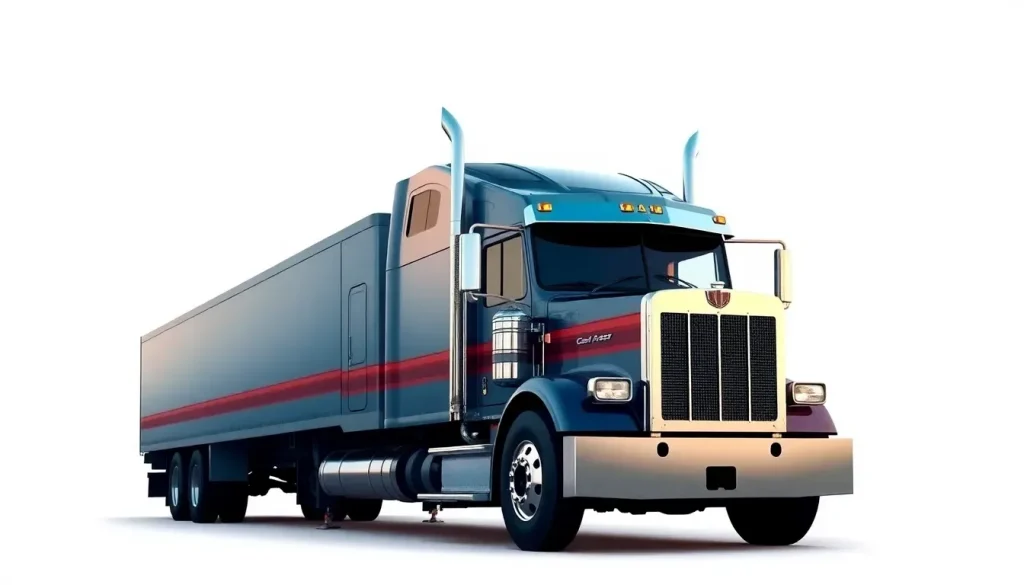
In an era where economic challenges dominate the logistics and transportation sector, companies must innovate to maintain stability and profitability. With fluctuating freight rates and rising operational costs, the key to success lies not just in enduring these challenges, but in transforming them into advantages. This shift not only enhances operational efficiency but also positions companies favorably in an increasingly competitive market.
Challenger Motor Freight, a key player in the industry, exemplifies this approach. As part of the Fastfrate Group, this Canadian carrier operates over 1,200 trucks across Canada and the United States, providing diverse transportation services including truckload, LTL (less-than-truckload), dedicated, and temperature-controlled freight. By embracing technology and operational enhancements, Challenger has effectively navigated the turbulent waters of the freight market.
- Understanding the Current Economic Landscape in Freight Transportation
- Proactive Strategies: How Challenger Motor Freight Maximizes Efficiency
- Streamlining Toll Management
- Enhancing Operations with Weigh Station Bypass Technology
- The Role of Efficiency in Mitigating Market Risks
- Looking Ahead: The Competitive Advantage of Operational Efficiency
Understanding the Current Economic Landscape in Freight Transportation
The logistics industry is currently experiencing significant economic headwinds. Factors such as softening freight rates, increasing insurance premiums, and escalating toll costs are squeezing profit margins tighter than ever. As a result, carriers are compelled to rethink their strategies. Here are some critical elements affecting the industry:
- Freight Rates: A decrease in demand has led to lower freight rates, affecting revenue.
- Insurance Premiums: Rising costs in insurance are cutting into profits.
- Toll Expenses: Increased toll fees create additional financial burdens.
- Market Volatility: Fluctuations in demand require flexibility and quick adaptation.
- Operational Efficiency: Companies need to streamline processes to remain competitive.
In such an environment, those companies that can efficiently manage their fleets and resources will not only survive but thrive. Challenger Motor Freight has adopted an approach focusing on operational efficiency, leveraging technology to improve their logistics management.
Proactive Strategies: How Challenger Motor Freight Maximizes Efficiency
Rather than waiting for favorable market conditions to return, Challenger has actively sought to optimize its operations in areas it can control. A pivotal partnership with Fleetworthy has enabled the company to implement significant changes, particularly in toll management and weigh station bypassing.
Streamlining Toll Management
Toll management is often a cumbersome process for trucking companies, consuming valuable administrative resources. For Challenger, managing tolls previously required extensive time and effort due to the numerous invoices received from various authorities. To combat this, the company adopted Bestpass by Fleetworthy in 2013. This solution consolidated toll activities into a single automated account, revolutionizing their approach to toll management.
Paul Weatherbie, Marketing Communications Manager at Challenger, shared insights on this transition: “With hundreds of trucks operating in the U.S., it became a real burden for us to stay on top of all the bills we were receiving. Bestpass has been a must-have service ever since.”
The implementation of this system resulted in a remarkable reduction in time spent on processing toll bills each month—cutting it by half. This efficiency has allowed the staff to redirect their focus towards enhancing driver support and safety initiatives. Challenger now enjoys benefits such as:
- Reduced administrative workload
- Discounted toll rates
- Automated payments
- Enhanced visibility into toll spending
- Fewer violations and discrepancies
Weatherbie emphasized the significance of this change: “By having one account that we can monitor for all our tolling activity, we’re much more efficient. That allows us to dedicate more time to other administrative priorities.”
Enhancing Operations with Weigh Station Bypass Technology
Operational efficiency extends beyond administrative processes. Each stop at a weigh station can average a loss of five minutes of driver time, with some delays extending to an hour. In 2020, Challenger adopted Drivewyze by Fleetworthy, a GPS-based weigh station bypass solution that integrates seamlessly with existing Electronic Logging Devices (ELDs).
“Since we’re headquartered in Ontario and many of our trucks travel in the province, switching to Drivewyze meant we could see a significant uptick in the number of bypass opportunities,” Weatherbie explained. This technology provides visual alerts to drivers, informing them when they can bypass weigh stations and continue their routes without interruption.
With access to over 900 fixed and mobile inspection sites across 48 U.S. states and Canadian provinces, Drivewyze has enabled Challenger to:
- Reduce driver delays significantly
- Lower fuel costs
- Enhance driver satisfaction
In a single month, Challenger trucks achieved 6,851 bypasses, translating into an impressive saving of approximately 571 driver hours and nearly $60,000 in operating costs. These savings are not one-off; they compound over time, thereby strengthening the company’s profit margins even as the freight market softens.
The Role of Efficiency in Mitigating Market Risks
Given the current economic uncertainty, fleets are scrutinizing every operational facet to maximize efficiency. Understanding that many market forces are beyond their control, companies like Challenger are strategically investing in areas they can influence, such as:
- Enhancing operational efficiency
- Improving vehicle uptime
- Gaining better visibility into operational costs
Fleetworthy’s comprehensive suite unites safety, compliance, toll management, and weigh station bypass solutions, empowering fleets to automate manual processes, eliminate redundancies, and gain real-time insights into cost drivers. Weatherbie reflects on the advantages: “Fleetworthy’s suite gives us efficiency at every turn, from tolling to bypassing to compliance. It simplifies how we operate and lets us focus on what matters most: keeping freight moving safely and on time.”
Looking Ahead: The Competitive Advantage of Operational Efficiency
In the transportation industry, efficiency transcends mere operational improvement—it's a vital competitive advantage. By adopting strategies that prioritize cost control, asset optimization, and driver productivity, fleets can position themselves favorably to weather economic fluctuations and capitalize on opportunities when market conditions improve.
Challenger Motor Freight serves as a model for how proactive measures and innovative technology can lead to substantial improvements in efficiency, allowing the company not only to navigate current challenges but also to lay a foundation for future growth. As the industry evolves, those who embrace this mentality will likely lead the charge toward a more stable and profitable future.



Leave a Reply