
History and Future of Internet from Arpanet to Quantum Connectivity
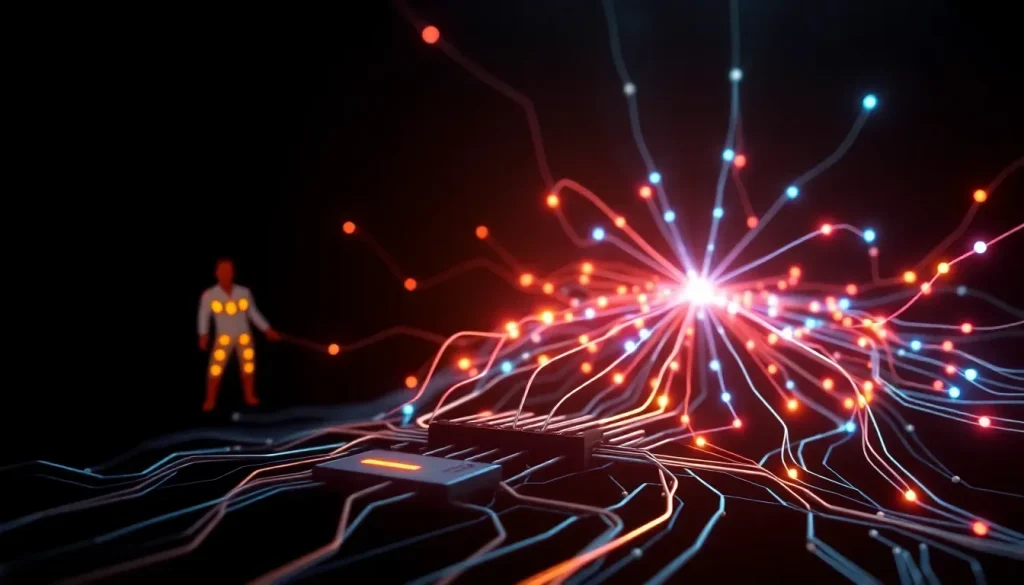
Internet began as a modest experiment aimed at connecting researchers' computers, and it has evolved into a vast global infrastructure that has revolutionized the world. But what lies ahead? What does the future hold for this ever-evolving network? Vint Cerf, recognized as one of the "fathers of the Internet," and Mallik Tatipamula, the current CTO of Ericsson, have outlined in a fascinating article what they believe are the seven phases of the Internet. These phases range from historical developments to ongoing advancements and those yet to come.
Throughout each phase, connectivity has served as a unifying principle, with each successive stage introducing new ways to connect. The journey began with data packets exchanged through fixed networks of large machines. The next step introduced mobility, marking a shift towards the widespread interconnection of various devices beyond just mobile and fixed computers. As we navigate through these stages, the current world has witnessed a significant expansion in human potential, sparking new industries and transforming the daily lives of those connected to the Internet.
The Early Concepts of Networking
The initial ideas surrounding “communication networks” were published in 1959 by Paul Baran, who was working on a secure communication network for military purposes capable of surviving a nuclear attack. In 1962, J.C.R. Licklider introduced the concept of a “galactic network,” envisioning a system that could connect users across different computers. Simultaneously, Leonard Kleinrock explored the concept of message storage and forwarding in his doctoral dissertation at MIT; Donald Davies was the first to use the term “packet,” and Lawrence G. Roberts aimed to utilize time-division multiplexing to link machines via telephone lines.
Building on the ideas of these scientists and driven by ARPA (Advanced Research Projects Agency), the design of ARPANET commenced—a network of computers created at the behest of the U.S. Department of Defense to connect various agencies and withstand nuclear attacks. This network served as the embryo of the Internet, though it bears little resemblance to today's version.
The first significant milestone occurred on October 29, 1969, with the inaugural connection test between ARPANET nodes at the University of California, Los Angeles (UCLA), and the Stanford Research Institute (SRI), located 500 kilometers apart. Progress accelerated, and by 1973, DARPA launched a research program focused on interconnecting networks and developing communication protocols. This philosophy gave rise to the term Internet, which referred to the interlinked network systems employing TCP/IP protocols created in the 1970s by Vint Cerf.
An essential leap forward for the Internet occurred in 1977 with the development of what we now recognize as the PC modem. However, the most significant transformation took place on January 1, 1983, when ARPANET transitioned from the original NCP to the TCP/IP protocol designed by Vinton Cerf and Bob Kahn, a framework still utilized today for data transmission and web connectivity. Finally, in 1989, Tim Berners-Lee, often referred to as the 'father of the Web,' proposed a system for distributing hypertext documents accessible via the Internet as part of an initiative to create the “World Wide Web.”
Phase 1: The Birth of the Internet
As previously outlined, the Internet was conceived in the 1970s primarily to connect computer networks. Its innovative nature relied not only on its architecture but also on the principle of openness. By adopting common protocols, various networks could interconnect regardless of their physical location. This transformation turned isolated systems into a “network of networks,” enabling unprecedented collaboration across institutions and national borders. Early applications such as email and file transfer demonstrated that connectivity could democratize access to information.
By the early 1990s, the World Wide Web provided a unifying framework: URLs for addressing, HTTP for communication, HTML as a common language, and the web browser as a universal interface. Between 1991 and 1993, the Web transformed the Internet from a research network into a global platform for information exchange, paving the way for broader adoption.
Phase 2: The Rise of Mobile Internet
The next major leap was the advent of mobility. In the early 2000s, with the proliferation of Internet-enabled mobile devices and the maturation of smartphones, connectivity became portable. The Internet was no longer confined to desktop computers; it traveled in pockets and bags, connecting billions of people globally for the first time. This newfound portability revolutionized communication, commerce, and entertainment.
Social networks flourished, mobile payment systems reached those without access to traditional banking, and services such as ridesharing and food delivery became everyday conveniences. Connectivity transitioned from being limited to desktops and focused on computers to becoming an always-active, portable network of digital resources integrated into daily life. The app economy soon emerged, allowing users to access any service or application at their fingertips instantly.
Phase 3: The Internet of Things (IoT)
Connectivity expanded beyond computers and mobile devices to encompass all digital devices with networking capabilities, giving rise to the Internet of Things. Sensors, appliances, and various devices in homes, factories, vehicles, and cities continuously transmit telemetry data, transforming the Internet into an invisible nervous system that connects the physical world with the digital.
The IoT has unlocked new possibilities in several sectors, such as:
- Healthcare</: Advanced remote monitoring and diagnostic tools.
- Manufacturing: Smart factories utilizing connected machinery for efficiency.
- Logistics: Enhanced supply chain management through real-time tracking.
- Agriculture: Connected tractors and soil sensors enabling precision farming to increase yield.
Phase 4: The Internet of AI Agents
The most profound change underway is the rise of AI agents. Unlike IoT devices that merely transmit data, these agents can perceive, reason, act, and collaborate. They are no longer passive terminals but active players shaping digital and physical economies.
This phase can be defined by two dimensions:
- Digital AI Agents: These include software-based entities such as programming copilots, digital assistants, workflow orchestrators, and negotiation algorithms. They operate in the digital realm but shape economies and services. For instance, a programming copilot assists developers by collaborating with other agents for real-time debugging, refactoring, and software optimization.
- Physical AI Agents: Conversely, physical AI agents function in both digital and physical environments, such as autonomous vehicles, drones, industrial robots, and medical devices. A common example is an autonomous car that integrates lidar, radar, and ISAC (Integrated Sensors and Communications), enabling it to detect its surroundings, avoid collisions, and coordinate with nearby vehicles and traffic systems.
Phase 5: The Internet of Senses
If Phase 4 introduces intelligence through agents, the next step in Internet integration is perception. The Internet of Senses will extend connectivity beyond information exchange to experience sharing.
This phase will be defined by two dimensions:
- Multisensory Communication: Expanding network capabilities beyond text, audio, and video. In the Internet of Senses era, networks will carry signals that convey touch, taste, and smell. Advances in haptic wearables and brain-computer interfaces (BCI) will allow online shoppers to "feel" fabric textures or "smell" fragrances before purchasing. In healthcare, doctors will remotely examine patients using haptic gloves that replicate the sensation of touch.
- Network-level ISAC: Unlike the AI agents' era, where intelligence was embedded within their detection and communication systems, here the network itself will perform perception. Programmable surfaces and metamaterials will shape signals, enabling motion detection, distance measurement, and localization as part of system communications. For example, smart cities will detect traffic flow and crowd movement in real-time, feeding their "senses" directly into the network.
The Internet of Senses will ensure that connectivity is immersive and context-aware, enriching interactions between humans and machines and laying the groundwork for embodied intelligence in the physical world.
Phase 6: The Ubiquitous Internet
As billions of devices and AI agents connect, ensuring seamless coverage will become increasingly vital. Phase 6, the Ubiquitous Internet, addresses this necessity by integrating terrestrial and non-terrestrial infrastructures, such as cellular networks, Wi-Fi, Ethernet, local area networks, fiber optics, satellites, and high-altitude platforms into a unified global network.
Ultimately, a ubiquitous Internet will guarantee connectivity everywhere, reaching remote villages, open oceans, skies, orbits, cislunar space, and beyond. This large-scale network will support future advancements in autonomy, perception, and intelligence, enabling both AI agents and human users to operate without borders.
Phase 7: The Quantum Internet
The final frontier in connectivity will be the Quantum Internet, where communication, networking, detection, and quantum computing converge. Unlike the classical Internet, which transmits bits, the Quantum Internet will distribute qubits through entanglement and teleportation, unlocking capabilities beyond any conventional system. Early demonstrations already showcase the potential of the Quantum Internet.
Entangled qubits transmitted via fiber optics and satellites will one day create ultra-secure communication channels resistant to interception, while quantum sensors will achieve unprecedented precision in measuring time, movement, and environmental factors. These innovations collectively promise applications like GPS-free navigation and ultra-sensitive environmental monitoring.
Even more exciting is the prospect of quantum networks, which will interconnect distributed quantum processors into a globally connected computing system. AI systems will operate simultaneously across multiple quantum computers, collaborating on the same problem sets. Integrated quantum AI systems are expected to accelerate the development of new medications and optimize complex supply chains and delivery routes.
The Quantum Internet will not replace the classical Internet, but rather enhance it, overlaying quantum signals onto classical bits. Just as the Internet of Agents will drive intelligence, the Quantum Internet will amplify that intelligence by integrating it with the laws of physics at minimal scales—merging detection, security, computing, and AI into a single global connectivity system.
In summary, the seven phases of the Internet illustrate how connectivity has evolved from workstations and mainframes to mobile devices, people, and the physical world. The insights gained from the first three phases have enabled the esteemed "fathers of the Internet" to forecast exciting new future phases: the network integration of AI agents, senses, everything related to the classical world, and ultimately, the quantum domain.


Leave a Reply