
GeForce RTX 60: expectativas para la próxima generación de NVIDIA
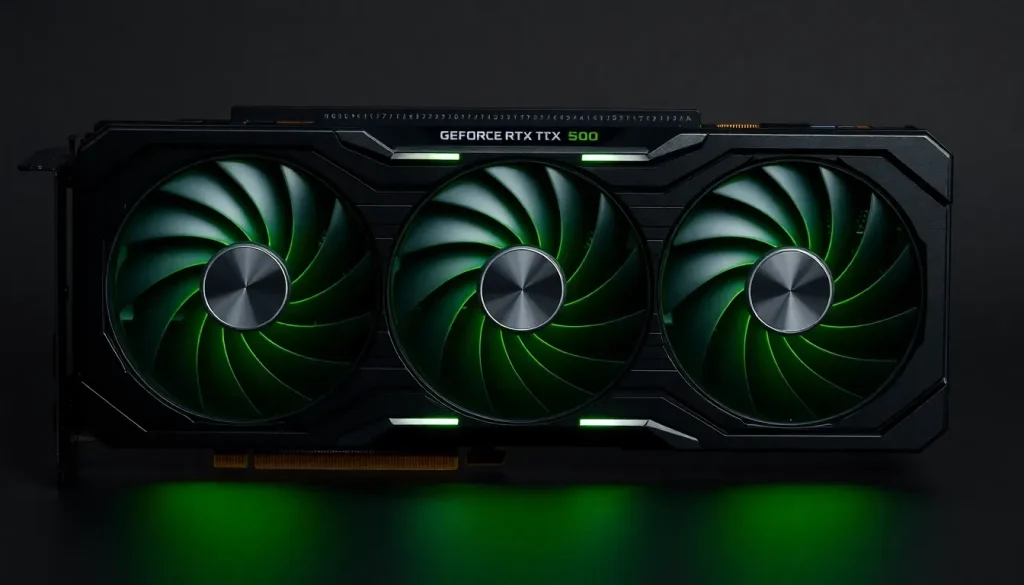
The anticipation surrounding the upcoming GeForce RTX 60 series from NVIDIA is palpable among gamers and tech enthusiasts alike. As the successor to the RTX 50 series, these next-generation graphics cards promise to deliver significant advancements in performance and features. With a projected launch window of 2026-2027, NVIDIA is already laying the groundwork with its new Vera Rubin architecture, which aims to redefine GPU capabilities.
Before the RTX 60 series hits the market, we can expect the introduction of the RTX 50 SUPER models, which will serve as an interim upgrade similar to the previous RTX SUPER iterations. This strategy indicates NVIDIA's commitment to refining its product line while preparing for a major leap forward in technology.
- Vera Rubin Architecture: The Future of NVIDIA GPUs
- Is NVIDIA Considering Feynman Architecture for the RTX 60?
- The Shift to Multi-Chip Designs in Gaming GPUs
- Manufacturing Process: What to Expect from NVIDIA
- Anticipated Innovations and Technologies in the RTX 60 Series
- Performance Leap: Expectations and Pricing for the RTX 60
Vera Rubin Architecture: The Future of NVIDIA GPUs
NVIDIA has confirmed that the Vera Rubin architecture will be a cornerstone of its upcoming product offerings. Expected to debut between 2026 and 2027, this architecture represents a shift towards a multi-chip design, which could enhance the efficiency and performance of their GPUs.
The multi-chip architecture will feature four interconnected chiplets, a significant evolution from the previous dual-chip designs seen in earlier models. This approach is anticipated to increase the number of shaders available, which will enhance graphical performance across a range of applications, from gaming to artificial intelligence.
Is NVIDIA Considering Feynman Architecture for the RTX 60?
While there are whispers that NVIDIA might pivot towards the Feynman architecture for the RTX 60 series, this seems unlikely. Industry speculation suggests that Feynman may not be ready for consumer products until 2028, making its debut more plausible in professional-grade applications first.
Given this timeline, it is reasonable to expect that the RTX 60 series will primarily utilize the Vera Rubin architecture, ensuring that NVIDIA maintains its competitive edge in the consumer graphics market.
The Shift to Multi-Chip Designs in Gaming GPUs
The potential for the RTX 60 series to adopt a multi-chip design raises intriguing questions. With the increasing complexity of modern GPUs, NVIDIA faces challenges in sustaining a monolithic core design. For instance, the current flagship RTX 5090 operates with 24,576 shaders, making it difficult to manufacture chips where all shaders are active. This results in the necessity to use chips with minor defects, limiting the active shaders to 21,760.
Implementing a multi-chip architecture could alleviate these issues by distributing the workload across several chiplets. However, such designs may introduce latency challenges due to inter-chip communication, which could impact gaming performance. Historical examples, notably in CPU design with AMD Ryzen processors, showcase both the benefits and drawbacks of chiplet architectures.
Manufacturing Process: What to Expect from NVIDIA
As NVIDIA transitions to the RTX 60 series, the choice of manufacturing node will play a critical role in performance and efficiency. The current RTX 50 series utilized the N4 node, a modified version of TSMC's 5nm process. This node improved performance by up to 11% and enhanced energy efficiency by 22%.
For the RTX 60 series, NVIDIA is expected to adopt TSMC's 3nm node, although the specific variant has yet to be confirmed. Advanced options like the N3E node could significantly enhance transistor density and performance while reducing power consumption. The potential benefits include:
- 60% increase in logical transistor density compared to the 5nm node.
- 10% improvement in performance with the same power consumption.
- 30-35% reduction in power consumption while maintaining performance levels.
This shift to a 3nm manufacturing process is anticipated to bring about a substantial performance uplift without a corresponding spike in power requirements, maintaining NVIDIA’s efficiency standards.
Anticipated Innovations and Technologies in the RTX 60 Series
If NVIDIA continues its trend of technological innovation, we can expect several enhancements in the RTX 60 series:
- Improved shader capabilities, enhancing overall graphics performance.
- Greater efficiency in neural network processing, making AI applications more robust.
- Introduction of Shader Execution Reordering (SER 3), which could optimize rendering processes.
- Fifth-generation RT cores for advanced ray tracing features.
- Sixth-generation Tensor cores, potentially integrating new AI technologies for gaming.
- DLSS 5, which may enable generating multiple frames from a single rendered frame.
The RTX 60 series may also introduce faster GDDR7 memory and an increase in memory capacity across various models. A potential configuration could include:
| Model | Memory | Bus Width |
|---|---|---|
| GeForce RTX 6050 | 8 GB GDDR7 | 128 bits |
| GeForce RTX 6060 | 12 GB GDDR7 | 128 bits |
| GeForce RTX 6060 Ti | 16 GB GDDR7 | 128 bits |
| GeForce RTX 6070 | 16 GB GDDR7 | 256 bits |
| GeForce RTX 6070 Ti | 20 GB GDDR7 | 320 bits |
| GeForce RTX 6080 | 24 GB GDDR7 | 384 bits |
| GeForce RTX 6090 | 32 GB GDDR7 | 512 bits |
These advancements indicate NVIDIA's commitment to pushing the boundaries of graphical performance while staying ahead of competitors.
Performance Leap: Expectations and Pricing for the RTX 60
The architectural changes and the move to a 3nm manufacturing process are expected to facilitate a substantial performance boost over the RTX 50 series. If previous trends hold, the leap from RTX 50 to RTX 60 could mirror the significant upgrade seen between the RTX 30 and RTX 40 series.
Potential performance tiers could be outlined as follows:
- GeForce RTX 6050: slightly below RTX 5060.
- GeForce RTX 6060: marginally lower than RTX 5070.
- GeForce RTX 6060 Ti: slightly above RTX 5070.
- GeForce RTX 6070: slightly below RTX 5080.
- GeForce RTX 6070 Ti: marginally exceeding RTX 5080.
- GeForce RTX 6080: slightly below RTX 5090.
- GeForce RTX 6090: 25-35% more powerful than RTX 5090.
As for the launch timeline, the GeForce RTX 60 series is projected to release between late 2026 and early 2027, adhering to NVIDIA's typical product cycle. However, with the shift to a more advanced manufacturing process, we may see an increase in the MSRP compared to the RTX 50 series.
While the official pricing will be dictated by NVIDIA, market fluctuations and demand will influence the actual retail prices once the cards are available to consumers.
Leave a Reply