
GeForce RTX 5070 review: MFG makes a difference
The GeForce RTX 5070 has emerged as one of the most anticipated graphics cards in NVIDIA's RTX 50 series, and for good reason. Positioned as an entry point into the high-end gaming experience, it offers a much more accessible price point while promising strong performance for 1440p gaming. In a time filled with new technological advancements, this analysis aims to explore the capabilities of the RTX 5070 across various resolutions, primarily focusing on 1440p and 2160p.
While there may be instances when its 12GB of VRAM feels limited at 2160p, this is not common. In most cases, a slight adjustment in texture quality will suffice for smooth gameplay. This analysis will delve deeper into those aspects, ensuring you have a comprehensive understanding of the RTX 5070's performance. It's also worth noting that testing in 1080p was omitted due to time constraints, as the RTX 5070 handles that resolution with ease, often leading to CPU bottlenecks—a frequent issue observed in gaming for years.
- Specifications of the GeForce RTX 5070 Founders Edition
- Comparative Analysis with GIGABYTE GeForce RTX 4070 SUPER WINDFORCE OC
- Design and Build Quality of the GeForce RTX 5070
- Technological Enhancements with Blackwell Architecture
- Benchmarking and Performance Testing
- Gaming Performance of the GeForce RTX 5070
- Temperature, Consumption, and Latency Analysis
- Final Thoughts on the GeForce RTX 5070
Specifications of the GeForce RTX 5070 Founders Edition
- GPU: GB205 built on TSMC's N4 node (5nm).
- Transistor Count: 31.1 billion in a 263 mm square package (density of 118.3 million transistors per mm²).
- Streaming Multiprocessors: 48 units.
- Shaders: 6,144 running at 2.32 GHz and 2.51 GHz.
- Texture Units: 192.
- Raster Operations Pipelines: 80.
- 4th Generation RT Cores: 48 (94 TFLOPs).
- 5th Generation Tensor Cores: 192 (988 TOPs).
- FP32 Performance: 30.86 TFLOPs.
- Memory Bus: 192 bits.
- L2 Cache: 48 MB.
- PCIe Interface: Gen5.
- Memory: 12 GB of GDDR7 at 28 Gbps (bandwidth of 672 GB/s).
- TGP (Total Graphics Power): 250 watts.
- Power Connector: 16-pin (300 watts).
- Video Outputs: Three DisplayPort 2.1b and one HDMI 2.1b.
- Dimensions: 24.2 cm long and 11.2 cm wide, occupying two expansion slots.
- Price: Starting at €654.
Comparative Analysis with GIGABYTE GeForce RTX 4070 SUPER WINDFORCE OC
Key Specifications
- GPU: AD104 built on TSMC's 5nm node.
- Transistor Count: 35.8 billion in a 392 mm square package (density of 121.8 million transistors per mm²).
- Shaders: 7,168 at 1.980 MHz-2.505 MHz (normal and turbo modes).
- Texture Units: 224.
- Raster Operations Pipelines: 80.
- 3rd Generation RT Cores: 56 (82 TFLOPs).
- 4th Generation Tensor Cores: 224 (568 TOPs).
- Memory: 12 GB of GDDR6X at 21 Gbps (bandwidth of 504.2 GB/s).
- TGP: 225 watts.
- Dimensions: 26.1 cm long and 12.6 cm wide, occupying more than two expansion slots.
- Price: Launch price of €689.99.
When we directly compare the specifications of both graphics cards, we find several points of contact, especially in the memory subsystem. However, notable differences also arise. The GeForce RTX 5070 utilizes a more advanced node than the RTX 4070 SUPER, since it is built on TSMC's N4 process. Yet, the latter boasts a higher transistor density and a greater number of shaders, translating to raw power favoring the RTX 4070 SUPER, which achieves 35.91 TFLOPs in FP32 against the 30.86 TFLOPs of the RTX 5070.
This seemingly implies that the RTX 4070 SUPER should outperform in gaming scenarios. However, as previously discussed, TFLOPs alone do not define a graphics card's gaming performance. Our analysis will reveal that the performance gap between the two cards is not as significant as TFLOPs might suggest.
Key Differences Between RTX 5070 and 4070 SUPER
- RTX 5070 employs a more advanced architecture and node.
- RTX 4070 SUPER is approximately 16% more powerful in FP32.
- RTX 5070 excels in ray tracing by 14.63% and shows a 73.94% advantage in AI tasks.
- RTX 4070 SUPER has 16.67% more shaders.
- GDDR7 memory enhances bandwidth by 33.33% in the RTX 5070.
- RTX 5070 has a slightly higher TGP of 250 watts but is more compact.
- RTX 5070 includes next-gen video outputs and supports PCIe Gen5.
Design and Build Quality of the GeForce RTX 5070
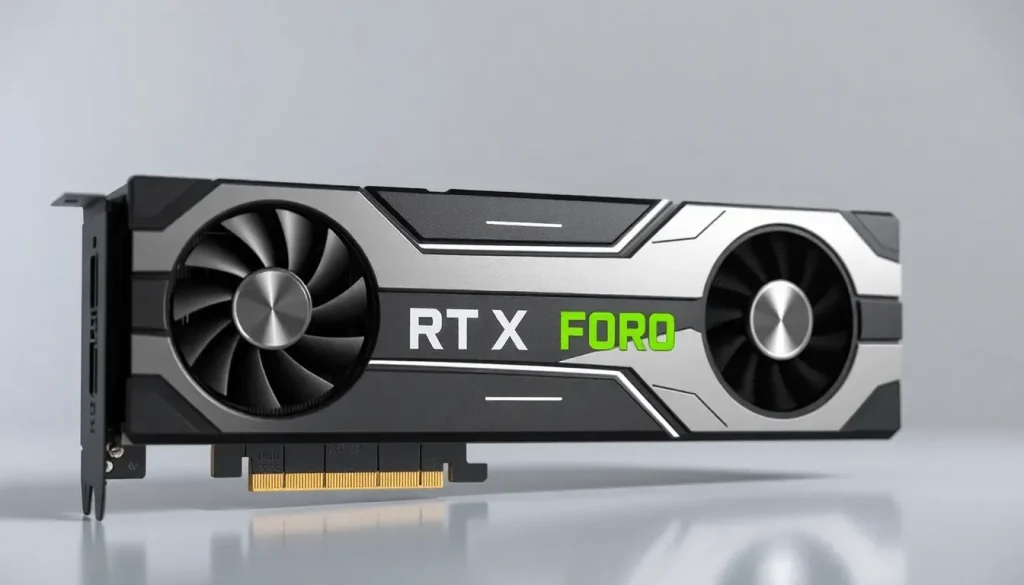
The RTX 5070 impresses with its compact and sleek design. Measuring only 24 cm in length, it is ideal for fitting into compact builds where space is limited. The card features NVIDIA's typical hourglass design, combining black with champagne gold accents that shift in hue depending on the lighting. The overall quality of materials used is premium, maintaining a level consistent with more expensive models.
The Founders Edition version ditches the white LED lighting, which might be perceived as a drawback, especially since the uniform design could benefit from some illumination. On the underside of the card, two fans are positioned at either end, while the GPU is centrally located. This cooling solution employs a three-PCB interconnected design similar to that of higher-end models.
Technological Enhancements with Blackwell Architecture
The GeForce RTX 5070 integrates significant advancements introduced by NVIDIA's Blackwell architecture. These include:
- Support for multi-frame generation.
- Neural shaders for enhanced rendering.
- Native compatibility for FP4 operations, signifying a leap from previous architectures.
GPU Specifications and Innovations
- Built on TSMC's N4 node.
- Utilizes the GB205 core.
Shader Innovations
- Neural rendering-capable shaders.
- Each block of 64 shaders can concurrently handle INT32 and FP32 operations.
- Second-generation Shader Execution Reordering (SER).
AI Developments
- 5th generation Tensor Cores with double the power.
- Native support for INT4 and FP4 operations.
- Integrated transformation engine for DLSS 4.
- Multi-frame generation that produces three additional frames for every conventionally generated frame.
Benchmarking and Performance Testing
To evaluate the RTX 5070's capabilities, various benchmarks were conducted, revealing its potential for both gaming and content creation. Despite its 12GB VRAM limitation, it outperformed even the RTX 4090 in some scenarios due to the Blackwell architecture enhancements. Here’s a glimpse of its performance across various applications:
3DMark Performance with DLSS
This test measures the graphics card's performance with DLSS 4 disabled and then again with it enabled. The RTX 5070 outperforms the RTX 4070 SUPER slightly in native resolution (almost 2 FPS more), but shines with DLSS 4 enabled, achieving a remarkable increase from 30 FPS to 193 FPS.
Video Editing with DaVinci Resolve
In a video editing test utilizing the H.265 4:2:2 10-bit standard, the RTX 5070 completed the task in just 17 seconds, outpacing the RTX 4090, which took 19 seconds due to the hardware acceleration afforded by the RTX 5070.
Blender Rendering Performance
Blender tests, which measure rendering capabilities in samples per second, showed the RTX 5070 competing closely with the RTX 4070 SUPER. Results revealed a slight edge in some scenarios, emphasizing the importance of optimization for RTX series cards.
V-Ray Rendering Test
In this CUDA-based test, the RTX 4070 SUPER initially scored higher, indicating potential optimization issues or driver-related concerns. However, enabling RTX acceleration allowed the RTX 5070 to achieve 6,537 "vpaths," surpassing the 5,512 achieved by the RTX 4070 SUPER.
Gaming Performance of the GeForce RTX 5070
For many potential buyers, gaming performance is paramount. The following tests illustrate how the RTX 5070 performs across various demanding titles, both in rasterization and ray tracing scenarios:
- **Cyberpunk 2077:** RTX 5070 outperforms RTX 4070 SUPER by 11.58% in 1440p and 23.68% in 4K. With DLSS 4 in performance mode, it jumps from 47 FPS to 217 FPS.
- **Alan Wake 2:** Performance is similar to the RTX 4070 SUPER, but the RTX 5070 nearly doubles its FPS with multi-frame generation.
- **Dragon Age: The Veilguard:** The RTX 5070 consistently outperformed the RTX 4070 SUPER by increasing its FPS significantly when multi-frame generation is activated.
- **Dying Light 2:** The RTX 5070 delivers about 10.89% better performance in 1440p and 12.77% in 2160p, especially when ray tracing is applied.
- **Red Dead Redemption 2:** Despite the RTX 4070 SUPER winning by a slim margin across the board, the performance of both cards remains competitive.
Temperature, Consumption, and Latency Analysis
In testing, the RTX 5070 recorded a maximum consumption of 251 watts, with average values between 230 and 245 watts depending on the graphical load. This ensures efficient operation within safe temperature limits, although average temperatures reached 74°C in demanding titles like Cyberpunk 2077.
Latency concerns surrounding multi-frame generation were addressed, revealing that activating DLSS 4 and multi-frame generation reduced latency from 103 milliseconds to 54 milliseconds, providing a smoother gaming experience.
Final Thoughts on the GeForce RTX 5070
The GeForce RTX 5070 stands out as a prime example of how advanced AI technology can significantly enhance gaming experiences, compensating for what might seem like a modest increase in raw power compared to its predecessors. With a performance boost averaging 20% over the RTX 4070 and approximately 5% over the RTX 4070 SUPER, the RTX 5070 is positioned as a competitive option for gamers looking to enjoy high-quality visuals and smooth gameplay at 1440p.
Moreover, the true value of the RTX 5070 lies in its multi-frame generation technology, which can elevate frame rates dramatically—sometimes by as much as 90%—transforming the overall gaming experience. This advancement marks a significant leap in terms of visual fidelity and gameplay fluidity, making the RTX 5070 a compelling choice for gamers at its price point.
The GeForce RTX 5070 is not without its areas for improvement, but when considering its architecture and the innovations it brings to gaming, it is an attractive option for anyone serious about 1440p gaming performance.

Leave a Reply