
Radeon RX 9070 XT review and comparison with GeForce RTX 5070 Ti
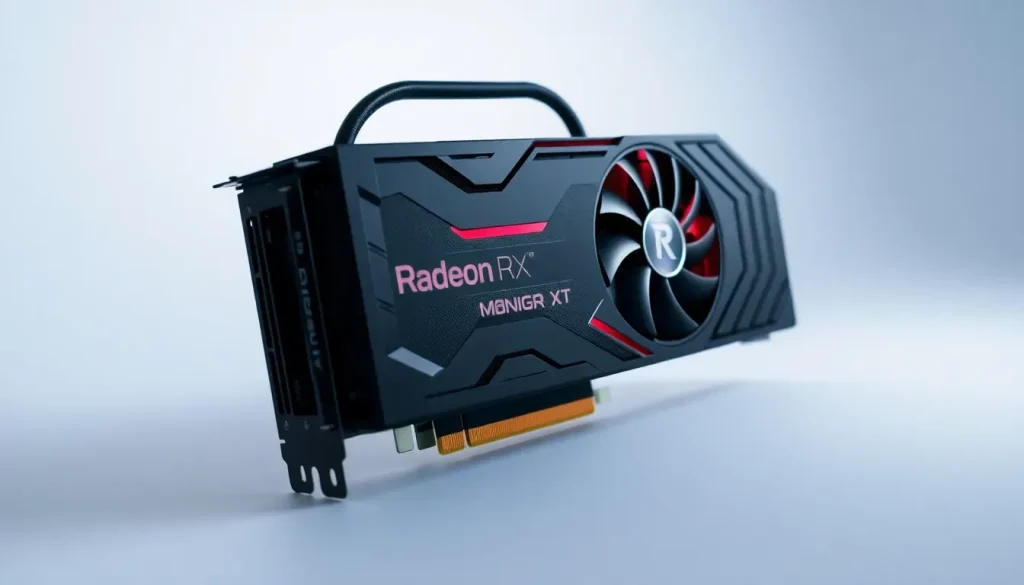
The launch of the AMD Radeon RX 9070 XT marks a significant moment in the graphics card market, particularly as it positions itself against NVIDIA's GeForce RTX 5070 Ti. This competition is not just about numbers; it reflects the ongoing evolution in gaming technology, pushing boundaries in performance, graphics quality, and user experience. In this article, we’ll explore the specifications, performance metrics, and practical applications of these two powerful GPUs, providing a comprehensive understanding of which card stands out in various gaming scenarios.
- Comparing the Radeon RX 9070 XT and the GeForce RTX 5070 Ti
- Specifications of the Radeon RX 9070 XT
- External Analysis and Build Quality
- Architectural Innovations with RDNA 4
- Ray Tracing and AI Cores: A Closer Look
- Testing Environment and Methodology
- Performance Benchmarks: ASUS TUF Gaming RX 9070 XT OC
- Power Consumption and Thermal Performance
- Final Thoughts on the ASUS TUF Gaming RX 9070 XT OC
Comparing the Radeon RX 9070 XT and the GeForce RTX 5070 Ti
When evaluating modern graphics cards, it's essential to differentiate their performance in two key areas: rasterization and ray tracing. Rasterization refers to the traditional method of rendering graphics, while ray tracing simulates the way light interacts with objects, providing realistic reflections and shadows. Additionally, the role of AI technologies like NVIDIA's DLSS and AMD's FSR cannot be overlooked, as they significantly enhance frame rates and image quality in supported games.
Understanding how the RX 9070 XT and RTX 5070 Ti perform in these areas can help gamers make informed decisions based on their specific gaming needs.
Specifications of the Radeon RX 9070 XT
The RX 9070 XT comes equipped with impressive technical specifications that showcase its capabilities:
- GPU Architecture: Navi 48, manufactured using TSMC's 4nm process.
- Transistors: 53.9 billion in a die size of 357mm².
- Compute Units: 64, totaling 4,096 shaders.
- Clock Speeds: Ranges from 2,520 MHz to 3,060 MHz in turbo mode.
- Memory: 16 GB of GDDR6 with a bandwidth of 640 GB/s.
- Ray Tracing Cores: 64 third-generation cores.
- AI Cores: 128 second-generation AI cores for enhanced graphics processing.
- Power Consumption: Total Board Power (TBP) rated at 330 watts.
- Connectivity: Triple 8-pin power connectors and PCIe Gen5 x16 interface.
- Dimensions: 33 cm long, 14 cm high, and 6.3 cm wide, occupying three expansion slots.
- Price: Starting from €909.
External Analysis and Build Quality
The ASUS TUF Gaming RX 9070 XT OC version, which I tested, is not only powerful but also built to last. Its large dimensions mean it occupies three slots, necessitating ample space within your PC case. The initial impression is one of quality, with a robust construction that utilizes military-grade components. Noteworthy features include:
- Durability: Moisture and dust-resistant PCB, high-quality VRM, and TUF 5K capacitors.
- Cooling Efficiency: Three axial fans that move 31% more air than traditional fans.
- Smart Fan Control: Fans turn off below 55°C to reduce noise and power consumption.
- Design: An angular aesthetic with a sleek black and silver color scheme, typical of TUF products.
Architectural Innovations with RDNA 4
AMD's RDNA 4 architecture introduces significant improvements over its predecessors. Key advancements include:
- Efficiency: Enhanced rasterization and compute efficiency.
- Ray Tracing Performance: Substantial improvements in ray tracing capabilities.
- AI Integration: Optimized performance for AI acceleration tasks.
- Increased Bandwidth: High-speed GDDR6 memory at 20 Gbps.
- Codec Support: Improved performance with H.264, HEVC, and support for AV1 and VP9 codecs.
Ray Tracing and AI Cores: A Closer Look
Ray tracing performance is crucial for modern gaming. The RX 9070 XT's third-generation ray tracing cores improve computational efficiency, doubling intersection calculation rates and enhancing BVH compression. Moreover, its second-generation AI cores deliver:
- Significant performance boosts compared to prior generations.
- Natively supports BF8 and FP8 operations.
- Compatibility with new technologies like FSR 4, which enhances image quality through AI.
Testing Environment and Methodology
The performance tests were conducted using a high-end setup to avoid bottlenecks:
- Motherboard: GIGABYTE X870E Aorus Master with the latest BIOS.
- Processor: Ryzen 7 9800X3D, clocked between 4.7 GHz and 5.2 GHz.
- RAM: G.SKILL Trident Z5 NEO RGB at 6,000 MT/s.
- Cooling System: Corsair CUE LINK TITAN 360 RX RGB.
- Storage: WD Black SN850 and Samsung 990 Pro SSDs.
- Power Supply: Corsair HX1500i, rated at 1,500 watts.
- Operating System: Windows 11.
Performance Benchmarks: ASUS TUF Gaming RX 9070 XT OC
The results from synthetic benchmarks provide insights into the RX 9070 XT's capabilities:
Blender Rendering Performance
In a comparative analysis using Blender, the RX 9070 XT faced compatibility issues, making it difficult to benchmark effectively against the RTX 5070 Ti. However, NVIDIA's card completed a rendering job in just 10 seconds, while the RX 9070 XT took 18 seconds, indicating a notable difference in performance.
Gaming Performance Evaluation
In terms of gaming performance, the RX 9070 XT displayed promising results but struggled in some scenarios:
- Red Dead Redemption: Slightly better performance than the RTX 5070 Ti.
- Star Wars Outlaws: Both cards performed similarly in rasterization, but the RTX excelled with ray tracing.
- Cyberpunk 2077: The RX 9070 XT performed well in rasterization but lagged in ray tracing capabilities.
- Black Myth Wukong: The RTX 5070 Ti achieved a much higher frame rate under ray tracing.
These tests highlight that while the RX 9070 XT has strengths, particularly in traditional rasterization, it falls short when competing with NVIDIA's superior ray tracing technology.
Power Consumption and Thermal Performance
In terms of power consumption, the RX 9070 XT maintained an average draw of around 330 watts, peaking at 348 watts during heavy loads. Impressively, it managed to maintain low operational temperatures, with maximum peaks recorded at only 51°C.
Final Thoughts on the ASUS TUF Gaming RX 9070 XT OC
While the ASUS TUF Gaming RX 9070 XT OC may not outperform the RTX 5070 Ti consistently, it presents an attractive option for gamers prioritizing rasterization performance. Its solid build quality, cooling efficiency, and competitive pricing make it a worthy contender in today’s market. However, for those looking to leverage cutting-edge ray tracing and AI enhancements, NVIDIA's offerings still hold a significant advantage.
For a deeper dive into this comparison, check out this informative video:
Leave a Reply