
GIGABYTE GeForce RTX 5080 Gaming OC SFF review: lo que importa
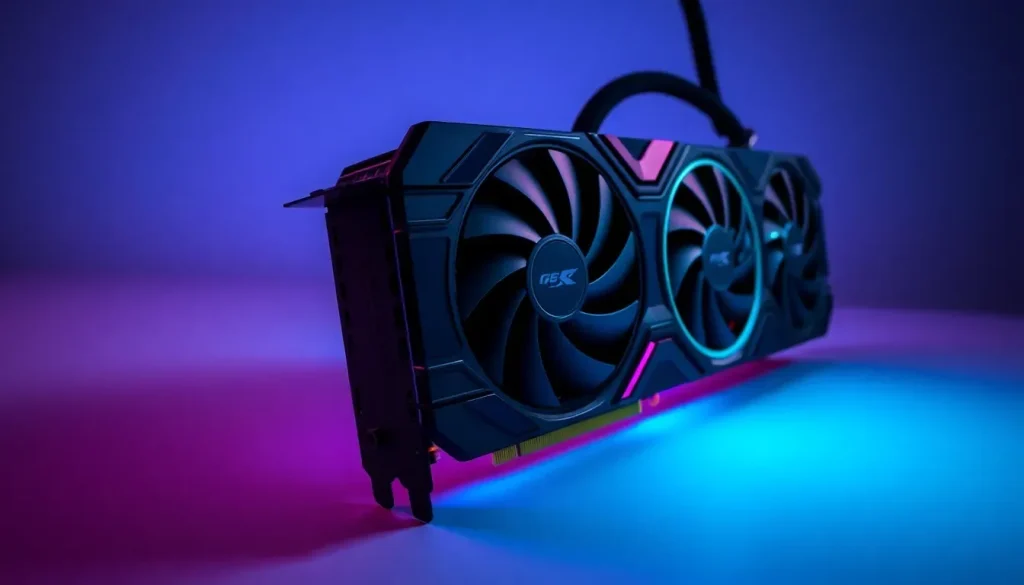
The GIGABYTE GeForce RTX 5080 GAMING OC SFF is a high-end graphics card that stands out for its design and quality of finishes. It aims to maximize value for price and performance, stripping away unnecessary details and flourishes, such as RGB LED lighting, to focus on what truly matters for gamers and content creators alike.
This model may not feature the aesthetics or quality finishes seen in more premium cards, but it compensates with a lower price point compared to its competitors. With its factory overclocking, it is capable of outperforming the GeForce RTX 5080 Founders Edition (FE). The card can be purchased starting from €1,513.
Available only in black, those looking for a similar model in white within the same price range can consider the GIGABYTE GeForce RTX 5080 AERO OC SFF, which features RGB lighting but comes at a slightly higher price.
Among the available GeForce RTX 5080 models on the market, this GIGABYTE option is one of the most economical and balanced in terms of quality and price. For this reason, we have prepared a detailed analysis to explore everything it offers and determine whether it is truly worth it.
Specifications of the GIGABYTE GeForce RTX 5080 GAMING OC SFF
- Graphics core GB203 manufactured on TSMC's N4 node (5 nm).
- 45.6 billion transistors in a 378 mm² package (density of 120.6 million transistors per square millimeter).
- 84 SM units.
- 10,752 shaders at 2.29 GHz and 2.67 GHz.
- 336 texturing units.
- 112 rasterization units.
- 84 fourth-generation RT cores (171 TFLOPs).
- 336 fifth-generation tensor cores (1,801 TOPs).
- 57.41 TFLOPs in FP32.
- 256-bit bus.
- 64 MB of L2 cache.
- PCIe Gen5 interface.
- 16 GB of GDDR7 memory at 30 Gbps (960 GB/s bandwidth).
- TGP of 360 watts, requiring an 850-watt power supply and a 16-pin power connector (450 watts).
- Includes a three 8-pin to one 16-pin power adapter.
- Three DisplayPort 2.1b ports with UHBR20 and one HDMI 2.1b output.
- Dimensions: 30.4 cm long, 12.6 cm wide, and 5 cm high, occupying two expansion slots, making it «SFF (Small Form Factor) Ready».
- Price: starting at €1,513.
External Analysis of the GIGABYTE GeForce RTX 5080 GAMING OC SFF
The packaging presents a classic design. Inside, you’ll find the graphics card safely protected in an anti-static bag, along with a user-friendly mounting system and the aforementioned power adapter.
The GIGABYTE GeForce RTX 5080 GAMING OC SFF is both compact and lightweight, so the mounting system is not essential—especially if your motherboard features a reinforced PCIe slot.
The design of the GIGABYTE GeForce RTX 5080 GAMING OC SFF is simple and understated. The entire chassis is black, complemented by gray details and angular lines that provide a nice contrast, without any RGB lighting.
This model employs the well-known WINDFORCE cooling system, which consists of three Hawk Fan fans that have a redesigned blade shape. This design reduces air resistance and noise, improving air pressure by 53.6% and air flow by 12.5%, resulting in better heat dissipation without compromising noise levels.
The fans utilize double ball bearings and are lubricated with nanographene, a material also used in GIGABYTE's premium GeForce RTX 5080 models. This lubrication method helps to extend the fans' lifespan by up to 2.1 times while also reducing noise.
GIGABYTE has implemented a feature seen in the AORUS GeForce RTX 5080 Master, allowing the fans to rotate alternately. This minimizes turbulence that occurs when all fans spin in the same direction, enhancing airflow pressure.
The GIGABYTE GeForce RTX 5080 GAMING OC SFF is devoid of unnecessary embellishments, yet the Taiwanese giant has not cut corners where it counts. It features a top-notch cooling system, with the three Hawk Fans mounted above an aluminum radiator controlled by a copper contact base with a vapor chamber.
All heat-generating components, such as memory and power system (VRM), make contact with the radiator using a server-grade gel with high thermal conductivity. This gel, unlike traditional thermal pads, ensures optimal contact and faster heat transfer.
On the back of the graphics card, there is a metal backplate that reinforces the structure and aids in cooling. It has an opening on the right side for facilitating airflow. This design choice helps accelerate heat dissipation from the area where heat typically accumulates.
The GIGABYTE GeForce RTX 5080 GAMING OC SFF uses a 16-pin power connector located on the top, easily accessible. Next to it is a switch that allows you to toggle between silent BIOS and performance BIOS. The latter is recommended as it allows the graphics card to unleash its full potential.
The card's rear features image outputs, including three DisplayPort 2.1b ports supporting UHBR20 and an HDMI 2.1b output. Built under the Ultra Durable philosophy, this model includes:
- Low RDS(on) MOSFETs.
- Solid capacitors with lower internal resistance to improve energy efficiency and reduce generated heat.
- A PCB with two ounces of copper for added durability.
Innovations of the Blackwell Architecture
We have previously explored the advancements in detail in other articles. If you wish to learn more about all the innovations introduced with this new architecture, I invite you to check out the analysis of the GeForce RTX 5090, where you will find a comprehensive breakdown of all the new features of this architecture.
Testing Bench Setup
- GIGABYTE X870E Aorus Master motherboard updated to the latest available BIOS.
- Ryzen 7 9800X3D processor with 8 cores and 16 threads operating at 4.7 GHz-5.2 GHz, normal and turbo modes.
- G.SKILL Trident Z5 NEO RGB RAM kit running at 6,000 MT/s with CL30 latencies (AMD EXPO profile).
- Corsair CUE LINK TITAN 360 RX RGB all-in-one liquid cooling system with three 120 mm fans.
- GIGABYTE GeForce RTX 5080 GAMING OC SFF graphics card.
- WD Black SN850 2 TB SSD with PCIe Gen4 x4 interface, capable of reaching 7,000 MB/s and 5,300 MB/s in sequential read and write.
- Samsung 990 Pro PCIe Gen 4 x4 1 TB SSD with sequential read speeds of 7,450 MB/s and write speeds of 6,900 MB/s.
- Corsair HX1500i 1,500-watt power supply with 80 Plus Platinum certification.
- Corsair XTM70 thermal paste.
- Windows 11 operating system.
This testing setup represents a top-tier PC, integrating high-performance components, a robust cooling system, and a power supply that exceeds the requirements for any graphics card. All components enable optimal performance without bottlenecking.
Performance of the GIGABYTE GeForce RTX 5080 GAMING OC SFF
Professional Applications and Synthetic Tests
The following tests allow us to evaluate the performance capabilities of the GIGABYTE GeForce RTX 5080 GAMING OC SFF in professional scenarios, including video editing, content creation, and rendering. They also help us isolate performance data using AI, upscaling, frame generation, and ray tracing.
3DMark DLSS
This benchmark measures the impact of DLSS 4 technology with multi-frame generation on performance in a scenario comparable to demanding current games. Without DLSS 4 or multi-frame generation, we achieved 49 FPS, while with both technologies, the average rose to 295 FPS, surpassing the 48 FPS and 285 FPS of the GeForce RTX 5080 FE.
Blender
This highly demanding rendering test measures performance in samples per minute. The GIGABYTE GeForce RTX 5080 GAMING OC SFF achieves 4,484 samples per minute in "monster", 2,376 samples in "junkshop", and 2,311 samples in "classroom." In comparison, the GeForce RTX 5080 FE records 4,409 samples in "monster", 2,304 in "junkshop", and 2,270 in "classroom". The GIGABYTE model edges out by a small margin in this test.
V-Ray
This rendering test utilizes specialized hardware to accelerate ray tracing. The GIGABYTE GeForce RTX 5080 GAMING OC SFF achieves 2,518 "vpaths" in CUDA mode and 9,374 "vpaths" in RTX mode. Compared to the FE model, which scores 2,442 and 9,256 "vpaths" respectively, this demonstrates a slight advantage for the GIGABYTE model.
PassMark
In this benchmark, we achieved a score of 44,689, placing the GIGABYTE GeForce RTX 5080 GAMING OC SFF above 99% of the graphics cards in the PassMark database. The GeForce RTX 4080 FE scored 43,702 points.
DaVinci Resolve
Utilizing H.265 4:2.2 10-bit, the average rendering time with DaVinci Resolve is 10 seconds, the same as the GeForce RTX 5080 FE. The GeForce RTX 4090 takes 19 seconds for this same test.
Procyon Flux 1.4
This test measures the performance of the GIGABYTE GeForce RTX 5080 GAMING OC SFF working with FP4 operations, one of the significant innovations of the Blackwell architecture concerning AI. The average image generation time with this graphics card is 9.03 seconds, slightly better than the 9.16 seconds recorded by the FE.
Gaming Performance: Rasterization and Ray Tracing
The GIGABYTE GeForce RTX 5080 GAMING OC SFF is a high-end graphics card designed for 2160p gaming, but it also performs well at 1440p, especially for games with ray tracing enabled at maximum settings.
With its factory overclock, we can expect this model to slightly outperform the performance values previously recorded with the GeForce RTX 5080 FE, although it should remain below the AORUS GeForce RTX 5080 MASTER, which is one of the most powerful and well-built RTX 5080 models available. Let’s take a look at the results.
GIGABYTE GeForce RTX 5080 GAMING OC SFF Compared to GeForce RTX 5080 FE
To clarify the performance differences between the two graphics cards, I have prepared a graph that represents these values in relative percentages. The GIGABYTE GeForce RTX 5080 GAMING OC SFF is 1.94% more powerful than the Founders Edition model at 1440p and 1.95% faster at 4K.
When ray tracing is activated, the difference in favor of the GIGABYTE GeForce RTX 5080 GAMING OC SFF becomes more noticeable. It wins by 2.14% at 1440p with ray tracing, and 2.49% at 4K with ray tracing.
With DLSS enabled in performance mode along with frame generation at 4K, the GIGABYTE model achieves a 2.79% advantage. These differences are small but significant enough to give the GIGABYTE GeForce RTX 5080 GAMING OC SFF a slight edge in terms of power.
Latency, Consumption, Temperature, and Frequency Scaling
First, let’s compare the temperatures of the GIGABYTE GeForce RTX 5080 GAMING OC SFF and the GeForce RTX 5080 Founders Edition. The GIGABYTE version registers slightly higher values, but they are perfectly acceptable, allowing the card to develop its full potential and scale to turbo mode without issues.
During basic desktop usage, the fans are off, and the temperature gradually rises, so I recorded the average obtained in the first two minutes of use after powering on the system.
Now, let’s look at the consumption. The values are quite similar between both models, although the GIGABYTE GeForce RTX 5080 GAMING OC SFF has a slightly higher peak consumption, which is entirely logical due to its mild overclocking. Overall, the average values for this model hover around 330-340 watts.
Moving on to frequency scaling, we find very stable values that exceed those reached by the GeForce RTX 5080 FE. The latter reached a peak of 2,785 MHz during my tests, which is below the minimum recorded for the GIGABYTE GeForce RTX 5080 GAMING OC SFF, 2,790 MHz.
The maximum value I recorded with the GIGABYTE model was 2,850 MHz, but it does not maintain this consistently. Typically, it fluctuates between 2,820 MHz and 2,827 MHz.
Lastly, let’s examine latency and how it varies when using DLSS 4 and multi-frame generation in Cyberpunk 2077, one of the most demanding games compatible with these technologies.
Without DLSS 4 or multi-frame generation, we have a latency of 54 and 89 at 2160p with ray tracing and path tracing, respectively. When activating these technologies in performance mode, we see the latency drop to 36 milliseconds and 46 milliseconds, respectively.
In-Depth Performance Review
This analysis confirms that the GIGABYTE GeForce RTX 5080 GAMING OC SFF is among the best options available in its price range. Its aesthetics are very understated compared to what we usually see in graphics cards marketed as "gaming," but there is a reason for this: GIGABYTE has opted for a sober design and focused its efforts on build quality.
The materials used and the cooling system of the GIGABYTE GeForce RTX 5080 GAMING OC SFF are characteristic of more expensive models, and as we have seen, the operating temperatures remain within optimal levels, allowing ample room for overclocking if desired. However, keep in mind that this will not only increase consumption but also elevate operating temperatures.
Regarding performance, the results align with expectations, with an average improvement of 2.14% at 4K under native resolution, along with better scaling when activating DLSS and frame generation. With this graphics card, we can easily play even at 4K with path tracing enabled, as long as we activate DLSS 4, ray reconstruction, and frame generation.
The difference made by these three technologies is significant, as evidenced by Cyberpunk 2077, where we can jump from 19 FPS to 130 FPS using DLSS 4 in quality mode with the new transformation model. This model further enhances the image quality of upscaling, positively impacting the quality of generated frames, which rely on pixel information from each traditionally rendered frame and depend on their quality.
It’s understandable that you’re considering the price difference between this model and the GeForce RTX 5080 FE, and it’s true that it’s considerable. However, this model is currently completely sold out, and unfortunately, the reality of the current market does not reflect the minimum recommended price provided by NVIDIA. Nowadays, if you look for a GeForce RTX 5080 at reputable stores with a good cooling system and factory overclocking, it’s typical to find models priced over €1,500.
With this dose of realism on the table, the GIGABYTE GeForce RTX 5080 GAMING OC SFF holds its own well, and as mentioned before, it is a strong option to consider. If you’re looking for a model with a bit of color since you prefer RGB lighting but want to maintain this design and cooling system, you have the option of the GIGABYTE GeForce RTX 5080 GAMING OC, which is a bit more expensive.

Leave a Reply