
Palit GeForce RTX 5060 Ti Infinity 3 16 GB review y simplicidad
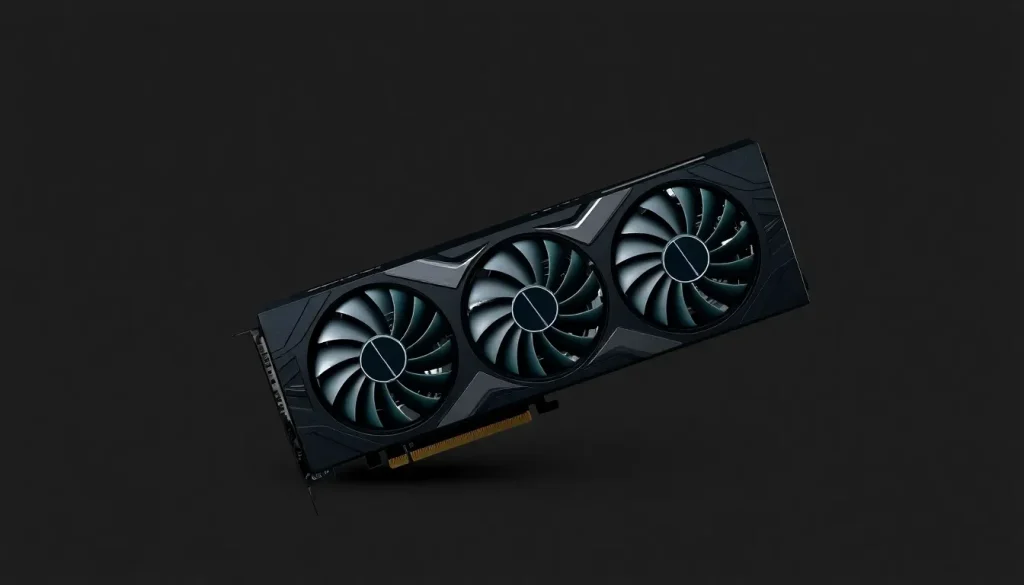
The Palit GeForce RTX 5060 Ti Infinity 3 is not just another graphics card; it represents a thoughtful and strategic choice for gamers and creators alike. With its straightforward yet effective design, this card promises a balanced blend of performance and affordability, making it a compelling option in the current GPU market.
For those prioritizing price-performance value, the Palit GeForce RTX 5060 Ti Infinity 3 with 16 GB of memory stands out as a noteworthy contender. Set to debut at a competitive price of 449 euros, this card aligns well with NVIDIA's recommended pricing, making it an attractive offering for budget-conscious consumers.
- Unpacking the Palit GeForce RTX 5060 Ti Infinity 3
- Specifications of the Palit GeForce RTX 5060 Ti Infinity 3
- First Impressions of the Palit GeForce RTX 5060 Ti Infinity 3
- Exploring the Blackwell Architecture Innovations
- Testing Setup
- Performance Analysis in Professional Applications
- Gaming Performance of the Palit GeForce RTX 5060 Ti Infinity 3
- Temperature, Power Consumption, Latency, and Frequency Scaling
- Palit GeForce RTX 5060 Ti Infinity 3 vs. GIGABYTE GeForce RTX 4060 Ti Eagle
- Final Thoughts on the Palit GeForce RTX 5060 Ti Infinity 3
Unpacking the Palit GeForce RTX 5060 Ti Infinity 3
When comparing the Palit model to competitors like the GIGABYTE GeForce RTX 5060 Ti Eagle OC Ice, the distinctions become apparent. The Palit variant is longer and features a more understated design, which may reflect in its lower build quality. However, this modesty could allow it to more easily meet NVIDIA's lowest recommended price, enhancing its appeal.
In this analysis, we will delve into the performance metrics of the Palit GeForce RTX 5060 Ti Infinity 3, assessing its efficiency in comparison to the GeForce RTX 4060 Ti, as well as evaluating its consumption rates and thermal characteristics. Let's dive in.
Specifications of the Palit GeForce RTX 5060 Ti Infinity 3
The technical specifications reveal the capabilities of the Palit GeForce RTX 5060 Ti Infinity 3:
- GPU: GB206 manufactured on TSMC's N4 node (5 nm).
- SM Units: 36.
- Shaders: 4,608 at 2.4 GHz and 2.57 GHz.
- Texture Units: 144.
- Raster Units: 48.
- RT Cores: 36 fourth-generation (72 TFLOPs).
- Tensor Cores: 144 fifth-generation (759 TFLOPs).
- FP32 Performance: 23.7 TFLOPs.
- Bus Width: 128 bits.
- L2 Cache: 32 MB.
- PCIe Interface: Gen5 8x.
- Memory: 16 GB GDDR7 at 28 Gbps, yielding a bandwidth of 448 GB/s.
- TGP: 180 watts.
- Power Connector: 8-pin.
- Outputs: Three DisplayPort 2.1b with UHBR20 and one HDMI 2.1b.
- Dimensions: 29 cm long, 12.5 cm wide, and 4.1 cm high, occupying two expansion slots, thus it is “SFF (Small Form Factor) Ready”.
- Starting Price: 459 euros.
First Impressions of the Palit GeForce RTX 5060 Ti Infinity 3
Upon unboxing, one of the most striking features of this graphics card is its light weight. This is largely due to the use of plastic in both the front and back panels, where the PCB typically provides structural integrity.
Weighing in at only 709 grams, the card's lightness eliminates the need for additional support despite its considerable length. The overall build quality may be somewhat modest, which is to be expected for this price range, but it should positively impact the final retail price.
The front of the card is equipped with three fans situated on an aluminum heatsink, which interfaces with the GPU, memory, and VRM. Palit has opted for thermal paste based on copper for contact with the GPU, complemented by thermal pads to ensure efficient heat dissipation across other components.
Aesthetically, the design is simple, featuring a black plastic chassis with concentric circular lines and minimal contrast aside from the silver accents on the center of the fans, which prominently display the Palit logo.
On the upper side, the “GeForce RTX” and “Infinity” branding is printed in white, alongside the conveniently located 8-pin power connector, ensuring ease of access during installation.
Switching to the back, we find a plastic plate that offers some structural support but does not contribute to cooling; its design includes an opening on the right side to enhance airflow for the heatsink.
The rear also houses the output ports: three DisplayPort 2.1b with UHBR20 and one HDMI 2.1b, along with a vent that facilitates exhaust airflow. Overall, this model embodies a straightforward yet functional approach.
Exploring the Blackwell Architecture Innovations
The Blackwell architecture brings several advancements that have been discussed extensively in previous analyses, including the GeForce RTX 5090 analysis. For those seeking in-depth knowledge, I encourage you to explore that article for a comprehensive understanding of the innovations introduced.
Testing Setup
For our performance evaluations, we utilized the following setup:
- Motherboard: GIGABYTE X870E Aorus Master, updated to the latest BIOS.
- Processor: Ryzen 7 9800X3D with 8 cores and 16 threads, clocked at 4.7 GHz-5.2 GHz in normal and turbo modes.
- RAM: G.SKILL Trident Z5 NEO RGB at 6,000 MT/s with CL30 latencies (AMD EXPO profile).
- Cooling: Corsair CUE LINK TITAN 360 RX RGB AIO with three 120 mm fans.
- Graphics Card: Palit GeForce RTX 5060 Ti Infinity 3 with 16 GB.
- Storage: WD Black SN850 2 TB PCIe Gen4 x4 SSD, reaching speeds of 7,000 MB/s read and 5,300 MB/s write.
- Storage: Samsung 990 Pro PCIe Gen 4 x4 1 TB SSD, capable of 7,450 MB/s read and 6,900 MB/s write speeds.
- Power Supply: Corsair HX1500i 1,500-watt 80 Plus Platinum certified.
- Thermal Paste: Corsair XTM70.
- Operating System: Windows 11.
This rigorous testing environment allows for a thorough evaluation of the Palit GeForce RTX 5060 Ti Infinity 3, ensuring no bottlenecking from other components.
Performance Analysis in Professional Applications
The Palit GeForce RTX 5060 Ti Infinity 3 shines in professional scenarios, particularly due to its native support for FP4 operations and compatibility with the H.265 4:2:2 standard. Its 16 GB of memory proves beneficial in handling resource-intensive tasks.
Performance in DaVinci Resolve
In video editing and rendering tests, the Palit GeForce RTX 5060 Ti Infinity 3 completes the task in just 17 seconds using H.265 4:2:2 10-bit encoding. This performance surpasses even the GeForce RTX 4090, which takes 19 seconds under identical conditions.
3DMark DLSS Benchmark
This benchmark assesses the card's performance in demanding 3D scenarios. Without DLSS, the Palit GeForce RTX 5060 Ti Infinity 3 achieves 21.92 FPS, but with DLSS enabled (using MFG at 4x), the performance skyrockets to 139.02 FPS, nearly a twelvefold increase in frame rate.
Compared to the GIGABYTE GeForce RTX 5060 Ti Eagle OC, the Palit model falls slightly behind, with GIGABYTE registering 22.08 FPS and 140.42 FPS respectively.
V-Ray Performance
In this demanding rendering test that utilizes ray tracing, the Palit GeForce RTX 5060 Ti Infinity 3 achieves 2,831 "vpaths" in CUDA mode, and 4,373 "vpaths" with hardware acceleration (RTX mode). The GIGABYTE model, with its factory overclock, performs slightly better at 2,886 and 4,433 "vpaths".
Blender Rendering Performance
For Blender, which measures performance in samples per second, the Palit card scores 2,070, 1,132, and 1,133 samples per minute in the "Monster," "Junkshop," and "Classroom" tests, once again trailing behind the GIGABYTE offering.
PassMark Benchmark
Utilizing the PassMark test, the Palit GeForce RTX 5060 Ti Infinity 3 scores 29,884 points, outperforming 95% of results in the PassMark database. The GIGABYTE model notches 30,315 points, while the GeForce RTX 4060 Ti scores 27,221 points.
Procyon Flux 1.4 Performance
This benchmark leverages FP4 operations and tensor cores for image generation, with the Palit card achieving an average image generation time of 18.08 seconds, slightly trailing behind the GeForce RTX 4090's 17.24 seconds, where lower times indicate better performance.
Gaming Performance of the Palit GeForce RTX 5060 Ti Infinity 3
The gaming performance of the Palit GeForce RTX 5060 Ti Infinity 3 is largely on par with what the GIGABYTE GeForce RTX 5060 Ti Eagle OC offers. This is not surprising given their similar specifications.
The GIGABYTE model edges out slightly due to its factory overclock, with performance differences ranging from 1% to 2% depending on the resolution and game.
- 1080p: 16.08% faster than the GeForce RTX 4060 Ti.
- 1440p: 22.07% faster.
- 2160p: 36.61% faster.
- 1080p with ray tracing: 44.34% faster.
- 1440p with ray tracing: 74.36% faster.
Temperature, Power Consumption, Latency, and Frequency Scaling
Despite its modest cooling design, the Palit GeForce RTX 5060 Ti Infinity 3 maintains impressive thermal performance, generally keeping the GPU temperature below 70 degrees Celsius, with averages hovering between 65 and 68 degrees depending on the specific game.
Power consumption is predictable, typically remaining below 170 watts, peaking at 177 watts under heavy load conditions such as ray tracing in Cyberpunk 2077. These figures are well within safe and reasonable limits.
Frequency scaling is stable, with fluctuations so minor that the difference between minimum and maximum values in gameplay is just 23 MHz. This indicates efficient scaling and consistent performance.
Latency, when using DLSS 4 and frame generation, shows a notable reduction compared to native values. Enabling ray tracing brings latency down from 95 ms to 54 ms, which is considered optimal.
Palit GeForce RTX 5060 Ti Infinity 3 vs. GIGABYTE GeForce RTX 4060 Ti Eagle
In this section, we will compare the performance differences between the Palit and GIGABYTE models. It's crucial to note that the GIGABYTE version is the 8 GB model, which limits its performance in various games, particularly when ray tracing is enabled. This leads to significant performance disparities at higher resolutions.
On average, the Palit GeForce RTX 5060 Ti Infinity 3 demonstrates a substantial performance advantage:
- 16.08% faster at 1080p.
- 22.07% faster at 1440p.
- 36.61% faster at 2160p.
- 44.34% faster at 1080p with ray tracing.
- 74.36% faster at 1440p with ray tracing.
In scenarios where memory is less critical, such as 1080p, the disparity narrows, with the Palit card being approximately 16% faster than the GeForce RTX 4060 Ti Eagle. It’s essential to consider that at higher resolutions, memory bandwidth and the advanced RT cores of the Palit model provide enhanced performance compared to its competitor.
Final Thoughts on the Palit GeForce RTX 5060 Ti Infinity 3
The Palit GeForce RTX 5060 Ti Infinity 3 effectively meets its design goals, presenting a discreet yet efficient product that maintains a competitive price point without compromising on essential build quality or thermal performance.
Throughout testing, the card demonstrated safe temperature values that facilitated stable frequency scaling and reliable operation. Operating at NVIDIA's benchmark speeds, it lacks factory overclocking; however, manual adjustments can be made without exceeding the 180-watt TGP limit.
With access to critical technologies from the Blackwell architecture, including DLSS and frame generation, gamers can expect a satisfying experience at both 1080p and 1440p resolutions, even with ray tracing enabled in most scenarios. It is also capable of handling 4K gaming without significantly compromising graphic quality, thanks to the power of DLSS 4 and frame generation.
If priced near its recommended retail value or slightly higher, the Palit GeForce RTX 5060 Ti Infinity 3 stands as a compelling alternative to more expensive models, particularly for gamers who wish to enjoy 1440p gameplay or high-quality 1080p gaming with ray tracing at maximum settings.
For those interested in visual reviews, you may check this video for a comprehensive overview:



Leave a Reply