
Samsung 990 Pro vs Seagate Firecuda 530 Comparison Guide
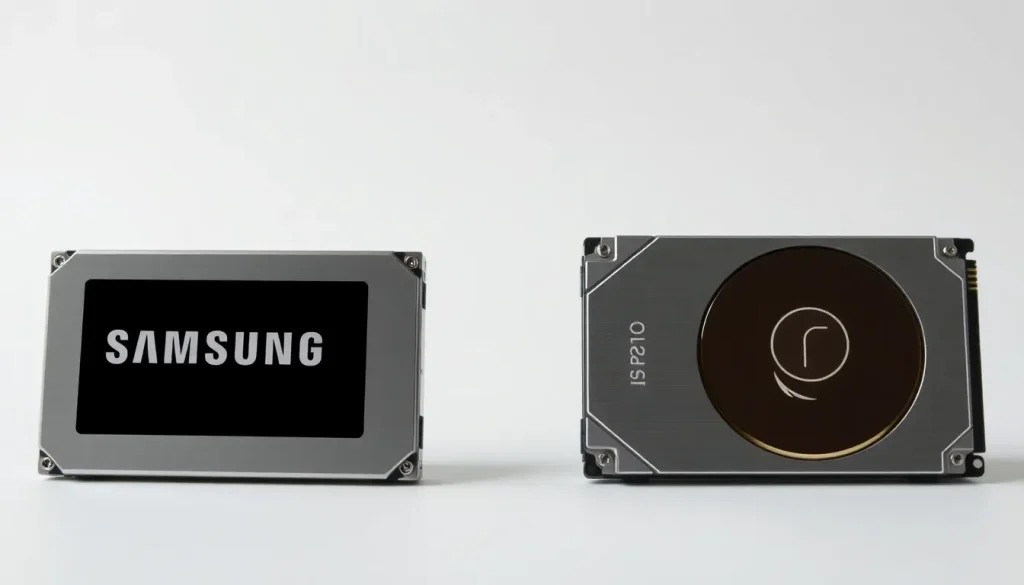
When it comes to choosing the best SSD for gaming or high-performance tasks, two names frequently emerge: the Samsung 990 Pro and the Seagate FireCuda 530. Both drives promise exceptional speed and reliability, but which one truly delivers? In this article, we’ll dive deep into their specifications, performance metrics, and other critical factors to help you make an informed decision.
The competition between high-end SSDs has never been fiercer, and understanding the nuances of each product is essential for maximizing your investment. Let's explore the intricate details of these two formidable contenders.
Performance Overview: A Head-to-Head Comparison
Both the Samsung 990 Pro and Seagate FireCuda 530 are PCIe Gen 4 NVMe SSDs designed for high-end performance, but they cater to different user needs and exhibit varying strengths.
The Samsung 990 Pro, launched in 2023, incorporates the advanced NVMe 2.0 technology coupled with Samsung's proprietary Pascal controller and V8 V-NAND. This ensures not only higher speeds but also robust performance for demanding applications.
In contrast, the Seagate FireCuda 530, while still impressive, was introduced in 2020. It uses the Phison E18 controller and B47R TLC NAND technology, which, although still competitive, shows signs of aging against the latest advancements in SSD technology.
Benchmark Scores Comparison
To illustrate the differences in performance, we’ll look at benchmark scores from both drives, specifically focusing on their 2TB variants.
PCMark 10 Benchmark
In the PCMark 10 tests, the Samsung 990 Pro outperformed the FireCuda 530 significantly, achieving an overall score of 4,651 compared to FireCuda’s 3,280. This is indicative of better bandwidth and lower latency, which translates into quicker access to data and responsiveness in real-world tasks.
- 990 Pro Overall Score: 4,651
- FireCuda 530 Overall Score: 3,280
- 990 Pro Bandwidth: 743 MB/s
- FireCuda 530 Bandwidth: 533 MB/s
- 990 Pro Latency: 36 µs
- FireCuda 530 Latency: 52 µs
3DMark Storage Test for Gamers
In gaming benchmarks, the 990 Pro again took the lead with a score of 4,816 versus the FireCuda’s 4,113. This performance gap is reinforced by superior bandwidth, enabling faster loading times in games and applications.
CrystalDiskMark Sequential Read/Write Performance
In terms of sequential read/write performance, the Samsung 990 Pro has a consistent edge, showing 2-3% faster read speeds across the board. The FireCuda 530, however, performs better at burst write speeds under certain conditions, such as QD1.
Random Read/Write Performance
Random I/O performance shows more pronounced differences. The 990 Pro excels in high-queue-depth scenarios, providing nearly 55% better read speeds and 60% better write speeds compared to the FireCuda 530. Conversely, under lighter workloads, the FireCuda shines in write speed performance.
File Transfer Rate
When transferring large files, the Samsung 990 Pro demonstrates its prowess, moving a 50GB folder roughly 15% faster than the FireCuda 530, making it the preferred choice for tasks that involve handling large data volumes.
Endurance and Reliability: TBW, DWPD, MTBF, and Warranty
Endurance is a critical factor for users involved in write-intensive tasks. Here, the FireCuda 530 excels, boasting TBW (Terabytes Written) ratings almost double that of the 990 Pro, along with a significantly higher DWPD (Drive Writes Per Day) rating.
- FireCuda 530 TBW: Higher than 990 Pro
- FireCuda 530 DWPD: More than double 990 Pro
- MTBF (Mean Time Between Failures) is also more favorable for FireCuda 530
This makes the FireCuda 530 a better option for heavy-duty applications like professional video editing or data logging, while the 990 Pro is suited for consumer-level tasks where endurance is less of a concern.
Technical Specifications: What’s Under the Hood?
Examining the technical specifications reveals the underlying capabilities of both SSDs. The Samsung 990 Pro features:
- Pascal controller with Cortex-R8 cores
- 236-layer V-NAND running at double the interface speed
- Static and dynamic SLC cache for more consistent performance
On the other hand, the FireCuda 530 relies solely on dynamic caching. While it offers greater endurance, the overall architecture of the 990 Pro leads to better performance in terms of speed and latency.
Pricing Trends and Market Positioning
Pricing can significantly influence your choice. Generally, the Seagate FireCuda 530 is priced higher than the Samsung 990 Pro, despite its slightly older technology. Prices can fluctuate based on market trends, sales, and retailer offerings. Therefore, it’s advisable to conduct research before committing to a purchase.
Which One Should You Choose?
Ultimately, if you seek top-tier performance, efficient power consumption, and advanced technology, the Samsung 990 Pro is the clear winner in most categories. Its impressive specifications, thermal efficiency, and overall performance make it the best option for gamers and professionals alike.
Conversely, if your focus is on endurance, and you engage in heavy writing tasks, the FireCuda 530 may still be a viable choice, particularly if you can find it at a discount. However, for most users, the 990 Pro stands out as the superior option.
To further enhance your understanding of these drives, you might find this video comparing them helpful:



Leave a Reply