
AI and the New Arms Race in Trucking Cybersecurity
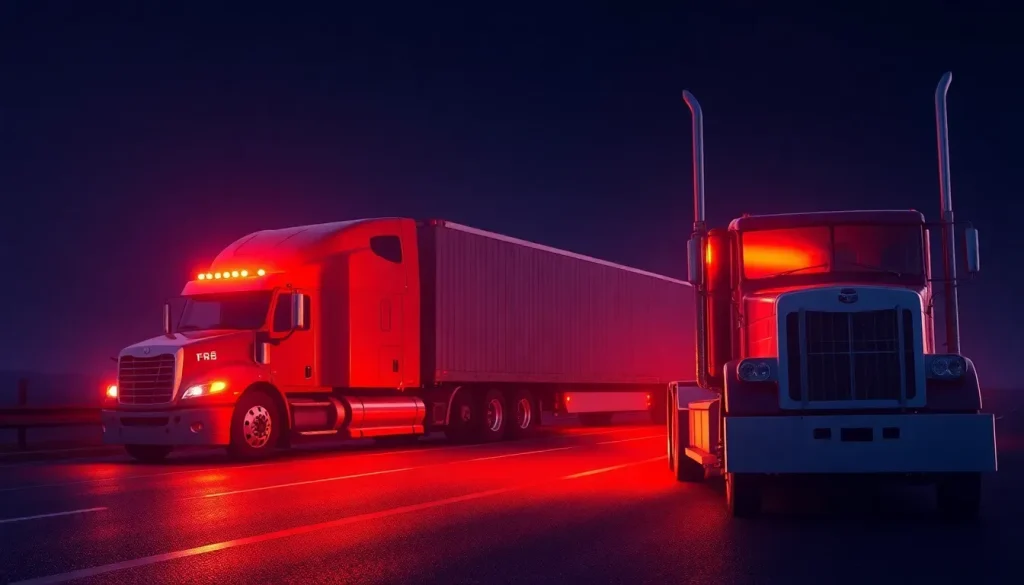
The world of cybersecurity is undergoing a transformative shift, primarily driven by advancements in artificial intelligence (AI). This evolution is particularly evident in the trucking industry, where the stakes are high, and the threats are becoming increasingly sophisticated. As companies strive to enhance their defenses against cyberattacks, they must also contend with the reality that attackers are leveraging AI to breach systems more effectively than ever before.
During a recent cybersecurity panel at ATA MCE 2025, industry experts gathered to discuss these pressing issues. Key figures included John Paape, CIO of Roehl Transport, Joe Russo, VP of IT and Security at ISAAC, and Ben Barnes, CIO of McLeod Software. Their insights illuminated how AI is reshaping the cybersecurity landscape for trucking fleets.
Understanding the Impact of AI on Cybersecurity
Artificial intelligence is not just a technological trend; it is fundamentally altering the dynamics of cybersecurity. The rapid pace of AI development means that tasks that once took weeks can now be completed in a fraction of the time. However, this acceleration comes with significant risks. Fleets are increasingly adopting AI to bolster their defenses, yet cybercriminals are also employing the same technology to enhance their attack strategies.
According to Paape, "AI adds another complexity from a security perspective for sure." The speed at which AI operates is redefining both opportunities for fleet operations and the risks associated with cybersecurity breaches. As fleets utilize AI in areas such as analytics, routing, and predictive maintenance, they must simultaneously enhance their capabilities to defend against AI-driven attacks.
The Dual Nature of AI: An Ally and an Adversary
The panelists referred to AI as a "double-edged sword." On one side, it serves as an invaluable ally in enhancing cybersecurity measures; on the other, it becomes a formidable adversary in the hands of malicious actors.
As noted by Barnes, "Cybersecurity vendors have leaned into it for better analysis." However, the criminals are also leveraging AI's capabilities. IBM’s latest threat report indicates that a staggering 16% of all cyberattacks last year were driven by AI, a figure expected to rise as generative tools become more accessible. Attackers use AI to:
- Automate phishing campaigns
- Refine and enhance malware
- Adapt attacks in real-time to bypass defenses
In response, fleets are utilizing AI to analyze vast data streams, identify anomalies, and respond more swiftly to incidents. "We’ve implemented several AI tools just so we can respond in pace with the complexity and speed of attacks," Paape explained. The integration of AI is no longer optional; it is essential for maintaining a robust security posture.
Securing AI Models and Data
As fleets adopt AI-driven tools, they face new vulnerabilities that traditional cybersecurity frameworks were not designed to address. The focus must shift from merely securing networks to ensuring that the AI models themselves are protected.
Paape emphasized critical questions that need to be addressed: “Are those models secured? Who has access? How are you authenticating into those models? How are you protecting your data?” These inquiries highlight the necessity of prioritizing security at the algorithmic level.
Russo added that fleets should scrutinize AI vendors with the same diligence as they do with other technology providers. In contrast to industries with established data security standards, such as HIPAA for healthcare or PCI-DSS for retail, the trucking sector currently lacks a unified framework for AI security. Russo stated, "That’s one piece that’s missing in this sector." Until such standards are established, fleets must develop their own AI governance policies, which include:
- Classifying AI vendors
- Setting access controls
- Reviewing AI models for biases
AI is also reshaping the human elements of cybersecurity, particularly in social engineering tactics. Attackers increasingly utilize advanced technologies, such as deepfake voice and video, to create realistic social engineering schemes.
Paape shared a cautionary case study: "They’re making a call from a high-ranking person in the organization. Now there’s trust established—and then they send the email. That’s the attacker." This highlights the danger of AI-generated impersonations, which can lead employees to make costly mistakes, such as opening malicious attachments or transferring funds.
Moreover, collaborative platforms like Microsoft Teams and Zoom have emerged as new attack surfaces. Barnes observed, “I’ve seen examples of a whole meeting that took place with three or four people on a Teams call, and only one of them was real.” To combat these threats, Russo recommended integrating AI-enabled deception scenarios into business continuity testing, training employees to detect subtle behavioral cues that might indicate a scam.
Harnessing AI as a Cybersecurity Ally
Despite the inherent risks, fleets are reaping substantial benefits from AI’s efficiency in enhancing cybersecurity measures. For instance, AI can automate penetration testing, allowing IT teams to identify vulnerabilities more quickly and thoroughly than manual methods.
Russo remarked, "AI’s purpose is to make you happy," stressing the importance of precision in queries. The effectiveness of AI in cybersecurity is contingent on how well it is directed. Furthermore, fostering a culture of cybersecurity awareness within organizations remains crucial. By integrating AI-focused education into training programs, fleets can better prepare their staff to understand both the capabilities and the threats posed by AI.
Intent and Leadership in AI Security
The panelists unanimously agreed that AI should not be viewed as a standalone security solution but rather as an amplifier of existing security frameworks. It enhances whatever foundation fleets already have, which means that leadership and intent play significant roles in determining whether AI becomes a protective measure or a potential liability.
Paape advised, "Make it a point to meet regularly with your IT security team. Ask them what keeps them up at night—and make sure your backups and data protection are ready for whatever comes next." This proactive approach is essential in a landscape where AI will continue to influence the digital realm.
The trucking fleets that will thrive in this evolving environment are those that utilize AI intentionally, establish clear security frameworks, and recognize that the relationship of trust between people, systems, and data remains the most robust defense against cyber threats.
For a deeper understanding of how AI and cybersecurity intersect, consider watching this informative video:


Leave a Reply