
DNA Data Storage Challenges: Physics vs. Economics
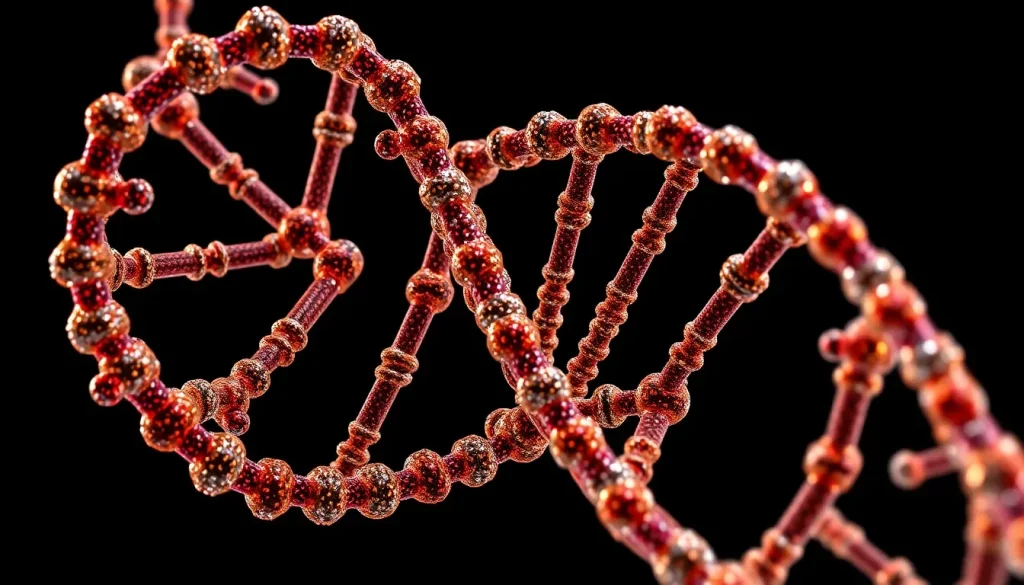
Imagine a future where all the world's knowledge is stored in a molecule that has existed for billions of years. DNA's potential to revolutionize data storage is astounding, but it remains largely untapped due to economic challenges. What stands in the way of this remarkable advancement?
As humanity progresses, every few centuries we reinvent the methods we use to remember our history and store information. From clay tablets to paper, and from magnetic tapes to silicon chips, each evolution has made storage faster, cheaper, and denser. However, none of these technologies have provided a truly permanent solution. Digital formats decay over time, and the search for a more enduring method continues. Enter DNA, a molecule that has preserved the codes of life for eons, now beckoned to perform a similar feat for our data.
The promise of DNA in data storage
DNA and its related molecules have fundamentally changed our approach to biology, medicine, and agriculture. The ability to read, understand, and manipulate DNA has revolutionized our capabilities in treating diseases and engineering organisms. However, the technology has yet to fulfill one of its most talked-about potentials: transforming the way we store the immense volumes of data we generate.
Every year, humanity creates more digital information than traditional media can handle economically. For over a decade, researchers and tech enthusiasts have pointed to DNA as the ideal solution. Renowned for its incredible data density and long-term stability, DNA could serve as nature’s preferred medium for storing and transmitting information.
Once data is inscribed in DNA, it can be copied with ease and at a relatively low cost. Recent advances in genomics have significantly reduced the expenses associated with reading DNA. The potential data density of DNA far exceeds any existing storage medium, and under optimal conditions, DNA molecules can remain stable for centuries. Unlike magnetic or optical formats, DNA storage will never become obsolete.
Barriers to adoption
Despite its theoretical advantages, DNA is not yet widely used for data storage. The overwhelming question is: why haven’t we transitioned to DNA storage already?
- Cost: Currently, storing one megabyte in DNA costs over a million times more than on an SSD and over 2.5 million times more than on magnetic tape, the current archival standard.
- Latency: Retrieving data from DNA can take hours or even days, in stark contrast to the milliseconds it takes to retrieve data from modern storage devices.
- Complexity: Data is stored in liquid, making random access to specific files more complicated and costly.
- Lack of Infrastructure: There is insufficient standardized infrastructure and automation to integrate DNA storage into contemporary data pipelines.
Early advancements in DNA data storage
The modern era of DNA data storage commenced with two pivotal studies in 2012 and 2013. One was conducted by George Church’s lab at Harvard, and the other by Nick Goldman’s team at the European Bioinformatics Institute. These studies demonstrated for the first time that digital data could be encoded, stored, and retrieved from synthetic DNA reliably.
Since then, the academic community has shown increasing interest in this field, with the number of published papers rising from around 70 in 2012 to over 800 in 2024. However, much of this focus has been on software development—such as creating codecs and refining retrieval algorithms—while the high cost of writing DNA remains unaddressed.
Emerging solutions
While the pace of progress in DNA data storage has been slow, promising ideas are starting to surface:
- Cassette-like DNA media: These media feature addressable partitions and protective coatings, potentially simplifying data retrieval.
- New synthesis methods: Innovations in DNA synthesis could lead to lower costs and more efficient writing processes.
- Standardization efforts: Initiatives like the DNA Data Storage Alliance, hosted by the Storage Networking Industry Association, aim to define file encoding and metadata standards for DNA, signaling a shift toward industry acceptance.
Investment trends in DNA storage
The investment landscape for DNA storage has been cautious. Since 2012, there have been fewer than 100 funding deals totaling around $1.4 billion. This figure is significantly lower compared to other emerging technologies such as quantum computing or fusion energy, which attract far more capital annually.
Interestingly, almost 80% of the funding has been concentrated in just two companies: Twist Bioscience and DNA Script, both primarily focused on creating DNA for biological research rather than data storage. This divergence highlights a fundamental mismatch; biological needs often require long, pure DNA strands, while data storage could benefit from shorter fragments and error correction.
Recognizing this discrepancy, Twist Bioscience established a separate entity, Atlas Data Storage, in May 2025, with $155 million in seed funding. This move indicates that while investor confidence may be shaky, it is not entirely lost.
Potential applications of DNA storage
Given the current limitations of cost and latency, DNA storage is best suited for specific applications:
- Cultural archives: Preserving historical documents and artifacts that require long-term storage.
- Scientific records: Storing crucial research data that must endure for decades or centuries.
- Legal frameworks: Ensuring important legal documents remain intact and accessible over the long term.
In essence, DNA storage is designed for a deep cold layer of data hierarchy—information that is written once but read only rarely, making it ideal for critical knowledge preservation.
Future prospects and economic challenges
For DNA storage to break out of the laboratory, two crucial developments must occur:
- Writing costs must decrease to below $1 per megabyte.
- Investment must scale dramatically to support infrastructure and standardization.
Even with a potential cost reduction of 1,000 to 10,000 times from the current $100 per megabyte, DNA storage would still be 2-3 times more expensive than magnetic tape. However, the true advantage of DNA lies in its long-term cost-effectiveness rather than short-term expenses.
At realistic packing densities, a cubic centimeter of DNA could hold hundreds of petabytes, condensing the capacity of an entire hyperscale data center into a sugar cube. Additionally, once data is stored in DNA, it requires no power, cooling, or maintenance. In contrast, traditional storage systems demand constant energy and periodic migrations every 5 to 10 years. Over a span of 25 years, the cumulative energy and maintenance costs often surpass the initial media costs.
DNA's zero-idle energy footprint presents it as an environmentally friendly and maintenance-free storage option for organizations striving to minimize emissions. Over extended periods, what might seem costly at first could ultimately be the most economical choice available.
The need for long-term vision
The challenge remains: markets and corporations typically do not plan for centuries. Investors often focus on quarterly returns, while governments may think in decades. This landscape suggests that public funding might be more instrumental in pushing DNA storage beyond the lab than private investment.
There is historical precedent for this kind of initiative. The Human Genome Project, which aimed to decode human DNA, cost around $5 billion and mobilized hundreds of scientists over 15 years. This publicly funded endeavor significantly reduced the costs of DNA sequencing, paving the way for an entire industry around affordable DNA reading.
A similar “Human Data Project,” aimed at making DNA writing a public good, could revolutionize information preservation.
Learning from the past
The evolution of flash storage offers a valuable lesson. When it was first introduced in the late 1980s, flash memory was deemed too expensive, too small, and too fragile. At that time, one megabyte of flash storage cost about $1,000, making it a luxury item. Despite this, flash eventually proved its worth by offering speed that magnetic media could not match. By the mid-2000s, prices had fallen by a factor of 10,000, leading to widespread adoption.
DNA storage is at a pivotal moment, similar to where flash memory once was but in reverse. While flash technology has moved from slow to fast, DNA is positioned to transition from long-term storage to what could be termed “forever” storage. While it may never rival SSDs or HDDs in terms of speed, it occupies a unique niche focused on archival storage cycles, intended for data that must endure beyond the life cycles of current technologies.
Years from now, the same DNA synthesis machines that sit dormant in laboratories today may revolutionize how we store information. The promise of DNA data storage is alive and well, patiently waiting for the economics to align with its potential.
If DNA storage fulfills even a fraction of its promise, the world’s information could outlast every disk, cloud, and company that created it. All it requires is a catalyst similar to the Human Genome Project and the unwavering engineering perseverance that transformed flash storage from an expensive curiosity into the backbone of modern computing.
With the right investments and vision, DNA data storage might not just be a concept for the future—it could become a reality that changes how we preserve our history, culture, and knowledge forever.
Footnote
Philipp Antkowiak is an academic researcher turned strategy consultant based in Zurich. He completed his PhD thesis on DNA data storage and has closely monitored academic and industry developments over the past decade.



Leave a Reply