
GeForce RTX 5080 review: superando los límites del silicio con IA
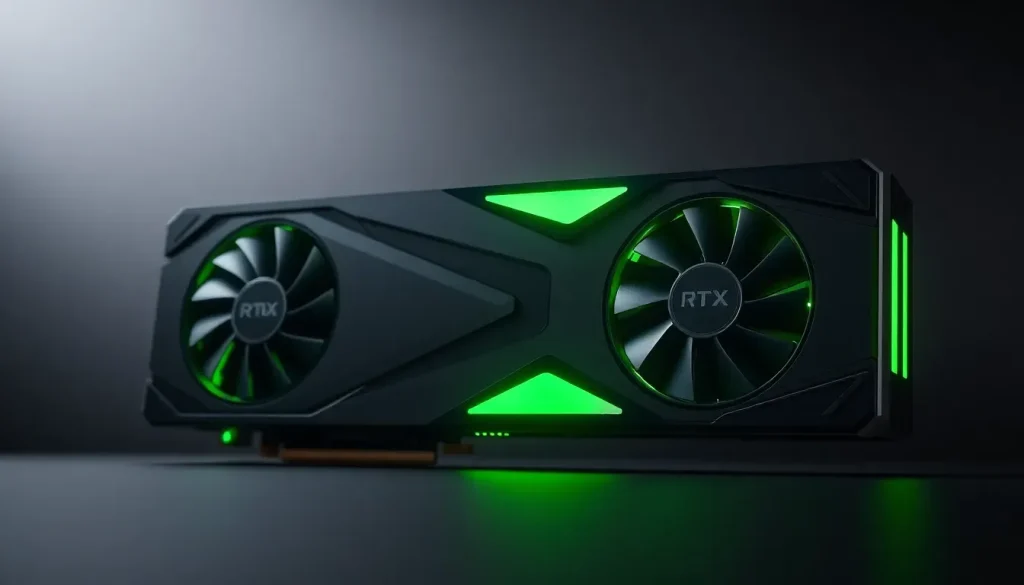
The GeForce RTX 5080 has arrived as the successor to the GeForce RTX 4080, and it promises to be a game-changer in the graphics card market. With a more competitive price point and enhanced specifications, it’s crucial to understand what makes this card stand out. Let’s dive deeper.
- Is the RTX 5080 suitable for AI applications?
- How good is the RTX 5080?
- Capabilities of the RTX 5080 compared to the RTX 4080
- Design, cooling, and build quality
- Architecture advancements with Blackwell
- Performance benchmarks: RTX 5080 vs. RTX 4090
- Power consumption and thermal performance
- Conclusion: Is the RTX 5080 worth it?
Is the RTX 5080 suitable for AI applications?
The RTX 5080 is not just a powerful graphics card for gaming; it also holds significant potential in artificial intelligence (AI) applications. With its advanced architecture, it can handle complex computations and machine learning tasks efficiently.
Key features that enhance its AI capabilities include:
- New Tensor Cores: The RTX 5080 is equipped with fifth-generation tensor cores that provide up to 230% more power compared to its predecessor, enabling rapid calculations essential for AI workloads.
- Neural Rendering: This technology allows the card to generate textures and materials using neural networks, significantly improving image quality and processing speed.
- DLSS 4 Support: With support for the latest iteration of Deep Learning Super Sampling, the RTX 5080 can produce multiple frames from a single render, optimizing performance and efficiency in AI-driven tasks.
How good is the RTX 5080?
The RTX 5080 brings impressive specifications that elevate its performance above the RTX 4080. Priced at €1,190, it offers a 20% reduction from the launch price of the RTX 4080, which was €1,469.
Specifications of the RTX 5080 include:
- GPU: GB203, built on TSMC's 5nm process.
- Transistors: 45.6 billion in a 378 mm² die.
- Shader Units: 10,752 at clock speeds of 2.29 GHz to 2.61 GHz.
- Memory: 16 GB GDDR7 at 30 Gbps, with a bandwidth of 960 GB/s.
- Power Consumption: 360 watts TGP.
Capabilities of the RTX 5080 compared to the RTX 4080
A direct comparison between the RTX 5080 and the RTX 4080 reveals some notable improvements:
| Feature | RTX 5080 | RTX 4080 |
|---|---|---|
| Architecture | Blackwell | Ada Lovelace |
| FP32 Performance | 56.27 TFLOPs | 48.74 TFLOPs |
| Tensor Cores | 336 (5th Gen) | 304 (4th Gen) |
| Ray Tracing Cores | 84 (4th Gen) | 76 (3rd Gen) |
| Memory Bandwidth | 960 GB/s | 716.8 GB/s |
Design, cooling, and build quality
Unboxing the RTX 5080 reveals a familiar yet refined design that mirrors the premium aesthetics of the RTX 5090. This card is crafted with a robust metal chassis and a central PCB layout, allowing efficient airflow through its dual axial fans.
Key design features include:
- Compact Size: Occupies only two expansion slots, making it ideal for small form factor (SFF) builds.
- Optimized Airflow: Large openings facilitate airflow, preventing heat buildup.
- Lighting Features: LED accents enhance visual appeal while indicating operational status.
Architecture advancements with Blackwell
The Blackwell architecture introduces numerous enhancements that improve performance significantly. Here’s a quick rundown of its key features:
- New Shader Units: Capable of neural rendering, these shaders improve image fidelity and computational efficiency.
- Enhanced Memory System: The move to GDDR7 memory provides a higher bandwidth while maintaining lower power consumption.
- AI Management Processor: This processor optimizes task scheduling for better resource allocation.
Performance benchmarks: RTX 5080 vs. RTX 4090
In various performance tests, the RTX 5080 proves its mettle, particularly in demanding applications:
- 3DMark DLSS: Achieved an impressive 285.85 FPS at 4K with DLSS 4, compared to 198.95 FPS from the RTX 4090.
- Blender: Produced over 4,400 samples per minute in demanding rendering tasks, showcasing its efficiency.
- DaVinci Resolve: Completed a complex H.265 4:2:2 project in just 10 seconds, outperforming the RTX 4090, which took 19 seconds.
For gaming performance, the RTX 5080 excels in titles that leverage DLSS 4, delivering superior frame rates:
- Cyberpunk 2077: Achieved up to 480 FPS with DLSS 4 in performance mode.
- Star Wars: Ramped up from 13 FPS to 155 FPS at max settings with DLSS 4 enabled.
- Indiana Jones: Demonstrated impressive scaling, although memory limitations were noted at high settings.
Power consumption and thermal performance
The RTX 5080 maintains an efficient power profile, consistently operating below its 360-watt TGP. In demanding scenarios like Cyberpunk 2077, it can drop to just 239 watts under optimal conditions.
Temperature readings indicate robust thermal management, with average operating temperatures around 64°C, ensuring performance stability during intense workloads.
Conclusion: Is the RTX 5080 worth it?
The GeForce RTX 5080, while not a massive leap in raw power over its predecessor, represents a significant advancement in architectural efficiency and capabilities. Its lower price and enhanced features, particularly in AI and game performance, make it a compelling choice for gamers and professionals alike.
As NVIDIA continues to push the boundaries of graphics technology, the RTX 5080 stands out as a testament to how innovation can redefine user experiences, making previously unthinkable gaming scenarios possible.
For more detailed insights into the RTX 5080's performance, check out this review:
Leave a Reply