
Gigabyte B343-C40-AAJ1 Review AMD EPYC 4005 High-Density Node
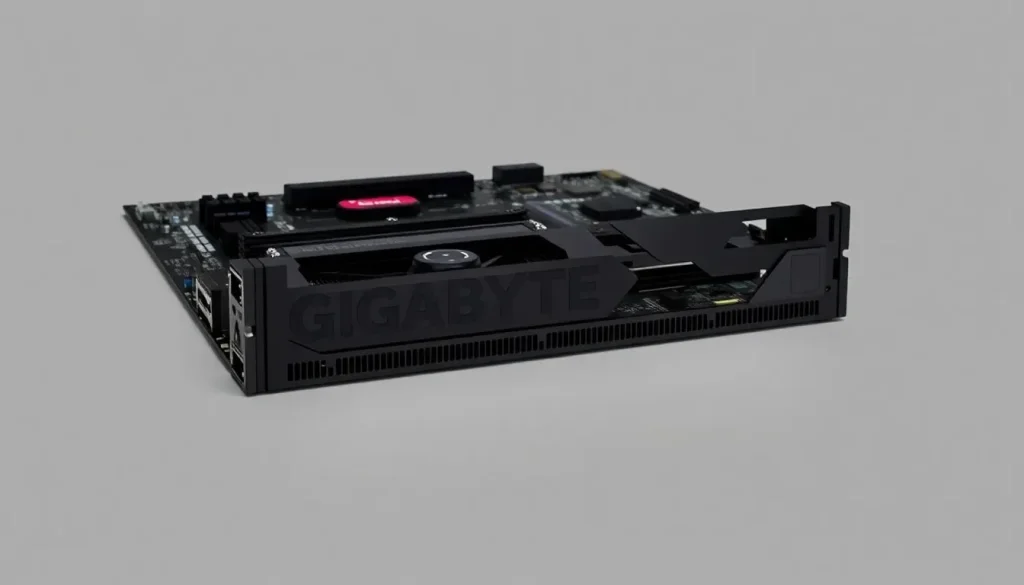
The Gigabyte B343-C40-AAJ1 is an impressive piece of technology that epitomizes the trend toward high-density computing. In a world where data centers are increasingly focused on efficiency, this 3U chassis houses ten nodes powered by AMD EPYC 4005 processors, offering significant capabilities in a compact form factor. Let’s dive deeper into its features and explore what makes it stand out in the crowded server market.
Overview of the Gigabyte B343-C40-AAJ1 Chassis
The chassis measures 3U in height and 770 mm (approximately 30 inches) in depth, making it significantly more compact than deploying ten separate 1U servers. Such a design not only saves space but also allows for installation in lower-cost, shorter-depth racks, facilitating a more affordable infrastructure environment.
At the front, the design is streamlined to focus exclusively on the ten nodes. This strategic focus enhances airflow and simplifies the physical setup, ensuring that each component has adequate ventilation.
On the back of the chassis, users will find an array of features designed for optimal performance:
- Four high-efficiency power supplies rated at 2 kW Titanium, providing redundancy and reliability.
- Two management ports for streamlined control and monitoring.
- Open Compute Project (OCP) NIC 3.0 slots for enhanced networking capabilities.
The use of four power supplies for ten nodes is a notable efficiency gain. In a traditional setup with individual 1U servers, twenty power supplies would be required, leading to increased complexity and power distribution unit (PDU) requirements. This setup not only minimizes component needs but also lowers operational costs significantly.
Power Supply and Management Features
One of the standout features of the Gigabyte B343-C40-AAJ1 is its intelligent power management. With Titanium-rated power supplies, the system is designed for energy efficiency and reliability. The power supplies allow for:
- Redundant power: Ensuring that the system remains operational even if one power supply fails.
- Simplified cabling: A reduction in the number of required cables, leading to a cleaner installation.
- Cost savings: Fewer components result in lower overall costs for power and management infrastructure.
Additionally, the two management ports allow for a shared management interface across multiple nodes. This feature is particularly beneficial in multi-node systems, as it reduces the number of management switch ports required, further simplifying network infrastructure.
Networking Capabilities with OCP NIC 3.0
The OCP NIC 3.0 slots provide a remarkable advantage in terms of networking flexibility and performance. This system allows for the installation of three multi-host adapters, which can service all ten nodes. The benefits of this system include:
- Higher-speed connectivity: Implementing a few high-speed NICs rather than individual 10GbE NICs for each node.
- Reduced cabling: Less cabling leads to a more organized and efficient setup.
- Enhanced bandwidth: The multi-host adapters ensure that all nodes can access the necessary bandwidth without bottlenecks.
By optimizing networking components, the Gigabyte B343-C40-AAJ1 not only enhances performance but also lowers the total cost of ownership.
Internal Configuration and Node Design
Inside the Gigabyte B343-C40-AAJ1, the design maximizes efficiency and cooling. The layout allows for easy access to the nodes, with the following key features:
- Shared fan modules that reduce the number of required fans across the nodes.
- 2.5-inch SATA drive slots located at the rear of the nodes for easy access and maintenance.
- PCIe Gen4 slots with x4 lane connectivity for enhanced data transfer capabilities.
This design supports a streamlined airflow pattern, ensuring that the system remains cool under heavy workloads. By allowing for shared cooling solutions, Gigabyte effectively reduces the need for multiple individual cooling systems, thus further optimizing the total cost of ownership.
Exploring the AMD EPYC 4005 Nodes
The heart of the Gigabyte B343-C40-AAJ1 is its ten nodes, powered by the AMD EPYC 4005 processors. These processors are known for their impressive performance in multi-threaded workloads, making them ideal for cloud computing, virtualization, and high-performance computing tasks. Some key features of the AMD EPYC 4005 include:
- High core counts, allowing for efficient processing of parallel tasks.
- Advanced memory support, enabling greater bandwidth and memory capacity.
- Security features built into the architecture, ensuring data integrity and protection.
This powerful architecture allows organizations to maximize performance while minimizing power consumption, making the B343-C40-AAJ1 an attractive option for enterprises looking to upgrade their server infrastructure.
Conclusion
The Gigabyte B343-C40-AAJ1 chassis represents a significant advancement in high-density computing. By integrating multiple nodes into a single chassis, it addresses common challenges faced by data centers, including space constraints and power management. The thoughtful design and innovative features of this system make it an ideal choice for businesses looking to optimize their IT infrastructure.
For a more visual overview of the Gigabyte B343-C40-AAJ1, check out this video:

Leave a Reply