
GIGABYTE GeForce RTX 5060 Ti Eagle OC Ice review AI significance
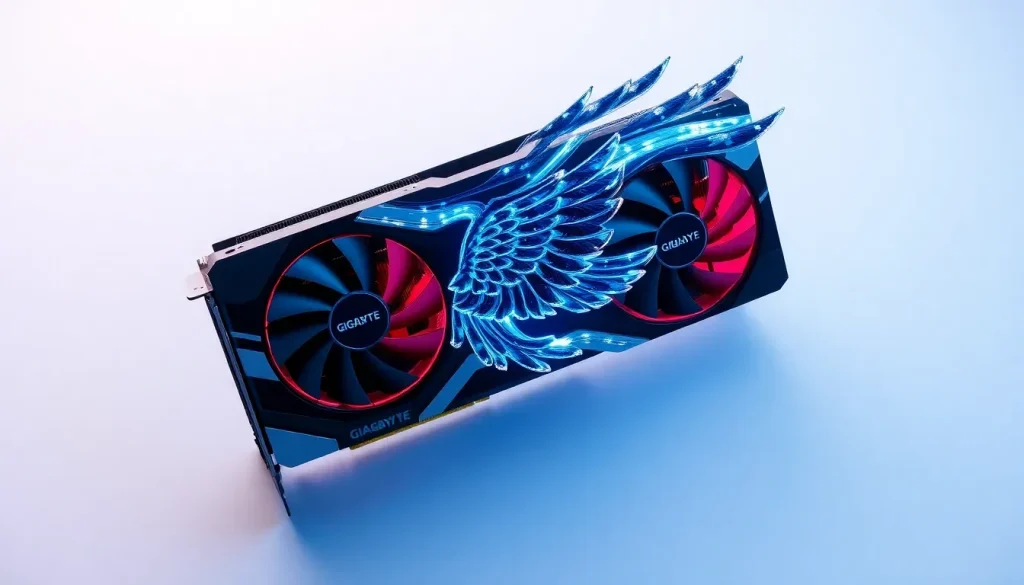
The GeForce RTX 5060 Ti has been generating considerable buzz as NVIDIA's latest mid-range graphics card. With its recent launch, gamers and tech enthusiasts alike are keen to explore its capabilities and performance. This model comes in two memory variants: 8 GB and 16 GB, catering to different user needs and preferences.
Excitingly, the pricing of the GeForce RTX 5060 Ti has turned out to be lower than that of the GeForce RTX 4060 Ti at launch, a fact we anticipated in previous reports. The recommended retail price in Spain stands at €405 for the 8 GB version and €459 for the 16 GB version. Comparatively, the GeForce RTX 4060 Ti debuted at €449 for its 8 GB configuration and €559 for the 16 GB variant.
This strategic pricing approach by NVIDIA enhances the overall value proposition of the RTX 5060 Ti, making it a compelling choice among mid-range graphics cards. The 8 GB model is priced €44 lower than the 4060 Ti, while the 16 GB model is a staggering €100 cheaper, which could influence many players' purchasing decisions.
Notably, NVIDIA has opted not to release a Founders Edition of the RTX 5060 Ti. Instead, consumers will find various custom-designed models from different manufacturers. Among them, I had the opportunity to test the GIGABYTE GeForce RTX 5060 Ti Eagle OC Ice, which is recognized for its compact design and robust performance.
- Specifications of the GeForce RTX 5060 Ti (GIGABYTE Eagle OC Ice)
- Comparative Specifications: GeForce RTX 4060 Ti (GIGABYTE Eagle)
- External Analysis of the GIGABYTE GeForce RTX 5060 Ti Eagle OC Ice
- Blackwell Architecture Insights
- Testing Setup
- Performance of the GIGABYTE GeForce RTX 5060 Ti Eagle OC Ice in Professional Applications and Synthetic Benchmarks
- Performance of the GIGABYTE GeForce RTX 5060 Ti Eagle OC Ice in Gaming
- Temperature, Consumption, Latency, and Frequency Scaling
- GIGABYTE GeForce RTX 5060 Ti Eagle OC Ice vs. GIGABYTE GeForce RTX 4060 Ti Eagle
- Final Thoughts and Evaluation
Specifications of the GeForce RTX 5060 Ti (GIGABYTE Eagle OC Ice)
- GPU: GB206 built on TSMC's N4 (5nm) process.
- 36 SM (Streaming Multiprocessors).
- 4,608 shaders clocked at 2.4 GHz and 2.61 GHz.
- 144 texture units.
- 48 rasterization units.
- 36 fourth-generation RT cores (72 TFLOPs).
- 144 fifth-generation tensor cores (759 TFLOPs).
- 24.11 TFLOPs in FP32.
- 128-bit bus.
- 32 MB L2 cache.
- PCIe Gen5 8x interface.
- 16 GB GDDR7 memory at 28 Gbps (448 GB/s bandwidth).
- TGP of 180 watts.
- Single 8-pin power connector.
- Three DisplayPort 2.1b ports with UHBR20 and one HDMI 2.1b output.
- Dimensions: 21.5 cm long, 12.2 cm wide, and 4 cm high. It occupies two expansion slots, making it SFF (Small Form Factor) Ready.
- Starting price: €459.
Comparative Specifications: GeForce RTX 4060 Ti (GIGABYTE Eagle)
- GPU: AD106 on TSMC's 5nm process.
- 4,352 shaders clocked at 2.310 MHz-2.535 MHz (normal and turbo modes).
- 136 texture units.
- 48 rasterization units.
- 136 fourth-generation tensor cores (353 TFLOPs).
- 32 third-generation RT cores (51 TFLOPs).
- 128-bit bus.
- 8 GB GDDR6 memory at 18 Gbps (288 GB/s bandwidth).
- 22 TFLOPs of FP32 performance.
- 51 TFLOPs in ray tracing.
- 353 TFLOPs in FP8 (AI).
- 32 MB L2 cache.
- PCIe Gen4 x8 interface.
- TGP of 160 watts.
- Single 8-pin power connector.
- Two DisplayPort 1.4a and two HDMI 2.1a outputs.
- Dimensions: 27.2 cm long, 11.5 cm wide, and 4.1 cm high. It occupies two expansion slots.
- Launch price: €449.
Upon comparing the specifications of both graphics cards, it becomes evident that the GeForce RTX 5060 Ti boasts more shaders than the GeForce RTX 4060 Ti. Moreover, it employs a more advanced architecture, faster memory, and a superior set of display outputs.
In terms of raw performance, the GeForce RTX 5060 Ti proves itself to be more powerful, achieving 24.11 TFLOPs compared to 22 TFLOPs of the RTX 4060 Ti. It also excels in ray tracing and AI performance. While its TGP is slightly higher, the difference remains minimal and justified by its enhanced capabilities.
For easier reference, here's a summary of key differences between the two models:
- Utilizes a more advanced node and architecture.
- Offers 9.09% greater FP32 power.
- Delivers 215% more AI capability.
- Achieves 41.18% more power in ray tracing.
- Features a higher memory bandwidth (448 GB/s compared to 288 GB/s).
- Houses 5.88% more shaders.
- Has a TGP of 20 watts more but is more compact.
- Includes more advanced display outputs and uses PCIe Gen5.
- The tested model is notably smaller.
External Analysis of the GIGABYTE GeForce RTX 5060 Ti Eagle OC Ice
Upon unboxing, the GIGABYTE GeForce RTX 5060 Ti Eagle OC Ice immediately impresses with its compact design. The PCIe Gen5 x8 connector eliminates the unused eight lanes, resulting in a shorter card than typical models. This design choice is both functional and aesthetically pleasing.
The card is primarily finished in white with silver accents and a hint of blue, featuring a clean design that is characteristic of the Eagle family. This model opts for a subdued appearance, completely avoiding any RGB lighting.
On the front side, you will find two Hawk Fan-type cooling fans, which have become staples in GIGABYTE's recent GPU releases. These fans are designed to reduce noise and air resistance, contributing to:
- A 53.6% increase in air pressure.
- A 12.5% increase in airflow volume.
The fans can rotate in alternating directions to minimize turbulence and optimize airflow pressure, dynamically adjusting based on temperature and load. If both are low, the fans stop entirely, ensuring silent operation.
To guarantee durability, GIGABYTE employs double ball bearings lubricated with graphene, which significantly reduces fan wear and can potentially double their lifespan.
Underneath the fans, a substantial radiator effectively cools the GPU and other heat-generating components, such as VRM and memory. The radiator is divided into two blocks connected by heat pipes, enhancing its cooling efficiency.
For contact with the memory and VRM, GIGABYTE utilizes server-grade conductive gel, a notable choice that has proven effective in higher-end models from their lineup.
From the top view, the GIGABYTE and GeForce RTX branding is visible, alongside the position of the 8-pin power connector, conveniently located at the left edge of the card for easy access.
The rear side features a sturdy metal backplate that enhances structural integrity and contributes to cooling by allowing airflow through the radiator's fins.
Adopting the Ultra Durable finish, this graphics card does not compromise on build quality. Key features include:
- MOSFETs with low on-resistance, resulting in improved heat dissipation.
- Inductors designed for low power loss and reduced interference.
- Solid capacitors with lower internal resistance, enhancing energy efficiency and lifespan.
On the back, the display outputs consist of three DisplayPort 2.1b ports with UHBR20 and one HDMI 2.1b output, complemented by vents for expelling hot air.
Due to its lightweight and compact design, the GIGABYTE GeForce RTX 5060 Ti Eagle OC Ice doesn't require additional support within the case, making it an excellent option for small form factor builds.
Blackwell Architecture Insights
The GIGABYTE GeForce RTX 5060 Ti Eagle OC Ice harnesses the power of the Blackwell architecture, which incorporates several cutting-edge improvements. It's crucial to note that even as a mid-range model, NVIDIA hasn't skimped on features in the GB206 GPU.
Here are the key innovations introduced with the Blackwell architecture:
- Transition to TSMC's N4 process.
- Neural rendering shaders capable of handling INT32 and FP32 operations simultaneously.
- Second-generation Shader Execution Reordering (SER).
- Fifth-generation tensor cores with double the output power and compatibility with INT4 and FP4 operations.
- AI management processor for efficiently coordinating workloads (shaders, AI, and ray tracing).
- Fourth-generation ray tracing cores with double the intersection calculation capacity.
- Dedicated decompression engine for Mega Geometry, improving performance in high-geometry games.
- Hardware flip measurement system to optimize rendering times and reduce lag.
- DLSS 4 technology with a new transformation engine for enhanced upscaling quality.
- Multi-frame generation, capable of producing up to three additional frames per rendered frame.
- Reflex 2 technology to lower latency and improve response times by up to 75% in gaming.
Testing Setup
- Motherboard: GIGABYTE X870E Aorus Master, updated to the latest BIOS.
- Processor: Ryzen 7 9800X3D with 8 cores and 16 threads at 4.7 GHz-5.2 GHz (normal and turbo).
- RAM: G.SKILL Trident Z5 NEO RGB at 6,000 MT/s with CL30 latencies (AMD EXPO profile).
- Cooling: Corsair CUE LINK TITAN 360 RX RGB All-in-One Liquid Cooler with three 120 mm fans.
- Graphics Card: GIGABYTE GeForce RTX 5060 Ti Eagle OC Ice with 16 GB.
- Storage: WD Black SN850 2 TB SSD with PCIe Gen4 x4 interface, achieving up to 7,000 MB/s read and 5,300 MB/s write speeds.
- Additional SSD: Samsung 990 Pro PCIe Gen 4 x4 1 TB SSD with 7,450 MB/s read and 6,900 MB/s write speeds.
- Power Supply: Corsair HX1500i 1,500 watts with 80 Plus Platinum certification.
- Thermal Paste: Corsair XTM70.
- Operating System: Windows 11.
This testing setup represents a high-end PC, ensuring that there will be no bottlenecks, allowing any graphics card to perform at its best under various conditions. Although the GIGABYTE GeForce RTX 5060 Ti Eagle OC Ice is a mid-range card, this robust build allows for optimal performance without any limitations.
Performance of the GIGABYTE GeForce RTX 5060 Ti Eagle OC Ice in Professional Applications and Synthetic Benchmarks
We start with classic professional applications and synthetic benchmarks, essential for evaluating the card's potential in real-world scenarios. Despite being a mid-range model, the RTX 5060 Ti stands out due to its 16 GB of memory and the advancements brought by the Blackwell architecture, such as native support for FP4 operations and compatibility with the H.265 standard under 4:2:2 10-bit.
To compare performance, I utilized a GeForce RTX 4060 Ti with 8 GB of memory. Ideally, I would have used the 16 GB model, but it was unavailable for testing.
DaVinci Resolve
In DaVinci Resolve, using the H.265 standard under 4:2:2 10-bit, the GIGABYTE GeForce RTX 5060 Ti Eagle OC Ice completes the task in 17 seconds, outperforming even the GeForce RTX 4090 FE, which takes 19 seconds. This impressive result underlines the value of supporting this standard.
3DMark DLSS
This benchmark runs two tests: one without DLSS and another with it. The performance difference is staggering; the GIGABYTE GeForce RTX 5060 Ti maintains 22 FPS in native resolution, while the GeForce RTX 4060 Ti struggles to reach 2.73 FPS.
With DLSS 4 and multi-frame generation activated, the GIGABYTE GeForce RTX 5060 Ti Eagle OC Ice jumps from 22 FPS to 140 FPS, more than doubling the performance of the RTX 4060 Ti. A remarkable achievement indeed.
V-Ray
This rendering benchmark measures a graphics card's performance in demanding scenarios using CUDA and hardware-accelerated ray tracing. The GIGABYTE GeForce RTX 5060 Ti Eagle OC Ice achieves 2,886 vpaths in CUDA mode and 4,433 vpaths in RTX mode.
In contrast, the GeForce RTX 4060 TI scores 2,196 vpaths in CUDA and 3,314 vpaths in RTX mode, confirming that the GIGABYTE GeForce RTX 5060 Ti Eagle OC Ice is 33.77% more powerful with RTX enabled.
Blender
Blender is a widely used rendering tool, and its performance is measured in samples per minute, with higher numbers being better. The GIGABYTE GeForce RTX 5060 Ti Eagle OC Ice achieves 2,099, 1,138, and 1,152 samples per minute in "Monster," "Junkshop," and "Classroom," respectively.
The RTX 4060 Ti scores 1,901, 891, and 999 samples per minute in the same scenarios, showing a difference of around 27% in favor of the GIGABYTE GeForce RTX 5060 Ti Eagle OC Ice.
PassMark
This benchmark evaluates the overall performance of a graphics card across various APIs. The GIGABYTE GeForce RTX 5060 Ti Eagle OC Ice achieves 30,315 points, while the GeForce RTX 4060 Ti scores 27,221 points. This test is not limited by memory capacity, reaffirming the RTX 5060 Ti's superiority with an 11.37% lead.
Procyon Flux 1.4
In this image generation test based on FP4 operations, the GeForce RTX 4060 Ti returned no score, so for comparison, I will use previously recorded values from a GeForce RTX 4090, a higher-end model compared to the GIGABYTE GeForce RTX 5060 Ti Eagle OC Ice.
The GIGABYTE GeForce RTX 5060 Ti Eagle OC Ice registered an average time of 17.91 seconds per image, while the GeForce RTX 4090 clocked in at 17.24 seconds, demonstrating a near tie and highlighting the efficiency of supporting native FP4 operations.
Performance of the GIGABYTE GeForce RTX 5060 Ti Eagle OC Ice in Gaming
Targeted primarily at gamers, the GIGABYTE GeForce RTX 5060 Ti Eagle OC Ice's performance in gaming scenarios is crucial. While its results in professional applications have been promising, the focus now shifts to its gaming benchmarks.
I centered the tests around 1080p and 1440p resolutions, while also evaluating native 4K performance to provide a clearer picture of what to expect from this graphics card. Comparisons were made against the GeForce RTX 4060 Ti with 8 GB, as the 16 GB version was not available for testing. This comparison highlights how having 16 GB of graphics memory can influence performance.
Red Dead Redemption 2
The GIGABYTE GeForce RTX 5060 Ti Eagle OC Ice scores 17.95% higher than the GeForce RTX 4060 Ti in 4K, with a 14.29% advantage in 1440p and an 8.75% lead in 1080p.
Star Wars Outlaws
In Star Wars Outlaws, the GIGABYTE GeForce RTX 5060 Ti Eagle OC Ice outperforms the GeForce RTX 4060 Ti by 10.96%, and by 12% in 1440p. It also excels in ray tracing performance, maintaining 14 FPS in 1440p with max ray tracing settings, while the RTX 4060 Ti struggles at 3 FPS.
With multi-frame generation enabled, the differences become even more pronounced, with the GIGABYTE GeForce RTX 5060 Ti Eagle OC Ice achieving up to 391 FPS in 1080p and 226 FPS in 1440p with DLSS in performance mode.
Alan Wake 2
Alan Wake 2 is demanding in terms of graphics quality. In this test, the GIGABYTE GeForce RTX 5060 Ti Eagle OC Ice surpasses the RTX 4060 Ti by 24.49% in 1080p, 30.3% in 1440p, and 43.75% in 4K. With ray tracing enabled, and utilizing DLSS and frame generation, the GIGABYTE card achieves averages of up to 264 FPS and 190 FPS with full ray tracing.
Black Myth Wukong
This title is another demanding game. The GIGABYTE GeForce RTX 5060 Ti Eagle OC Ice shows significant performance advantages, winning over the RTX 4060 Ti by 27.03% in 1080p, 26.92% in 1440p, and 25% in 4K. It also performs better in ray tracing and scales effectively with DLSS.
Cyberpunk 2077
Cyberpunk 2077 features three major sub-tests: rasterization, ray tracing, and ray tracing with path tracing. The GIGABYTE GeForce RTX 5060 Ti Eagle OC Ice excels in rasterization, achieving 25.25% higher performance in 1080p, 38.6% in 1440p, and 54.55% in 4K.
When ray tracing is activated, the GIGABYTE GeForce RTX 5060 Ti Eagle OC Ice continues to outperform the competition, achieving impressive results in path tracing. With this technology enabled, the card can reach 162 FPS in 1440p.
Dragon Age: The Veilguard
This game is particularly demanding on memory, making the GIGABYTE GeForce RTX 5060 Ti Eagle OC Ice's 16 GB memory beneficial compared to the 8 GB of the RTX 4060 Ti. As evidenced in the accompanying graph, enabling frame generation at 1440p negatively impacts performance, given that this technology consumes memory bandwidth, which the RTX 4060 Ti cannot accommodate.
Dying Light 2
Dying Light 2 is another title that has become a classic, maintaining its demanding nature, especially with ray tracing. Here, the GIGABYTE GeForce RTX 5060 Ti Eagle OC Ice leads with 11.11% higher performance in 1080p, 16.42% in 1440p, and 26.67% in 4K. With ray tracing enabled, the performance gap widens, with the GIGABYTE card outperforming by 18.52% in 1080p and 25% in 1440p.
Gears 5
As a game based on the Unreal Engine 4, Gears 5 remains demanding. The GIGABYTE GeForce RTX 5060 Ti Eagle OC Ice achieves a 15.13% advantage in 1080p and 18.75% in 1440p, with a remarkable 44.44% lead in 4K.
Indiana Jones and the Great Circle
This title is so memory-intensive that players with only 8 GB of memory cannot modify ray tracing settings. Consequently, no data have been available for the RTX 4060 Ti under maximum ray tracing. The 4060 Ti struggles even to run the game at maximum settings, requiring texture quality to be set to low to avoid errors due to insufficient memory.
Having more than 8 GB of memory is highly advisable, as illustrated by the attached graphs. Activating frame generation in 1440p has detrimental effects on performance due to memory constraints.
A Plague Tale: Requiem
Ending with a personal favorite, A Plague Tale: Requiem, the GIGABYTE GeForce RTX 5060 Ti Eagle OC Ice secures a clear victory, achieving 13.43% greater performance in 1080p, 17.02% in 1440p, and 24% in 2160p.
Temperature, Consumption, Latency, and Frequency Scaling
Despite its compact size, the GIGABYTE GeForce RTX 5060 Ti Eagle OC Ice records impressive temperature values. The dual-fan system operates exceptionally well, maintaining an average of 66 degrees Celsius in Cyberpunk 2077, with occasional peaks reaching 68 degrees Celsius.
The power consumption remains within expected limits, peaking at 178 watts, with an average of 167 watts in Cyberpunk 2077. Note that these values can vary significantly based on the graphical settings used, with consumption potentially dropping below 150 watts under certain configurations.
The frequency scaling achieved by the GIGABYTE GeForce RTX 5060 Ti Eagle OC Ice is commendable, with stable values and a peak of 2,790 MHz, translating to a consistent performance superior to many models that also feature factory overclocking.
Latency is a critical aspect in gaming, particularly when using frame generation technology, which can increase latency. NVIDIA has effectively managed multi-frame generation, not only improving gaming fluidity but also keeping latency low.
Maintaining latency below 100 ms is essential for an acceptable gaming experience, while less than 70 ms indicates an optimal experience.
GIGABYTE GeForce RTX 5060 Ti Eagle OC Ice vs. GIGABYTE GeForce RTX 4060 Ti Eagle
Having established that the GIGABYTE GeForce RTX 5060 Ti Eagle OC Ice outperforms the GeForce RTX 4060 Ti Eagle in gaming, it becomes necessary to undertake a comparative analysis to clarify the differences between the two models.
The following graph presents a relative comparison based on the performance data obtained earlier, allowing us to derive percentage values across various resolutions and settings.
As illustrated, the GIGABYTE GeForce RTX 5060 Ti Eagle OC Ice is 18.31% more powerful at 1080p, 23.22% more at 1440p, and 38.19% more at 2160p. At this highest resolution, the greater bandwidth and 16 GB of memory make a noticeable difference.
When enabling ray tracing, the new RT cores and 16 GB of memory enable the GIGABYTE GeForce RTX 5060 Ti Eagle OC Ice to maintain a substantial performance lead, with a remarkable 75.21% difference in 1440p ray tracing performance. It's essential to understand that with the 16 GB version of the RTX 4060 Ti, these discrepancies would not have been as significant, although the 5060 Ti would still emerge as the winner.
Final Thoughts and Evaluation
The GIGABYTE GeForce RTX 5060 Ti Eagle OC Ice is a deceptive graphics card—in a good way. At first glance, its small size might suggest that GIGABYTE has compromised on build quality or performance, but nothing could be further from the truth.
This model features high-quality components typically found in much more expensive models and provides an excellent cooling system. This is evident in its impressive operating temperatures, which remain low despite having only two fans, and its notably quiet operation.
In terms of efficiency, it achieves a positive outcome, offering good performance per watt and appropriate scaling when compared directly to the GeForce RTX 4060 Ti.
The suite of technologies brought forth by the Blackwell architecture enables the GIGABYTE GeForce RTX 5060 Ti Eagle OC Ice to deliver strong performance even at 1440p with max ray tracing settings—levels that would have been restricted to high-end graphics cards just a couple of years ago.
The card requires just an 8-pin power connector, making it less demanding on the power supply. This, combined with its price of €449, makes it a highly recommended graphics card for building a new gaming PC or upgrading an existing setup.
Available in both 8 GB and 16 GB versions, I strongly advise opting for the 16 GB model, as the €50 difference is easily justifiable considering the performance gains.


Leave a Reply