
How International's S13 Redefines Diesel Efficiency
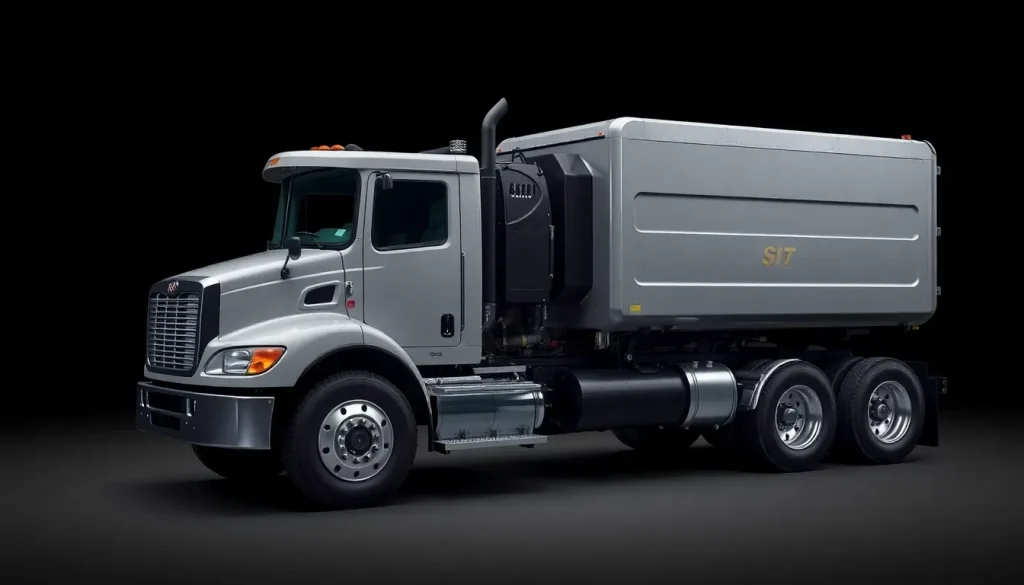
In the competitive world of heavy-duty transportation, innovation and efficiency are essential. The emergence of International's S13 Integrated Powertrain marks a significant leap forward, revolutionizing diesel engine performance while focusing on sustainability. Let's explore the intricacies of this groundbreaking engine and what it brings to the trucking industry.
International's engineering team, in collaboration with MAN and Scania since 2017, adopted a daring approach towards the design of the S13 powertrain: they prioritized performance over emissions initially. Keith Watts, a training specialist at International, encapsulated this philosophy by stating, “Let an engine be an engine.” This philosophy laid the groundwork for what would eventually become a global standard for efficiency and performance.
The inception of the S13 powertrain came shortly after Volkswagen Truck & Bus acquired a 16.6% stake in Navistar, now operating under the International Motors banner. This partnership facilitated a five-year, multi-billion-dollar venture that led to the development of what is known in North America as the S13 Integrated Powertrain, which is also referred to as Scania Super in Europe. This engine went into production across various Traton Group subsidiaries, including MAN's D30 model, officially unveiled in August 2022 for North America.
- Understanding the S13: Breaking Away from Conventional Design
- The S13 goes away with EGR: A New Approach to Efficiency
- The transmission ties it together: The T14 14-speed marvel
- Versatile PTO and chassis integration: Designed for flexibility
- The finer points: Weight and efficiency leadership
- Driving the S13: Real-world performance insights
- Skip the shifting: Effortless driving experience
Understanding the S13: Breaking Away from Conventional Design
The S13 features an impressive 85% parts and design commonality with its European counterparts, with only 15% variation to cater to different truck configurations, such as cabover and conventional models. While the core components, including the engine and 14-speed transmission, remain nearly identical, the S13 distinguishes itself with its innovative emissions strategy.
Scania first introduced the all-SCR, no-EGR emissions strategy with its DC13 engine in 2014, successfully meeting Euro VI emissions standards. This design continues to evolve, ensuring compliance with increasingly stringent regulations. Jonathan Hutchison, Senior Powertrain Launch Manager at International, explains this design philosophy: "The low-carbon, high-NOx design concept hinged on having the engine just create power and produce NOx as a byproduct." This means the engine focuses on generating power while the aftertreatment system manages NOx emissions effectively.
The S13 goes away with EGR: A New Approach to Efficiency
At the core of the S13 engine design is a notable 23:1 compression ratio, which is higher than what's commonly found in modern diesel engines. This results in hotter combustion temperatures and a cleaner burn, minimizing soot production. By eliminating the need for cooled exhaust gas recirculation (EGR), the S13 enhances combustion efficiency and reduces the likelihood of diesel particulate filter fouling.
To manage the higher NOx emissions resulting from this hotter combustion process, the S13 employs a dual-dosing SCR system. This innovative approach involves:
- Injecting diesel exhaust fluid (DEF) at two points within the exhaust stream.
- Delivering the first dose near the turbo outlet and the second downstream in the aftertreatment unit.
- Ensuring precise NOx reduction across varying temperatures and loads, which enhances overall efficiency.
While DEF consumption is slightly higher than the industry average, this trade-off is justified by the elimination of the diesel oxidation catalyst (DOC) and the need for active regeneration cycles. In real-world tests, trucks equipped with the S13 have operated for over 18 months without requiring a single active regeneration event.
International claims that when fuel economy averages exceed 8.2 mpg, the diesel particulate filter (DPF) can last up to 650,000 miles (1,040,000 km) before replacement, often extending into the second ownership cycle. Although the EGR cooler is removed from the design, an EGR system is still present but repurposed to maintain aftertreatment system efficiency during coasting, idling, and cold starts.
The transmission ties it together: The T14 14-speed marvel
Complementing the S13 engine is the T14 14-speed transmission, developed specifically for this powertrain and not available as a standalone unit. This compact, fully automated manual transmission features:
- Evenly spaced gear steps, providing a smooth power delivery across the RPM range.
- An electronic clutch actuator (ECA) that allows for smooth and precise engagement of the clutch.
- A clever planetary gear set that provides multiple reverse speeds, catering to both highway and vocational applications.
The T14 transmission’s sophisticated lubrication and temperature-conditioning system extends oil and filter life to approximately 600,000 miles (960,000 km), supporting overall uptime and reliability.
Versatile PTO and chassis integration: Designed for flexibility
International's S13 powertrain also offers remarkable versatility for vocational applications. Both front- and rear-mounted power take-offs (PTOs) are available, allowing for customized configurations tailored to specific operational needs. Key points include:
- Pre-wiring for PTO installation on every chassis, enabling easy future modifications.
- A warranty that covers PTO when ordered from the factory, ensuring peace of mind for fleet owners.
- Integrated control logic via Diamond Logic, International's electrical architecture, enhancing programmability and safety.
The finer points: Weight and efficiency leadership
International boasts that the S13 is the lightest 13-liter engine on the market, weighing in at just 2,284 lb. (1,038 kg). This weight advantage is significant, as it is approximately 300 lb. (136 kg) lighter than its closest competitor and nearly 800 lb. (364 kg) lighter than the heaviest engine in its class. However, weight comparisons can be tricky as they depend on whether the engine is measured with oil, a flywheel, or with the aftertreatment system included.
Fuel efficiency is another critical factor where the S13 excels. Navtej Singh, Director of Engineering at International, asserts, “We are already fuel economy leaders in Europe.” Recent A-B testing in various fuel economy cycles has demonstrated that the S13 is at least 6.5% more fuel-efficient than its competitors. Notably, the Scania Super won the European Truck Challenge in 2023 for fuel efficiency, showcasing its prowess in real-world driving conditions.
Driving the S13: Real-world performance insights
Having driven various models from International, including ProStars and LTs with various engines, I can confidently say that the LT/S13 combination represents the pinnacle of performance. My experience driving this truck included navigating through urban environments and highway conditions, providing a comprehensive feel for its capabilities.
One standout feature is the innovative Maneuvering Mode, unique to the S13. This mode enhances low-speed control by preventing the truck from rolling when the brakes are released and allowing for precise speed adjustments—ideal for tasks like backing up to a dock or aligning with a trailer. This feature engages automatically above 9 mph (14 km/h), ensuring driver convenience across different scenarios.
Skip the shifting: Effortless driving experience
The T14 transmission also deserves special mention for its smooth shifting capabilities. The electro-mechanical clutch actuators allow for exceptionally controlled gear changes, virtually eliminating the sensation of shifting during driving. This seamless operation is particularly beneficial in high-traffic scenarios where adaptive cruise control and collision mitigation systems can also be tested effectively.
While the S13 powertrain may not boast flashy features, its reliability and efficiency are undeniable. Fleets can expect enhanced fuel economy and reduced maintenance costs due to the elimination of traditional EGR systems and the associated regeneration processes. Moreover, advanced telematics systems provide valuable diagnostic data, transforming potential breakdowns into planned service events, thereby enhancing operational efficiency.
Having learned from past experiences with emissions systems, International is committed to maintaining the reliability of the S13 powertrain. With several years of successful service both domestically and internationally, the feedback surrounding this engine has been overwhelmingly positive.
For more insights into the driving experience of the International S13, watch this engaging video:

Leave a Reply