
Huawei all-flash storage solution focused on AI technology
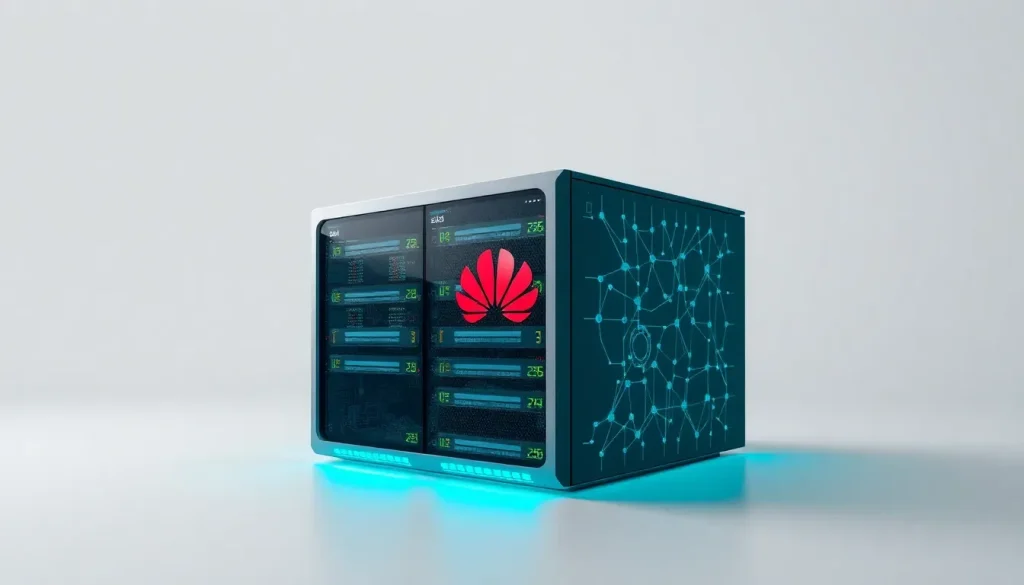
Huawei is making significant strides in the realm of storage solutions, particularly in the context of artificial intelligence (AI). With the evolution of data management and storage requirements, companies are increasingly turning to robust solutions that can handle vast amounts of data efficiently. This article delves into Huawei's latest innovations in AI-centric storage technology, exploring the diverse product offerings and their implications for businesses in various sectors.
- Overview of Huawei's Storage Product Portfolio
- Key Features of Huawei’s OceanStor Dorado Line
- Advancements in AI Storage Solutions
- OceanStor Pacific: Unstructured Data Management
- Energy Efficiency and Scalability
- OceanDisk: Smart Disk Enclosures for Enhanced Performance
- Comparison with Competitors: Huawei AI Chip vs. Nvidia
- Future Prospects for Huawei Storage Solutions
Overview of Huawei's Storage Product Portfolio
Huawei's storage product range is centered around two primary families: the OceanStor Dorado SAN and NAS systems, and the OceanStor Pacific unstructured data systems. Additionally, they offer a controller-less OceanDisk JBOD line. At the recent Huawei Connect Europe event held in Madrid, the company unveiled key updates across all three product lines, introducing AI-focused, all-flash A Series Dorados, entry-level all-flash Dorados, and an innovative all-flash replacement system for Pacific disk drives.
Despite Huawei's limited presence in the U.S. market, the company continues to thrive globally, evidenced by impressive revenue growth. For instance, Huawei Europe reported a remarkable 20% increase in revenue last year, solidifying its position as the second-largest storage vendor worldwide, trailing only Dell. This growth highlights Huawei's competitive edge, particularly outside the U.S., where it has established a strong market presence.
Key Features of Huawei’s OceanStor Dorado Line
The OceanStor Dorado line competes directly with industry leaders like Pure Storage and NetApp, offering advanced features that cater to various business needs. The latest generation, Dorado v7, showcases remarkable improvements:
- Support for up to 100 million IOPS.
- Enhanced reliability—reportedly 10 times greater than previous models.
- Utilization of Huawei’s Kunpeng CPUs and Ascend DPUs, along with 128 TB QLC SSDs.
The range includes multiple products, such as Dorado 3000, 5000, 8000, and 18000, each tailored to specific storage requirements. For example, the Dorado 18000 boasts a full mesh architecture, which allows it to maintain functionality even in the event of controller or enclosure failures, achieving an impressive reliability rating of 99.99999%.
Advancements in AI Storage Solutions
The introduction of the A Series Dorado is a game-changer, specifically designed for AI training and inference workloads. This line separates itself from standard Dorado arrays by offering:
- KV Cache offload capability for rapid data delivery to GPU servers.
- Utilization of open-source UCM (Unified Cache Manager) software.
- Real-time data management, optimizing data placement based on usage patterns.
This innovative approach allows data centers to run large AI models efficiently, significantly reducing dependency on high-bandwidth memory (HBM) chips by up to 80%. The A Series includes products like the A600 and A800, which prioritize bandwidth over sheer IOPS, maintaining high GPU utilization even during intensive workloads.
OceanStor Pacific: Unstructured Data Management
The OceanStor Pacific product line is tailored for managing data lakes, supporting various data formats, including SMB, NFS, S3, HDFS, POSIX, MPI-IO, and Iceberg. This flexibility makes it an ideal choice for organizations dealing with extensive unstructured data.
One of the standout features of the Pacific line is its integration with Huawei’s Data Management Engine (DME), which provides an intuitive, ChatGPT-like interface for storage management. Administrators can issue commands in natural language, such as: “Add 100 LUNs for Oracle.” This capability streamlines management tasks and enhances operational efficiency.
Energy Efficiency and Scalability
Energy efficiency is a critical consideration for modern data centers. The OceanStor Pacific 9926 model exemplifies this focus, offering:
- 8PB capacity in a compact 2RU enclosure.
- Up to 95% space savings compared to traditional HDD systems.
- A power rating of 0.25 W/TB, translating to significant power savings.
Such advancements not only reduce operational costs but also contribute to sustainable practices in the tech industry. The scalability of Huawei’s storage solutions is another notable benefit, as organizations can expand their capacity seamlessly to accommodate growing data needs.
OceanDisk: Smart Disk Enclosures for Enhanced Performance
Huawei has also introduced two new OceanDisk systems: the 1610 and the 1800 smart SSD enclosures. These enclosures are designed to optimize data access and performance:
- The 1610 features a 4 RU chassis with a maximum raw capacity of 2 PB.
- The 1800, a larger 5 RU box, supports up to 2.6 PB of capacity.
- Both systems deliver 3.5 million IOPS and 70 GBps throughput.
These systems are already in use by major players in the tech industry, such as Tencent Cloud and ByteDance, underscoring their reliability and effectiveness in high-demand environments.
Comparison with Competitors: Huawei AI Chip vs. Nvidia
A relevant question in the tech community is whether Huawei’s AI chip technology surpasses that of Nvidia. While both companies have made significant advancements in AI and machine learning, Huawei’s approach focuses on integrating its hardware solutions into a comprehensive AI stack, which includes:
- Proprietary CPUs and SSDs.
- Structured (Dorado) and unstructured (Pacific) data storage systems.
- Intelligent JBOFs (OceanDisk).
- AI pipeline software (Omni Dataverse).
This all-in-one strategy positions Huawei as a formidable competitor in the AI storage market, even without direct Nvidia certifications.
Future Prospects for Huawei Storage Solutions
Looking ahead, Huawei is poised for continued success in the storage solutions market. The company has demonstrated resilience and adaptability, especially following challenges such as the U.S. export restrictions imposed in 2018. By building a robust product line that addresses modern data management needs, Huawei has overtaken competitors like NetApp and Pure Storage in revenue, now ranking just behind Dell.
As businesses increasingly rely on AI and data-intensive applications, the demand for efficient, scalable storage solutions will continue to grow. Huawei’s commitment to innovation in this space suggests that they will remain a key player in shaping the future of data storage.
Overall, Huawei's advancements in AI-focussed, all-flash storage solutions not only enhance performance but also redefine the standards for efficiency and scalability in data management. As organizations navigate the complexities of the digital age, Huawei’s comprehensive storage offerings provide a compelling solution for tackling the challenges of the future.


Leave a Reply