
John Sculley's rise and fall as Apple's CEO on October 15, 1993
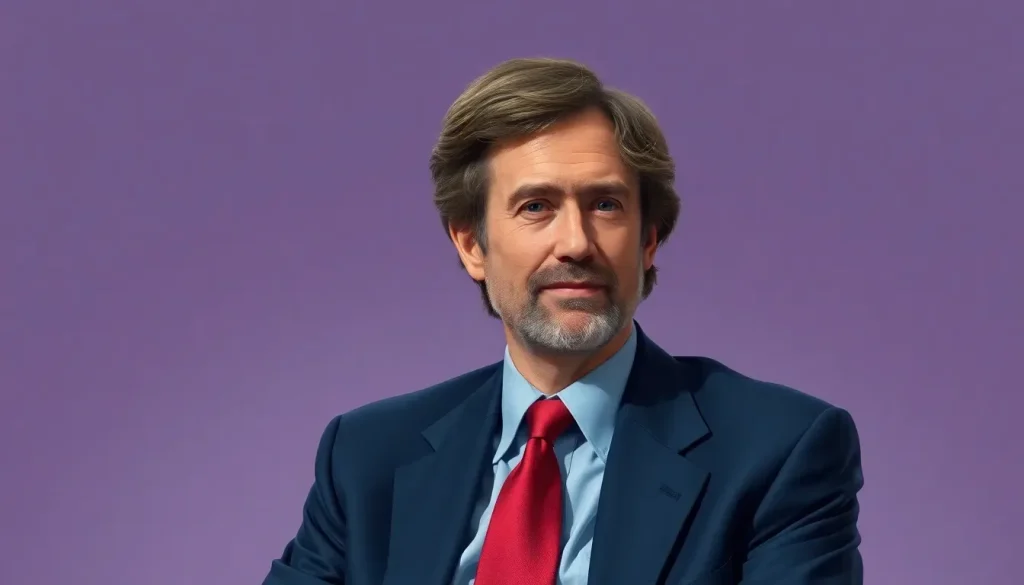
John Sculley is a name that resonates deeply within the tech industry, particularly in the history of Apple Inc. His tenure as CEO is often marked by polarizing opinions, ranging from innovation to controversy. This article delves into Sculley's journey at Apple, exploring the intricacies of his leadership, the challenges he faced, and the lessons that can be learned from his experiences.
When considering a position as CEO of a major corporation, it’s crucial to negotiate your exit package before taking the role. This is a lesson John Sculley learned well, as he left Apple on October 15, 1993, with an exit package valued in today's terms at approximately $17.5 million. This substantial amount included severance pay, a consulting fee for one year, and even arrangements for Apple to purchase his mansion and private jet.
Sculley is perhaps best known for his controversial decision to oust Steve Jobs from the company, a move that has led him to be labeled as one of the worst American CEOs in history by CNBC. Despite the challenges he faced during his time at Apple, Sculley's financial exit was a notable aspect of his legacy, contrasting sharply with the struggles that plagued the company at the time.
- John Sculley's entry into Apple
- Steve Jobs and his influence on Apple
- Challenges faced by Sculley at Apple
- Innovations during Sculley’s leadership
- Tensions between Sculley and Jobs
- What happened after Sculley left Apple
- Lessons learned from Sculley’s time at Apple
- Sculley’s perspective on Apple today
John Sculley's entry into Apple
The infamous quote from Steve Jobs that convinced Sculley to join Apple is a testament to how pivotal his recruitment was: "Do you want to sell sugar water for the rest of your life, or do you want to come with me and change the world?" Before joining Apple, Sculley had been the president of Pepsi, where he was credited with the creation of the successful Pepsi Challenge marketing campaign.
Under Sculley's leadership, the Pepsi Challenge encouraged consumers to take part in blind taste tests, effectively positioning Pepsi against its rival, Coca-Cola. This campaign not only boosted Pepsi's market share but also showcased Sculley's marketing acumen. He later mentioned in his book, Odyssey: Pepsi to Apple, that the initial research indicated that consumers preferred Pepsi over Coke in blind tests, an insight he did not fully capitalize on at the time.
Steve Jobs and his influence on Apple
Upon joining Apple, Sculley took over from Mike Markkula, a critical figure in Apple’s early years. Markkula had been instrumental in guiding the company during its formative stages, and his transition left a significant impact on Apple’s direction. Sculley expressed enthusiasm about the opportunity, stating his desire to bring business and marketing experience to a company that was revolutionizing technology.
In the early days, Sculley and Jobs appeared to form a strong partnership. Jobs, however, was notorious for his intense management style, which sometimes clashed with Sculley’s corporate approach. Reports suggest that one of Jobs's criteria for selecting a CEO was finding someone he could manipulate, a strategy that ultimately failed to materialize as their relationship soured.
Challenges faced by Sculley at Apple
As Apple grew, so did its challenges. Criticism of Sculley's leadership came to a head when the company announced its quarterly results just a day before his resignation in 1993. While Apple reported a profit, it was a meager increase that only marginally surpassed analysts' grim predictions. In reality, the company’s fourth-quarter earnings had plummeted by a staggering 97 percent compared to the previous year, reflecting a troubling financial trajectory.
To provide perspective, Apple's net income fell from $97.6 million in 1992 to just $2.7 million in 1993. Such figures are a stark reminder of the pressures Sculley faced, especially when juxtaposed against his high salary, which in 1987 made him the highest-paid executive in Silicon Valley at $2.2 million annually.
Innovations during Sculley’s leadership
Despite the controversies, Sculley's tenure was not devoid of accomplishments. Steve Wozniak, co-founder of Apple, credited Sculley with playing a pivotal role in the survival of the Macintosh platform. Wozniak acknowledged that while the Macintosh initially struggled, Sculley helped shift its trajectory by fostering a market around it post-Jobs’s departure.
One of Sculley’s notable marketing campaigns was the "Test Drive a Macintosh," which aimed to encourage potential customers to experience the Macintosh firsthand. Apple invested heavily in this strategy, even running a 16-page advertisement in Newsweek. Unfortunately, while the campaign allowed approximately 200,000 individuals to trial a Mac, many returned the devices, indicating that the experience did not translate into substantial sales.
- Sculley initiated the Knowledge Navigator project, which laid the groundwork for future innovations.
- He introduced the Newton, an early attempt at a personal digital assistant (PDA).
- Under his direction, marketing strategies were revamped to attract new customers.
Tensions between Sculley and Jobs
As time progressed, the relationship between Sculley and Jobs deteriorated. By 1985, Jobs had become a liability in Sculley's eyes instead of an asset. While it is a common misconception that Sculley outright fired Jobs, he did indeed strip him of significant responsibilities within the company, leading to Jobs's eventual departure to establish NeXT.
This separation marked a turning point for Apple, as Sculley continued to steer the company without Jobs for another eight years. The fallout from their split would resonate throughout the tech industry and eventually pave the way for Jobs’s triumphant return.
What happened after Sculley left Apple
After his departure from Apple, Sculley took the helm at Spectrum Information Technologies, a company focused on wireless technology. However, his tenure there was marred by controversy and legal disputes, as he claimed he was misled about the company's financial health. Ultimately, his time at Spectrum was short-lived, as he resigned just four months later.
In the years that followed, Apple underwent a remarkable transformation, eventually emerging as one of the most valuable companies in the world. Meanwhile, Sculley’s vision of the Knowledge Navigator, an early precursor to modern smart devices, remained largely unfulfilled until much later, as technology began to catch up with his ideas.
Lessons learned from Sculley’s time at Apple
John Sculley’s journey at Apple serves as a case study in corporate management and the tech industry’s rapid evolution. His experiences highlight the following significant lessons:
- The importance of aligning leadership style with company culture and innovation needs.
- Understanding market dynamics and consumer behavior is crucial for a tech company’s success.
- Investment in new ideas must be paired with effective execution and timing.
Sculley himself has reflected on his time at Apple, acknowledging the mistakes he made, particularly in terms of technology foresight. He has often spoken about the challenges of being a corporate leader in a fast-paced industry like technology.
Sculley’s perspective on Apple today
Even many years after his departure, Sculley remains engaged with Apple’s evolution. In 2025, he expressed his thoughts at the Zeta Live Conference, indicating that the company would need to adapt to a changing technological landscape as Tim Cook's retirement looms. He emphasized the need for Apple to embrace AI more deeply, moving beyond its reliance on traditional applications.
Sculley elaborated on his vision for the future, suggesting that the next CEO would need to navigate a world where AI operates independently, making decisions without direct human intervention. These insights echo his earlier ideas from the Knowledge Navigator concept, showcasing a persistent thread in his thinking about the future of technology.



Leave a Reply