
MAN eTruck Test: 623 km Madrid to Barcelona with eTGX eTGS
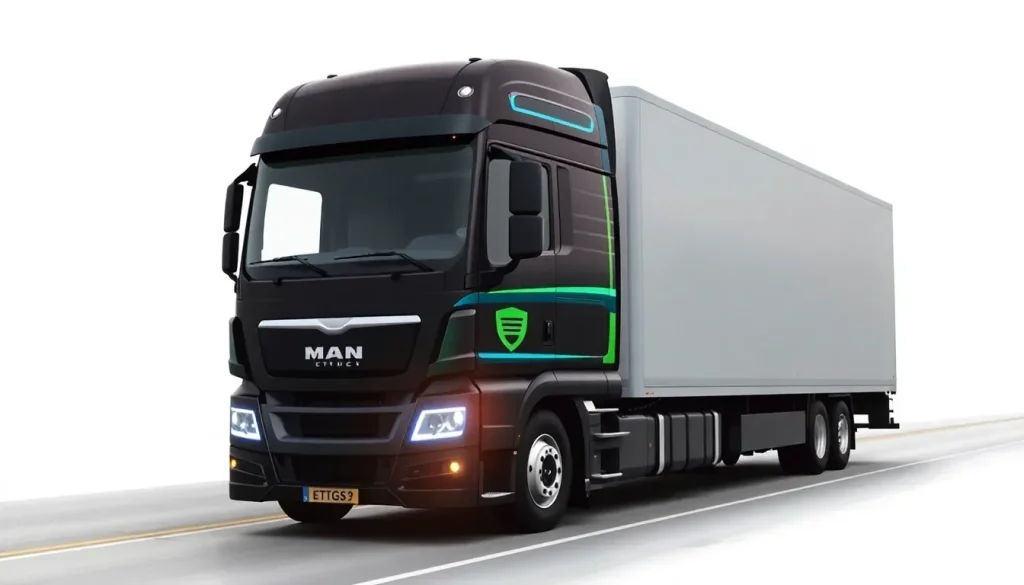
In an era where sustainability is increasingly prioritized, the introduction of electric trucks signifies a transformative shift in the logistics and transportation industry. The MAN eTruck is more than just a vehicle; it symbolizes the future of transportation. But how do these electric trucks perform on long-haul routes? We set out to answer this question by embarking on a real journey from Madrid to Barcelona, a distance of 623 kilometers, with the eTGX and eTGS models. Read on for a detailed examination of their performance, consumption data, and insights from the road.
The MAN eTruck: A Real-World Test Between Madrid and Barcelona
Can the MAN eTruck truly handle a 600-kilometer journey with a trailer in tow? This was the question we aimed to explore, and instead of conducting a controlled test, we opted for an authentic experience by driving 623 kilometers. The short answer is yes, and this article delves into the specifics of our journey with the eTGX and eTGS models, highlighting vital metrics like consumption, autonomy, and charging times.
Electric trucks from MAN are no longer a concept but a reality, with the eTGX and eTGS now available for customers eager to embrace electromobility. Our test was not merely a brief encounter; a 624-kilometer journey allowed us to draw significant conclusions about the MAN eTruck's capabilities.
During our testing day, we had access to two sets of trailers, one featuring the eTGX and the other the eTGS. We departed from the MAN headquarters in Coslada, Madrid, aiming for our final destination in Parets del Vallès, Barcelona.
Driving these fully electric trucks over a route familiar in national transport allowed us to determine whether electric vehicles can be effectively integrated into long-distance logistics today.
Specifications of the MAN eTGX and eTGS
Both trucks were equipped with identical specifications, including motor and battery configurations, with the only notable difference being cab size. Each vehicle features the most powerful motor available, delivering 400 kW, equating to approximately 544 horsepower, and a continuous torque of 1,250 Nm.
The power options available include:
- 333 hp (245 kW) with 800 Nm torque
- 449 hp (330 kW) with 1,150 Nm torque
- 544 hp (400 kW) with 1,250 Nm torque
In terms of battery capacity, MAN offers three configurations for conventional tractors:
- 89 kW/h packages, with options for 4, 5, or 6 elements
- Resulting in total capacities of 356 kW/h, 445 kW/h, and 534 kW/h respectively
It is important to note that these figures represent gross capacities, with the effective usable energy around 80 kW/h per pack. Additionally, the battery placement on the chassis sides ensures optimal weight distribution, enhancing the truck's balance.
Autonomy in Action: The Journey's Overview
During our test, both trucks were loaded with 37 tons. We initiated our journey with the intention of utilizing the GPS-based cruise control at 85 km/h whenever feasible. A planned stop was set for battery recharging near Zaragoza.
We drove the ETGS to Zaragoza, reaching the charging station with 320 kilometers completed and 40% battery remaining. The eTGX arrived under similar conditions but had slightly more battery reserve at 43%, attributed to its superior aerodynamics and optimized tires for efficiency.
Both models confirmed they could exceed 500 kilometers of autonomy, affirming that with a full 40-ton load, the half-thousand-kilometer mark is indeed attainable.
Some features that further extend autonomy include:
- Digital mirrors “Optiview” enhancing aerodynamics and reducing consumption
- High-capacity charging connectors with a maximum output of 375 kW/h
- Ability to recharge batteries to full capacity in under one hour
The Driving Experience: Comfort and Efficiency
Driving an electric truck is a markedly different experience than its combustion counterparts. The absence of vibrations and noise creates a serene driving environment, making the experience much more pleasant. The immediate availability of torque and power allows for rapid accelerations, though energy conservation remains a priority.
With 544 hp at our disposal, we experienced continuous, exhilarating acceleration. However, to maximize battery efficiency, it is crucial to adopt a regenerative driving style. This involves utilizing the truck's advanced systems designed to optimize energy recovery during operation.
Key regenerative features include:
- Adjustable recovery settings for optimal energy conservation
- Continuous braking functionality to enhance battery recharge
The driving mode “One Pedal Driving” allows for smooth speed adjustments, enabling the driver to decelerate without using the service brake, effectively redirecting kinetic energy back into the battery.
The new fully digital instrument panel provides real-time information about battery status, energy consumption, and recovery, ensuring the driver is always informed. This feature proved invaluable during our test, enabling effective energy management and extending battery life.
Challenges and Infrastructure Considerations
While these heavy-duty electric trucks represent significant advancements, ongoing improvements are necessary. It is essential to avoid direct comparisons with traditional fuel-powered trucks, especially regarding purchase prices and achievable ranges. The strict European legislation on emissions underscores the need for manufacturers to invest heavily in developing efficient products.
One of the most significant hurdles for electric trucks in Spain is the lack of charging infrastructure. Although our test demonstrated that national routes can indeed be achieved electrically, strategic planning and leveraging mandatory rest periods for battery recharging are crucial for success.
Performance Metrics from the Journey
The results from our 623-kilometer journey were promising. The average consumption recorded was:
| Model | Average Consumption (kWh/100km) |
|---|---|
| MAN eTGS | 93 |
| MAN eTGX | 90 |
These figures highlight the efficiency of the MAN eTruck models, reinforcing the potential of electric trucks for future logistics and transport solutions. As the infrastructure develops and technology advances, we can expect to see even greater improvements in performance and efficiency.



Leave a Reply