
Meta Vision for GPU Scale Compute with 1PB E2 SSDs
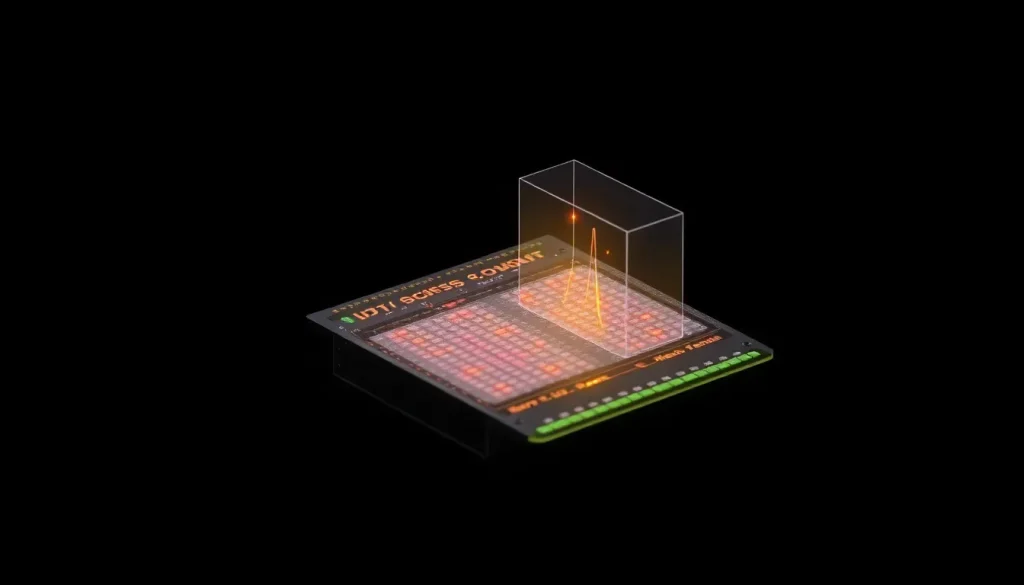
As the demand for high-capacity storage solutions continues to rise, the technology surrounding solid-state drives (SSDs) is evolving rapidly. Among the key players in this revolution is Meta, a company that is not only leveraging existing technologies but also advocating for new standards that promise to enhance performance and efficiency in data storage infrastructures. In this exploration, we delve into the innovative E2 form factor proposed by Meta, which aims to redefine the landscape of GPU-scale computing.
Understanding the Current Landscape of SSD Technology
The world of data storage is witnessing a significant shift towards high-capacity NAND flash memory, particularly QLC (Quad-Level Cell) NAND. This technology has become a hot topic due to its ability to store more data in a smaller physical footprint. For example, the Solidigm D5-P5336 122.88TB SSD showcases the potential of this technology, allowing for unprecedented data storage solutions.
However, as the industry moves away from traditional 2.5-inch form factors by late 2026, there is a pressing need for innovative designs that can accommodate the ever-increasing demands for storage. This is where Meta's proposal for the E2 form factor comes into play, aiming to facilitate the development of SSDs with over 1PB of capacity.
The Rise of the E2 Form Factor
Meta's E2 form factor is designed to address the limitations associated with existing SSD form factors, such as E1 and E3. While these forms have their advantages, they fall short when it comes to maximizing capacity with QLC NAND technology.
The E2 proposal emphasizes:
- Enhanced Cooling: The new design incorporates better thermal management, ensuring that high-capacity drives can operate efficiently without overheating.
- Increased NAND Placement: By optimizing the layout, the E2 form factor allows for a greater number of NAND chips on a single PCB, leading to higher overall capacities.
- Standardized Connectors: Utilizing common EDSFF connectors enables compatibility with existing infrastructure while paving the way for future innovations.
Strategic Goals and Implications for Data Centers
The ambition behind the E2 form factor is to produce SSDs capable of reaching 1PB capacity while consuming only 80W of power. This efficiency is critical for data centers, which are often limited by power consumption and cooling capabilities.
A practical demonstration of this vision was showcased by Meta, which illustrated a 40-drive chassis capable of housing 40PB of storage. This staggering capacity means:
- Reduction in the need for additional CPUs and NICs, resulting in lower system complexity.
- Improved energy efficiency, which is crucial as energy costs continue to rise.
- Consolidation of storage resources, simplifying management and maintenance tasks.
The Future of SSD Markets
The SSD market is on the cusp of a transformation, and Meta's vision is poised to play a significant role in shaping this evolution. According to recent insights from Trendfocus, while the SSD market is projected to grow, the M.2 segment is expected to face a dramatic decline, potentially dropping to one-fifth of its current volume by 2024. In contrast, the E1.L and E3.L units are anticipated to have minimal market impact.
Meta's strategy involves:
- Using E1.S for lower capacity performance tiers.
- Focusing on the E2 form factor for high-capacity storage solutions.
- Adapting to market shifts, where U.2 unit volumes may surpass M.2, E3.L, and E1.L combined by 2029.
The Importance of Higher-Capacity SSDs
The push towards higher-capacity SSDs is not merely a trend; it represents a fundamental shift in how data is stored and managed. The lower costs associated with higher-capacity drives offer several advantages:
- Cost Efficiency: Larger drives reduce the overall cost per terabyte, making it more affordable for organizations to scale their storage.
- Controller Optimization: With fewer drives needed to achieve the same storage capacity, the costs associated with controllers also decrease.
- Path to 1PB Drives: As NAND technology continues to advance, the industry is on the verge of producing 1PB SSDs, with the E2 form factor serving as a catalyst for this growth.
Conclusion: Embracing the Future of Data Storage
Meta's vision for the E2 form factor is a critical step forward in the ongoing evolution of data storage technology. By addressing the limitations of existing SSD designs and pushing for higher capacities, Meta is not only paving the way for more efficient data centers but also contributing to the broader landscape of GPU-scale computing. As the industry embraces these changes, we can anticipate a new era of storage solutions that balance performance, capacity, and energy efficiency.

Leave a Reply