
NASA does not hide information about 3I/ATLAS
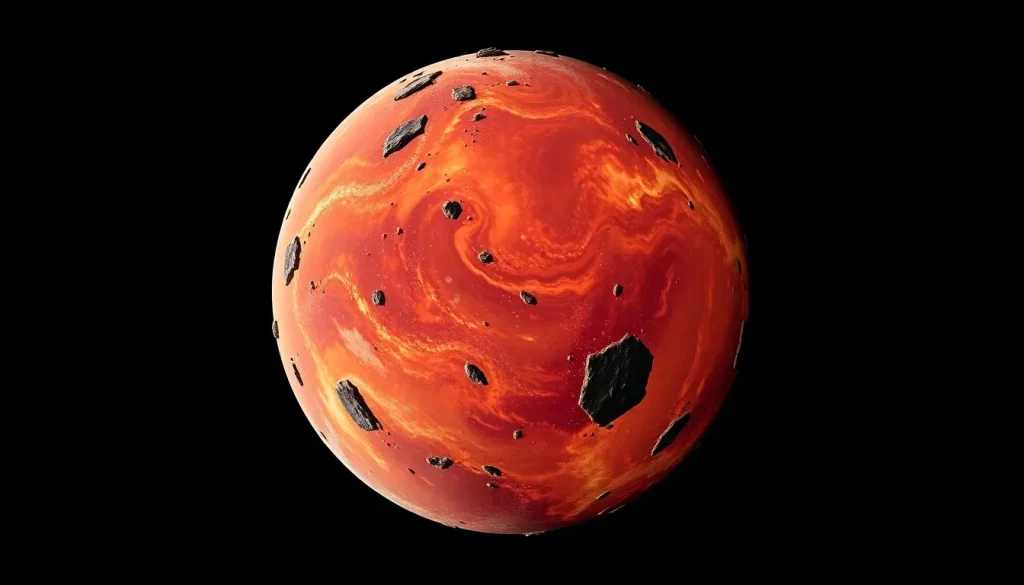
Recently, the fascination surrounding the comet 3I/ATLAS has surged, captivating the attention of both the scientific community and the general public. This growing interest is not solely due to its cosmic journey but also because of the myriad discussions, theories, and even conspiracy claims that have emerged. As we delve deeper into this extraordinary celestial visitor, it becomes evident that it offers more than just a spectacle; it is a gateway to understanding our universe and our place within it.
Understanding the Comet 3I/ATLAS
To appreciate the significance of 3I/ATLAS, it's essential to grasp its origins and characteristics. Discovered on July 1, 2023, by the ATLAS (Asteroid Terrestrial-impact Last Alert System), 3I/ATLAS holds the distinction of being the third interstellar object detected by humanity to traverse our solar system. It reached its closest point to Earth on October 30, 2023, at a safe distance, allowing astronomers a unique opportunity to study its composition and trajectory.
What sets 3I/ATLAS apart from other comets is its interstellar nature, suggesting that it originated from outside our solar system. This characteristic raises intriguing questions about the materials found in such objects and what they can tell us about the formation of solar systems beyond our own.
Media Controversies Surrounding 3I/ATLAS
The media frenzy began when Avi Loeb, an astronomer from Harvard University, accused NASA of withholding crucial images captured by the HiRISE camera aboard the Mars Reconnaissance Orbiter during 3I/ATLAS's close approach to Mars on October 2 and 3. According to Loeb, these images, which boast significantly higher resolution than those from the Hubble Space Telescope, could provide vital insights into the object's geometry, brightness, and any potential anomalies.
Such accusations have prompted a wave of speculation about potential cover-ups and scientific transparency. However, the reality seems to be more mundane. NASA's official response clarified that the delay in releasing the images was due to a partial government shutdown that left much of its scientific personnel unpaid. This situation, while not ideal, highlights the complexities faced by government agencies in times of financial uncertainty.
Avi Loeb: A Polarizing Figure in Astronomy
Avi Loeb's involvement in this controversy is particularly noteworthy. Known for making bold claims, including the assertion that ancient interstellar objects could be alien probes, he has captured both a following and a fair amount of skepticism within the scientific community. His insistence on the "anomalies" associated with 3I/ATLAS—such as its unexpected acceleration and nickel-rich composition—continues to fuel debates among astronomers.
While some view Loeb as a pioneering thinker pushing the boundaries of scientific inquiry, others dismiss him as more of a showman than a scientist. This division illustrates the broader tension in science between established views and disruptive ideas.
The Ongoing Scientific Efforts
Amidst the controversies and media buzz, a dedicated group of astronomers continues to study 3I/ATLAS with rigor and discipline. Their work involves:
- Analyzing available data to model the comet's trajectory accurately.
- Exploring its likely origin outside the solar system.
- Examining its interaction with solar wind and other cosmic factors.
Despite the absence of high-resolution images from Mars, significant progress has been made in understanding the comet's hyperbolic orbit and other aspects of its nature. This research not only enriches our knowledge of 3I/ATLAS but also contributes to our broader understanding of celestial mechanics and the history of our solar system.
What Makes 3I/ATLAS Significant?
3I/ATLAS is more than just a fleeting guest in our solar system; it represents a rare opportunity to study an object from outside our cosmic neighborhood. The significance of such a comet can be seen through several lenses:
- Scientific Inquiry: Each interstellar object provides unique data that can illuminate the conditions in other parts of the universe.
- Public Interest: Events like the approach of 3I/ATLAS inspire public fascination with space and science, potentially cultivating future generations of scientists.
- Technological Advancement: The study of such objects drives the development of new observational technologies and techniques.
Exploring the Cosmic Context of 3I/ATLAS
The study of interstellar comets like 3I/ATLAS is essential for several reasons. These objects can serve as time capsules, preserving information about the early solar system and the materials that formed it. Furthermore, understanding their composition can provide insights into:
- The chemical processes that occurred in the early universe.
- The potential for life-supporting materials existing beyond Earth.
- The dynamics of solar system formation.
This cosmic context emphasizes the importance of continued funding and support for space research, as the knowledge gleaned from these studies can have far-reaching implications for our understanding of life and the universe.
In light of the ongoing discussions about 3I/ATLAS, it is crucial to remember that the quest for knowledge is often fraught with challenges and misunderstandings. While sensational claims may capture headlines, the real work of science, conducted in laboratories and observatories around the world, remains vital to advancing our understanding of the universe.
For those interested in a deeper dive into the ongoing developments regarding 3I/ATLAS, check out this informative video:
The ongoing story of 3I/ATLAS serves as both a reminder of the mysteries of the cosmos and a testament to the perseverance of scientific inquiry. In a universe filled with questions, each discovery brings us a step closer to understanding not only the heavens above us but our role within them.
For further information on this fascinating topic, you can read more about it here.



Leave a Reply