
NVIDIA BlueField-4 Launching in 2026 with 64 Arm Cores and 800G Networking
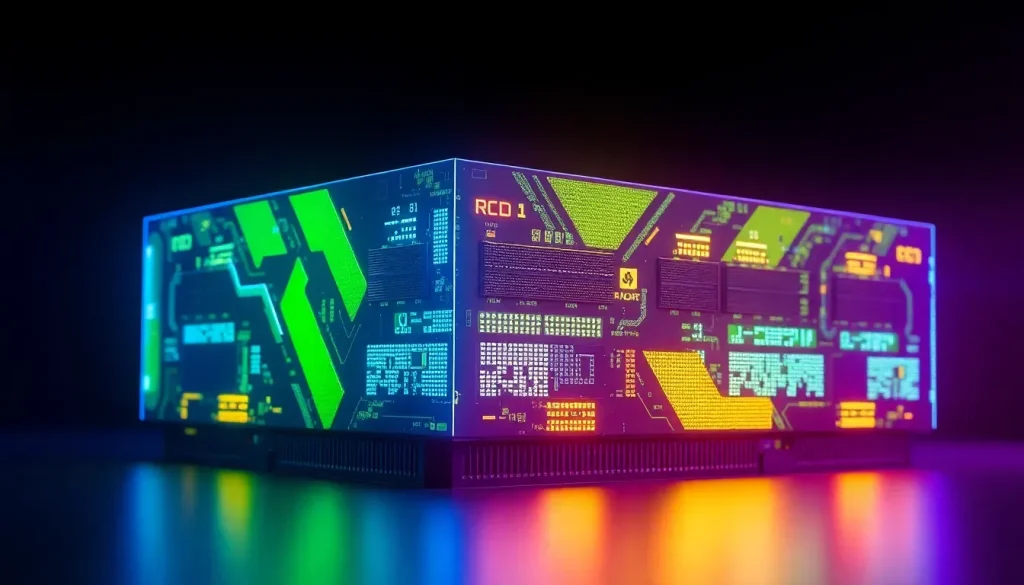
At the recent NVIDIA GTC event in October 2025, a series of groundbreaking announcements emerged, but one, in particular, captured the attention of the tech community. The introduction of the next-generation NVIDIA BlueField-4 Data Processing Unit (DPU) signifies a substantial leap in performance and capability, featuring an innovative architecture designed for the demands of modern computing. With support for 800G networking and equipped with 64 Arm cores, the BlueField-4 is set to redefine what is possible in data processing and AI applications.
This announcement not only highlights NVIDIA's commitment to advancing DPU technology but also showcases the integration of cutting-edge components that promise to enhance performance across various applications. As organizations increasingly turn to AI and data-centric operations, the implications of this technology are profound.
Overview of NVIDIA BlueField-4 DPU
The NVIDIA BlueField-4 DPU is engineered with a staggering 126 billion transistors, marking it as one of the most powerful units available. It integrates the NVIDIA ConnectX-9 networking technology, which is crucial for achieving the high-speed connectivity required for contemporary data centers and AI workloads. This combination of hardware enables the BlueField-4 to handle massive data throughput, making it ideal for industries that rely heavily on data processing.
The 64-core architecture, based on the “Grace” CPU, is particularly noteworthy. This design not only boosts processing capabilities but also enhances power efficiency, allowing for more tasks to be completed simultaneously without a corresponding increase in energy consumption. The use of Arm cores is indicative of NVIDIA's strategy to utilize diverse architectures to optimize performance.
Key Features of NVIDIA BlueField-4
- High-Performance Processing: The DPU features 64 Arm cores, providing a robust platform for parallel processing.
- Advanced Networking: With 800G networking capabilities, it supports ultra-fast data transfers critical for AI and cloud computing.
- Massive Transistor Count: At 126 billion transistors, it represents one of the most powerful DPUs ever created.
- Energy Efficiency: The design focuses on optimizing power usage while maximizing performance.
- Flexible Architecture: Built to support a variety of applications, from data analytics to AI training.
What does NVIDIA BlueField do?
The NVIDIA BlueField series of DPUs is designed specifically to offload and accelerate data-centric workloads. This includes functionalities such as storage, networking, and security processes, allowing the main CPUs to focus on higher-level tasks. With this offloading, organizations can achieve improved overall system performance and responsiveness.
One of the significant advancements in the BlueField-4 is its ability to accelerate key functions like key-value (KV) cache operations. This enhancement allows for faster retrieval and processing of data, which is particularly beneficial in applications involving large language models (LLMs). By utilizing KV caches, systems can quickly resume previous interactions, enhancing user experience and operational efficiency.
Does BlueField support InfiniBand?
Yes, the NVIDIA BlueField-4 is designed to support InfiniBand, a high-performance networking technology that provides reliable and efficient data transfer between connected devices. This support is crucial for data centers that require low-latency communication and high throughput, particularly in environments where large datasets are processed in real-time.
The integration of InfiniBand within the BlueField architecture means that organizations can build out their infrastructure with confidence, knowing they have the capability to meet the demanding requirements of modern applications. This feature is essential for industries that rely on fast computing, such as finance, healthcare, and artificial intelligence.
Implications for Data Centers and AI Applications
The introduction of the NVIDIA BlueField-4 is likely to have significant implications for data center management and AI application development. As AI continues to permeate various sectors, the need for powerful and efficient processing units becomes increasingly critical. The BlueField-4's architecture will support:
- Accelerated AI Workflows: By enhancing the speed and efficiency of data processing, it enables faster model training and inference.
- Enhanced Scalability: Organizations can scale their operations without a proportional increase in energy costs or physical infrastructure.
- Improved Security: Built-in security features can help protect sensitive data and applications against threats.
The Future of Computing with NVIDIA
NVIDIA's strategy appears to be laser-focused on creating powerful silicon solutions that can handle the complexities of modern computing environments. The BlueField-4 DPU is a testament to this vision, providing a platform that not only meets current demands but is also adaptable to future technological advancements.
As the industry shifts toward AI-driven solutions, the role of DPUs like the BlueField-4 will become even more prominent. Organizations that invest in such technologies will likely gain a competitive edge by leveraging the latest advancements in processing and networking capabilities.
Additional Announcements from NVIDIA
In addition to the BlueField-4 DPU, NVIDIA also unveiled an AI-native 6G compute platform in collaboration with Nokia. This platform aims to revolutionize connectivity and computation in the age of 6G, pushing the boundaries of what is possible in communication and data processing.
The collaboration, which features insights from industry veterans like Justin Hotard, CEO of Nokia, reflects the growing importance of integrated solutions that combine hardware and networking technologies to address the needs of next-generation applications.
For those interested in deeper insights into NVIDIA's innovations, the following video may provide valuable perspective:



Leave a Reply