
Radeon RX 7900 XTX review: performance, temperature, comparison RTX 4080
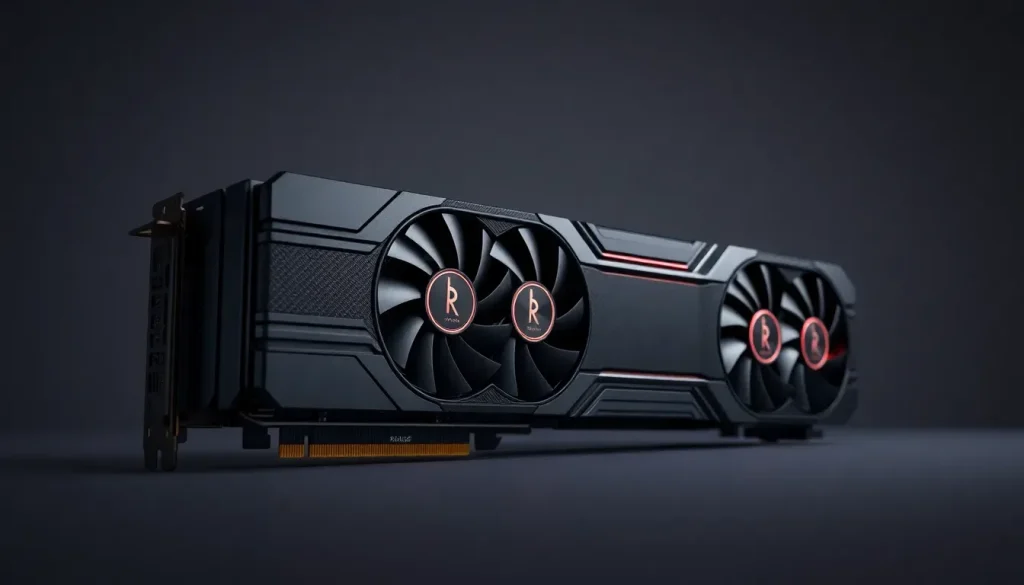
The Radeon RX 7900 XTX marks a significant milestone in AMD's GPU lineup. Launched alongside the RX 7900 XT, it represents the pinnacle of AMD's new generation of graphics cards based on the advanced RDNA3 architecture. This innovative design utilizes a multi-chiplet layout and combines two different manufacturing processes, enhancing performance and efficiency.
In this comprehensive analysis, we will delve into the key features of the Radeon RX 7900 XTX. We will explore its architecture, performance benchmarks in both rasterization and ray tracing, its capabilities with AMD's FidelityFX Super Resolution (FSR), and how it stacks up against its main competitor, the NVIDIA GeForce RTX 4080. Additionally, we will discuss the card's thermal performance and power consumption.
We extend our gratitude to AMD for providing the Radeon RX 7900 XTX for this analysis, allowing us ample time to conduct thorough testing. Now, let’s dive into the details!
Radeon RX 7900 XTX: An Overview of Its Architecture
The RDNA3 architecture signifies a considerable evolution over the previous RDNA2. One of the most notable advancements is the introduction of a multi-chiplet design for the GPU, known as Navi 31, which features a core manufactured on a 5 nm node and six L3 cache chiplets built on a 6 nm node.
This innovative design allows for improved performance while maintaining lower manufacturing costs. By separating the GPU and L3 cache into different encapsulations, AMD has streamlined the production process, reducing complexity and enhancing yield rates on silicon wafers.
In technical terms, the RX 7900 XTX operates with a monolithic core structure, integrating all components of the graphics core within a single package, except for the L3 cache. This design choice simplifies the architecture while still leveraging the benefits of high-speed cache memory, which provides significant bandwidth improvements.
The RX 7900 XTX is equipped with a total of 96 MB of Infinity Cache, delivering a maximum bandwidth of 5.3 TB/s. This impressive figure stands in contrast to the 960 GB/s bandwidth achieved by the card's 24 GB of GDDR6 memory. The Infinity Cache is strategically utilized to store frequently changing elements and instructions in games, aiding in maintaining high performance.
Performance Enhancements in RDNA3 Architecture
RDNA3 architecture improves computational unit performance by 17% over its predecessor. Although the shader count remains at 64 per compute unit, each can now process two Wave 32 instructions simultaneously. This architectural refinement allows for increased efficiency and higher operational frequencies.
The RX 7900 XTX is designed to achieve clock speeds approaching 3 GHz, thanks to optimizations that increase the front-end processing speed by 10% to 15% compared to the back-end, allowing for a more balanced workload and better performance per watt.
Moreover, AMD has capitalized on the additional space afforded by the multi-chiplet architecture to introduce dedicated hardware for AI acceleration and improve ray tracing capabilities. Each compute unit now includes two AI acceleration units and second-generation ray tracing cores, enhancing the overall performance in both standard and ray-traced gaming scenarios.
The RX 7900 XTX: Design and Build Quality
The reference model of the Radeon RX 7900 XTX boasts a solid build quality with a sleek design. The card features three large cooling fans mounted on a substantial heatsink, providing efficient thermal management during intense gaming sessions. Despite its robust cooling system, the RX 7900 XTX maintains a relatively compact form factor, measuring 28 x 12.5 cm, though it occupies three expansion slots due to its cooling demands.
In terms of power, the RX 7900 XTX supports a combined maximum draw of 375 watts, requiring two 8-pin power connectors. It’s essential to note that the card's power consumption fluctuates based on workload, a factor that can affect overall system stability.
Notably, AMD has opted not to use heat pipes in this model, relying instead on a contact base with thermal pads to dissipate heat from the GPU and memory to the heatsink. This design choice is both effective and efficient, as evidenced by the card's impressive thermal performance during testing.
Key Specifications of the Radeon RX 7900 XTX
- GPU: Navi 31 with Multi-chiplet design.
- Manufacturing process: 5 nm for the GPU, 6 nm for L3 cache.
- Compute Units: 96
- Total Shaders: 6,144
- Texture Units: 384
- Ray Tracing Units: 96 (second-generation).
- Memory: 24 GB GDDR6 at 20 GHz with a bandwidth of 960 GB/s.
- Infinity Cache: 96 MB.
- Interface: PCIe Gen4 x16.
- Typical Board Power (TBP): 355 watts.
Performance Testing of the RX 7900 XTX
To provide a fair comparison, we utilized the same testing rig as that used for the GeForce RTX 4080 review. This ensures that performance metrics are consistent across both graphics cards, eliminating hardware-related discrepancies.
- CPU: Intel Core i9-13900K
- Motherboard: GIGABYTE Z790 AERO G
- Cooling: Corsair iCUE H150i Elite LCD
- RAM: 32 GB Corsair Vengeance DDR5 at 6,000 MHz
- Storage: 2 TB WD Black SN850 SSD
- Power Supply: Corsair HX1500i 1,500 watts
- OS: Windows 11 Home
Benchmark Results: Synthetic and Professional Testing
We began our performance evaluation with Blender, a widely recognized benchmark that measures rendering capabilities. The RX 7900 XTX showed impressive results, although it was outperformed by the RTX 4080, which significantly benefits from optimizations present in Nvidia’s architecture.
In PassMark testing, the RX 7900 XTX achieved a score placing it among the top graphics cards in the database, although it fell short when compared to the RTX 4080.
Gaming Performance: Real-World Testing
When it comes to gaming, the RX 7900 XTX shines, particularly in demanding titles like Dying Light 2. In 4K resolution at maximum settings, it averages 72 FPS, and with FSR 2 enabled, the average increases to 117 FPS. This demonstrates the card's capability to handle high-resolution gaming smoothly.
However, when ray tracing is activated, performance does take a hit; the card manages an average of 26 FPS at 4K, but with FSR 2, this can improve to 49 FPS.
Other games such as Gears V and Ghostwire Tokyo also showcase the RX 7900 XTX's capabilities, maintaining fluid performance even at high resolutions. For instance, Ghostwire Tokyo runs at 115 FPS in 4K without ray tracing and 39 FPS with ray tracing enabled, again benefiting from FSR 2.
Power Consumption and Thermal Performance
The RX 7900 XTX performed admirably in thermal management, with peak temperatures not exceeding 74 degrees Celsius under heavy load. This allows the GPU to operate within safe limits even during demanding tasks, providing a thermal advantage over the RTX 4080, which peaks at 65 degrees Celsius.
In terms of power consumption, the RX 7900 XTX averaged below 350 watts, with occasional peaks reaching 411 watts during intensive gaming. Such spikes should be considered normal operational profiles and not a cause for concern.
Comparative Analysis: RX 7900 XTX vs. GeForce RTX 4080
Overall, while the RX 7900 XTX showcases noteworthy advancements, it still faces stiff competition from the GeForce RTX 4080. In rasterization, the AMD card manages to edge out the RTX 4080 by a small margin, but falls significantly behind in ray tracing performance. The RTX 4080 benefits greatly from Nvidia's DLSS technology, which often enhances performance in supported titles, making the gap in real-world performance even more pronounced.
In summary, while the RX 7900 XTX is a strong contender with its lower price point and robust performance, it does not surpass the RTX 4080 in terms of overall capabilities, especially in ray tracing where AMD still has ground to cover.
For a deeper insight into the performance comparisons, you can check out this video that highlights the differences:



Leave a Reply