
Rumors of Deep Production Cuts Affecting iPhone Air Supply Chain
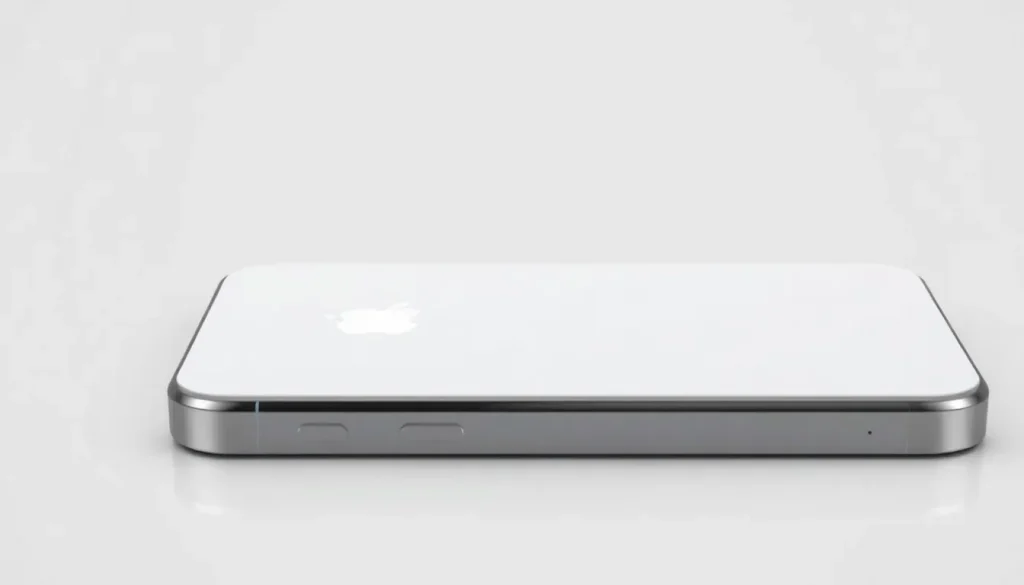
In recent weeks, whispers have circulated regarding significant adjustments in Apple's production plans, particularly concerning the iPhone Air. As consumers eagerly await the latest innovations from the tech giant, the implications of these changes could reshape the landscape of smartphone availability and market dynamics. Let’s explore the latest developments surrounding the iPhone Air and its more successful counterparts.
Analysts and industry insiders have increasingly pointed towards a trend of reduced component orders for the iPhone Air. This adjustment appears to align with a pattern typically observed towards the end of a product's lifecycle. Recent reports are suggesting that Apple is scaling back production to levels that echo a phase of declining demand.
Production reductions due to weak demand
On October 17, a pivotal report hinted at potential shifts in production for the upcoming 2025 iPhone lineup. Following this, a second report corroborated these claims, providing a more detailed look at the situation. According to Nikkei, multiple sources have suggested that the production plans for the iPhone Air have been considerably decreased due to disappointing market response.
In stark contrast, the demand for the iPhone 17 and iPhone 17 Pro has reportedly surged. This divergence in consumer interest has led Apple to increase production orders for these models significantly. The iPhone Air, however, has struggled to capture consumer enthusiasm, resulting in a drastic reduction in its manufacturing output.
One anonymous supplier remarked on the situation, stating, "The total forecast has almost entered end-of-production mode, dropping significantly compared to earlier projections." Furthermore, the anticipated production for November is expected to be approximately 10% lower than that of September. This indicates a troubling trend that could reflect broader issues within Apple's planning and market positioning.
Understanding Apple's production philosophy
It's important to note that the term "end-of-production" does not imply that Apple is discontinuing the iPhone Air entirely. Rather, if this report holds any truth, it suggests that Apple currently feels equipped to produce enough units to meet demand for about 60 days. This aligns with Apple’s "just in time" manufacturing ethos, which prioritizes efficiency by minimizing inventory levels.
Under this model, Apple typically orders components only as needed, which allows for agile adjustments in response to market conditions. Initially, the iPhone Air was expected to account for approximately 10% to 15% of the new iPhone batch slated for 2025, but with the latest updates, suppliers have been instructed to reduce production for this model.
Regional demand variations for the iPhone Air
Interestingly, while the supply chain is curtailing orders, reports from China indicate that demand for the iPhone Air remains robust. Recent media coverage highlighted that the iPhone Air sold out almost immediately upon the opening of preorders, signifying a stronger preference in that market compared to the U.S. and other regions.
- Demand appears to be strong in China, with rapid sales upon preorder availability.
- The iPhone Air's popularity in China may contrast sharply with its performance in Western markets.
- Apple's ability to adapt its production to regional demand could be critical for future sales.
Shifting focus towards iPhone 17 models
Amidst the downturn for the iPhone Air, the iPhone 17 series is reportedly exceeding expectations in terms of consumer interest. Apple's strategies seem to be paying off, leading to an increase in production orders for the base iPhone 17 by around 5 million units. Similarly, the iPhone 17 Pro is also seeing an uptick in production.
Overall, the production forecast for the iPhone 17 models is claimed to be stable, with estimates ranging from 85 million to 90 million units. An investment firm recently reported an increase in Apple's overall production from 88 million to 94 million units for the iPhone lineup. This underscores the company’s focus on models that are resonating well with consumers.
From a model-specific perspective, it’s noteworthy that while orders for the iPhone Air are projected to decline, other models like the iPhone 17 Pro Max are set to see significant increases:
- iPhone Air: down by 1 million units
- iPhone 17: up by 2 million units
- iPhone 17 Pro: up by 1 million units
- iPhone 17 Pro Max: up by 4 million units
Market insights and consumer preferences
The potential issues with demand for the iPhone Air were foreshadowed by earlier consumer surveys. A report monitoring the demand for Apple’s smartphone line indicated that the iPhone 17 Pro Max captured a substantial 33% market share, followed closely by the iPhone 17 Pro and the iPhone 17.
In contrast, the iPhone Air was initially overlooked in these results, only later revealing a dismal 2% market share, placing it outside the top five models. This stark difference in consumer preferences highlights the challenges Apple faces with the iPhone Air in a competitive market.
For those interested in a deeper dive into this topic, a relevant video titled "Apple Slashes iPhone Air Production After Weak Demand" provides additional context and analysis:
In summary, while the iPhone Air faces turbulence, the iPhone 17 series is gaining traction. The evolving dynamics of production and demand could significantly influence Apple's market strategy moving forward. The coming months will be pivotal in determining how well Apple can navigate these challenges and capitalize on emerging opportunities.


Leave a Reply