
Volvo and Waabi achieve milestone in autonomous truck integration
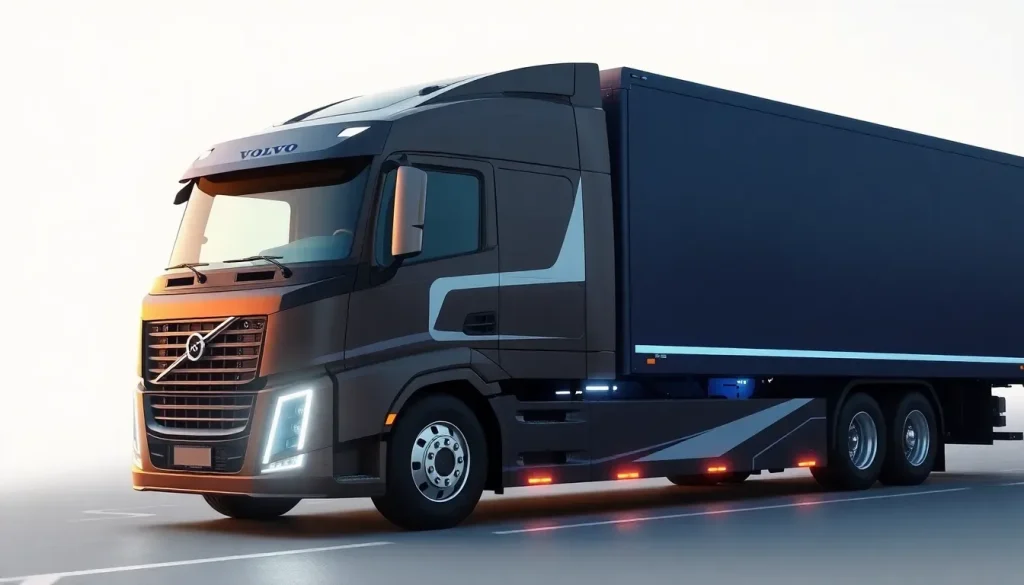
The world of transportation is on the brink of a revolutionary transformation, driven by advancements in artificial intelligence and autonomous systems. One of the most significant developments comes from the collaboration between Volvo Autonomous Solutions and Waabi, a Toronto-based AI company. Their recent integration milestone for autonomous trucking is not just a technical achievement; it represents a pivotal step towards a future where self-driving freight vehicles are a common sight on our roads.
As logistics and transportation continue to evolve, understanding the implications of such innovations becomes crucial. In this article, we delve into the details of this groundbreaking partnership, the technology involved, and what the future may hold for the trucking industry.
Milestone achievement in autonomous trucking integration
Volvo Autonomous Solutions and Waabi have announced a significant achievement in their partnership, successfully integrating the Waabi Driver with the Volvo VNL Autonomous truck. This integration marks a critical step towards the commercial deployment of self-driving vehicles in the freight transport sector.
According to a press release issued on October 28, this milestone represents the culmination of ongoing collaborative efforts between the two companies. By leveraging Waabi’s advanced AI-driven autonomy and Volvo’s specialized truck platform, they aim to validate the integrated system for safe and scalable deployment across various environments.
Technological foundations of the integration
The backbone of this partnership lies in the cutting-edge technologies being harnessed. Waabi's self-driving software is an interpretable, end-to-end AI model designed for generalization across a range of driving scenarios. This capability allows it to operate safely and efficiently on highways as well as on surface streets.
Some key features of the integrated system include:
- Safety: Focus on safety-critical functions such as braking and steering, ensuring reliable operations.
- Scalability: Ability to adapt to different geographic and operational conditions.
- Efficiency: Designed to work seamlessly within existing logistics frameworks.
Volvo’s VNL Autonomous truck is engineered specifically for autonomous operations, equipped with redundant systems to manage safety-critical functions. This integration between Waabi's software and Volvo's hardware sets a robust foundation for future developments in autonomous logistics.
Expert insights on the future of autonomous trucking
Raquel Urtasun, founder and CEO of Waabi, highlighted the importance of addressing three critical areas for the success of autonomous trucking: technology safety, hardware design, and effective commercial deployment. She stated, “Together with Volvo, we are leading autonomous trucking forward. The Volvo VNL Autonomous, powered by the Waabi Driver, is the next step in ushering in a stronger, safer, and more efficient era in transportation.”
Nils Jaeger, president of Volvo Autonomous Solutions, echoed these sentiments, emphasizing that partnerships like this are pivotal not only for advancing technology but also for creating a supportive ecosystem for commercial deployment. He noted that autonomy could effectively tackle major challenges in the transport sector, including:
- Improved Safety for drivers and road users.
- Increased Efficiency in logistics operations.
- Enhanced Capacity to meet growing demand.
The commercial viability of autonomous freight transport
As the integration of Waabi’s AI with Volvo’s autonomous technology progresses, the focus shifts towards validating and ensuring the commercial viability of these self-driving trucks. This involves rigorous testing and regulatory approval processes to guarantee safety and reliability.
Moreover, the potential benefits of deploying autonomous trucks could significantly impact the logistics industry, including:
- Cost Reduction: Lower operational costs due to reduced labor and increased efficiency.
- Time Savings: Faster delivery times by optimizing routes and eliminating human error.
- Environmental Impact: Potential for reduced carbon emissions through optimized driving patterns.
Looking ahead: The role of AI in trucking
The integration of AI into the trucking industry is not just about creating self-driving vehicles; it's about rethinking logistics and freight operations as a whole. AI can enhance decision-making processes, improve route planning, and manage fleet operations more effectively.
As companies like Waabi and Volvo pioneer this technology, the implications extend beyond just transportation. Possible future innovations could include:
- Smart Infrastructure: Roads and highways equipped with AI technology to communicate with autonomous vehicles.
- Data Utilization: Leveraging big data analytics for real-time decision-making in logistics.
- Integration with Urban Mobility: Coordinating freight and passenger transport systems for enhanced efficiency.
To gain further insight into this emerging field, you can explore this informative video about Waabi and Volvo’s collaboration:
Conclusion: A transformative journey ahead
The partnership between Volvo Autonomous Solutions and Waabi represents a significant leap forward in the realm of autonomous freight transport. As they continue to integrate technology and validate their systems, the potential for safer, more efficient logistics operations becomes a tangible reality.
As this technology matures, it is essential for stakeholders in the logistics and transportation sectors to stay informed and adapt to these changes. The future of trucking is not just about vehicles; it's about creating a comprehensive ecosystem that enhances efficiency, safety, and sustainability across the board.


Leave a Reply